Natural Wasp Repellents That Actually Work (Science-Backed)
Look, I’ve spent way too much time researching this whole “natural wasp repellent” thing, and here’s what I found: some of it actually works, but most of the stuff you read online is either oversimplified or just flat-out wrong.
The good news? There’s actual peer-reviewed research on this. A 2013 study published in Pest Management Science tested 21 essential oils against yellowjackets and paper wasps, and 17 of them showed real repellent effects [1]. That’s not just some blog post claiming lavender works – that’s scientists actually testing this stuff in controlled conditions.
But here’s the thing nobody tells you: just putting a peppermint plant on your patio isn’t gonna do much. You need to actually understand why certain scents work and how to use them properly. So let’s get into what the science really says.
How Wasps Actually Smell (And Why It Matters)
Before we talk about what wasps hate, you gotta understand how they even detect scents in the first place.
Wasps have this incredibly sophisticated smell system centered on their antennae. Those antennae aren’t just for show – they’re covered with thousands of tiny hair-like structures called sensilla, each packed with olfactory receptor neurons [2]. When an odor molecule drifts toward a wasp, it enters through microscopic pores in these sensilla and dissolves into the fluid surrounding the sensory neurons.
What makes this relevant? Wasps are extremely sensitive to chemical compounds. Researchers at the University of Georgia found that wasps can detect odors with greater accuracy than trained dogs in some contexts [4]. This sensitivity is a double-edged sword – it helps them find food, but it also means strongly aromatic compounds can overwhelm their sensory system or trigger innate avoidance behaviors.
Different compounds affect wasps through different mechanisms. Some, like citronellal, appear to directly activate a receptor called TRPA1 – basically an “irritant detector” that triggers escape responses in insects [5]. Others might simply overload the olfactory system, making it difficult for wasps to navigate or locate food sources.
The Essential Oils That Actually Work (With Research to Prove It)
Alright, so the big 2013 study by Zhang and colleagues tested essential oils in real-world conditions using attractant-baited traps [1]. They didn’t just report whether oils worked – they used electroantennographic detection to identify exactly which chemical compounds triggered responses in wasp antennae.
The top performers, in order of effectiveness:
- Clove
- Pennyroyal
- Lemongrass
- Ylang ylang
- Spearmint
- Wintergreen
- Sage
- Rosemary
- Lavender
- Geranium
- Patchouli
- Citronella
- Roman chamomile
- Thyme
- Fennel seed
- Anise
- Peppermint
The real breakthrough came when researchers tested combinations. A mixture of equal parts clove, geranium, and lemongrass oils completely blocked wasp attraction to bait [1]. Adding rosemary to the mix achieved the same result. When clove oil was tested alone, it reduced wasp visits by about 95% at release rates of 30-45 mg per day.
A separate 2014 study from Belgium’s Royal Institute of Natural Sciences confirmed a lot of these findings [6]. Wintergreen oil, marjoram, various Artemisia species, and mint oils showed the strongest repellent effects.
Here’s something interesting though: this study also tested commercial insect repellents like DEET, picaridin, and IR3535 – and found they showed almost no repellent activity against wasps [6]. So your standard mosquito spray probably won’t help with wasps.
The Specific Compounds That Drive Wasps Away
So what’s actually in these oils that wasps can’t stand? Researchers identified 29 compounds that triggered strong antennal responses in wasps [1].
Eugenol is the main active component in clove oil, making up 80-95% of its composition. It’s one of the most potent individual wasp repellents identified. Interestingly, eugenol also has insecticidal properties and affects the octopamine receptor system in insects.
Menthone and menthol are the key players in peppermint and spearmint oils. Lab testing showed that both compounds demonstrated similar repellent potency, likely because they share a common molecular backbone [6].
Citral gives lemongrass its characteristic scent and showed strong field-tested repellency. It’s actually a mixture of two similar compounds (geranial and neral) and is also found in lemon verbena and some citrus oils.
Methyl salicylate is what makes wintergreen smell like wintergreen. It showed consistent repellent effects in both field and lab tests, making wintergreen one of the most reliable essential oil options.
Other significant compounds include pulegone (from pennyroyal), thujone (from sage and wormwood), linalool (found in many floral scents including lavender), and terpinen-4-ol (a major component of tea tree oil).
Different Wasps, Different Responses
Not all wasps behave identically, and understanding the species you’re dealing with can help you set realistic expectations.
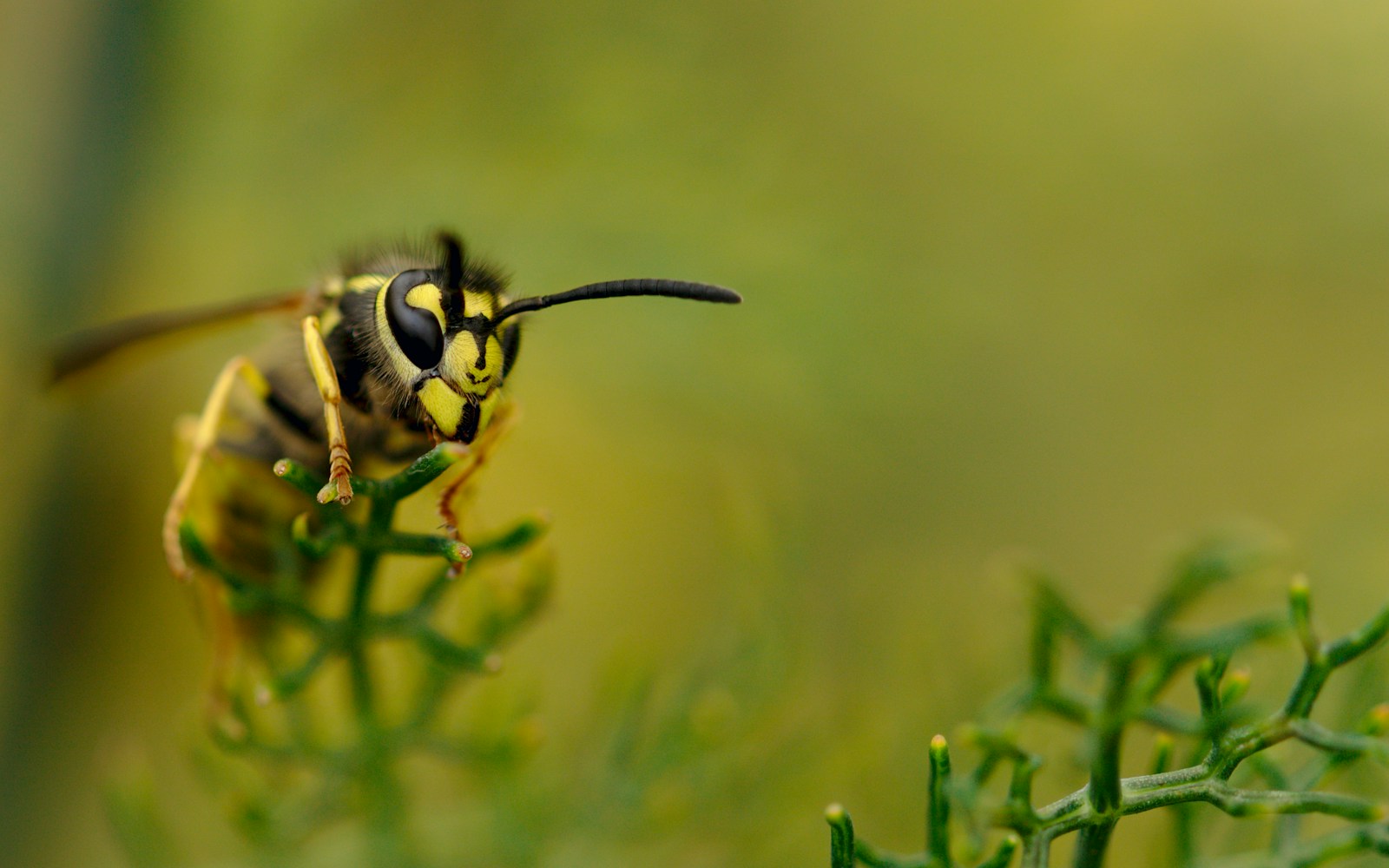
Yellowjackets (Vespula species) are the aggressive scavengers most likely to ruin your picnic. They’re attracted to protein early in the season and sweet foods later in summer. The good news? Most repellent research was conducted on yellowjackets, specifically the western yellowjacket and German yellowjacket [1][6]. These species nest underground or in wall voids, with colonies that can number in the thousands.
Paper wasps (Polistes species) are generally less aggressive and build those familiar umbrella-shaped nests under eaves and porch ceilings. The European paper wasp was also tested in the Zhang study and showed similar repellent responses to yellowjackets.
Hornets, including the European hornet, have larger olfactory systems with more brain regions that process scent information than paper wasps [3]. This expanded olfactory capacity may mean they’re even more sensitive to certain compounds, though direct comparative studies are limited.
What Doesn’t Work: Common Myths Debunked
Let’s address some popular “solutions” that don’t hold up to scrutiny.
Fake wasp nests are widely sold as deterrents based on the theory that wasps are territorial. The problem? There’s no scientific literature supporting this claim [7]. Real wasps frequently build nests in close proximity to each other, and queens have even been found overwintering in abandoned nests of other species. Plus, yellowjackets nest underground, so hanging decoys won’t affect them at all.
Dryer sheets are a popular internet suggestion, but according to David Mizejewski of the National Wildlife Federation, “there is no evidence that dryer sheets repel wasps, because it has never been studied” [8]. Dr. Qing-He Zhang, who led the essential oils research, has even suggested yellowjackets might be attracted to the floral fragrances in some dryer sheet products.
Standard bug spray (DEET, picaridin) works great for mosquitoes but has minimal effect on wasps, as the Belgian laboratory study confirmed [6].
How to Actually Use Essential Oils Effectively
Knowing which oils work is only half the battle. Application method matters significantly.
Spray Method
Mix 10-15 drops of essential oil per 8 ounces of water in a spray bottle. Add a few drops of dish soap to help the oil disperse and stick to surfaces.
The most effective blend based on research: equal parts clove, geranium, and lemongrass oils [1].
Shake thoroughly before each use – oil and water don’t naturally mix. Spray around outdoor dining areas, garbage bins, potential nesting sites under eaves, and anywhere you’ve seen wasp activity.
Reapplication is Crucial
Essential oils are volatile – they evaporate. The Belgian study found that repellent potency was strongly associated with low evaporation rates; once too much oil evaporates, effectiveness drops sharply [6].
Plan to reapply every 2-3 days initially, then weekly once activity decreases. Always reapply immediately after rain.
Cotton Ball Method
Soak cotton balls in undiluted essential oil and place them in small containers or mesh bags around problem areas. This provides a concentrated, longer-lasting scent source. Refresh the oil every 1-2 weeks.
Diffusers
Diffusers on porches or patios can help create an aromatic barrier. The scent not only directly repels wasps but may help mask the food odors that attract them in the first place.
Timing and Location
Apply repellents in early morning or evening when wasps are less active. Avoid spraying on sunny days – essential oils can burn plant foliage in direct sunlight.
Focus on entry points (doors, windows), outdoor eating areas, garbage and recycling bins, and any locations where you’ve found nests in the past. Wasps tend to return to successful nesting sites year after year.
Critical Safety Warnings You Shouldn’t Ignore
Essential oils are “natural,” but that doesn’t mean they’re harmless.
Pet Toxicity is Real
The ASPCA Animal Poison Control Center warns that concentrated essential oils can be dangerous, even fatal, for cats and dogs [9].
Pennyroyal, despite being highly effective against wasps, is particularly dangerous – it’s been linked to seizures and liver failure in pets. Tea tree oil is never safe for cats. Wintergreen contains methyl salicylate, which is toxic to both cats and dogs. Eucalyptus is toxic to cats.
If you have pets, stick to safer options like lemongrass when possible. Use oils only in well-ventilated areas where pets can leave freely. Never apply oils directly to pets, and keep diffusers out of reach to prevent spills.
Cats are especially vulnerable because they lack certain liver enzymes needed to metabolize essential oil compounds [9]. According to veterinary experts, there aren’t any truly safe essential oils for cats – all have potential for toxicity.
For Children
Always dilute essential oils before any skin application. Keep products out of reach. Avoid eucalyptus and thyme oils around young children.
Never Spray Wasps Directly
This can agitate them and dramatically increase your sting risk. Yellowjackets release alarm pheromones when threatened, potentially summoning more wasps to attack.
Essential Oils Don’t Remove Active Nests
If you have an established wasp colony, particularly yellowjackets in the ground or hornets in a wall void, repellents won’t solve the problem. These situations typically require professional pest control.
Beyond Scents: What Actually Works Best
Here’s the part where I tell you stuff you probably don’t want to hear. Essential oils and scent repellents are fine as ONE part of a bigger strategy. But if you think you can just spray some peppermint oil and call it done… that’s not gonna work.
Control the Food Source
Wasps don’t randomly decide to hang around your house. They go where there’s food. If you’ve got sugary drinks, protein (early season), or ripe fruit lying around – you’ll have wasps.
Cover food and drinks outdoors. Clean up spills immediately. Remove fallen fruit from under trees. Seal garbage cans tightly.
Seal Entry Points
If wasps are getting inside your house, find and seal those entry points. Check around windows and doors, foundation cracks, gaps under doors, holes in screens, and anywhere pipes or utility lines enter the building.
This does more than months of spraying essential oils.
Reduce Nesting Sites
Wasps build nests in sheltered spots. Regular inspection and early removal (before colonies get large) is key. Check under eaves, in attics, inside grills, in wall voids, under decks, and in sheds or garages.
Timing Matters
Wasp activity peaks in late summer and early fall when colonies are largest and food becomes scarce. This is when they’re most likely to crash your outdoor events. Be extra vigilant with prevention during this time.
The Bottom Line on Natural Wasp Deterrents
Here’s what the science actually tells us: certain essential oils – particularly clove, lemongrass, spearmint, wintergreen, and geranium – do have genuine, measurable repellent effects against yellowjackets and paper wasps [1][6]. The active compounds (eugenol, menthone, citral, and others) trigger avoidance responses through the wasps’ sensitive olfactory system.
But manage your expectations. These repellents work best for prevention and deterrence, not elimination. They’re most effective when used consistently before wasp problems become established. Once a colony is actively nesting nearby, repellents alone won’t solve the issue.
The most effective approach combines scent-based deterrents with practical prevention: keep food covered, clean up spills immediately, seal garbage cans, remove fallen fruit from under trees, and eliminate potential nesting sites by sealing gaps in siding and screening vents.
Wasps are simply following their biological programming to find food and shelter – reduce those attractants, add some strategic scent barriers, and you’ll make your outdoor space far less appealing to these stinging insects.
Just remember that wasps, annoying as they can be, serve important ecological roles. They’re predators of many agricultural pests and even contribute to pollination. The goal isn’t necessarily extermination – it’s coexistence at a comfortable distance.
Sources
[1] Zhang, Q-H., Schneidmiller, R.G., & Hoover, D.R. (2013). Essential oils and their compositions as spatial repellents for pestiferous social wasps. Pest Management Science, 69(4), 542-552. https://pubmed.ncbi.nlm.nih.gov/23081867/
[2] Wikipedia contributors. (2024). Insect olfaction. Wikipedia, The Free Encyclopedia. https://en.wikipedia.org/wiki/Insect_olfaction
[3] Royal Society Publishing. (2020). Molecular mechanisms of olfactory detection in insects: beyond receptors. Open Biology, 10(10), 200252. https://royalsocietypublishing.org/doi/10.1098/rsob.200252
[4] The Red & Black. Wasps’ odor detection more accurate than dogs’. University of Georgia. https://www.redandblack.com/news/wasps-odor-detection-more-accurate-than-dogs/article_7627ab38-495d-595d-9a4e-9bc7a584929c.html
[5] The School of Aromatic Studies. (2024). Natural Solutions for Keeping Wasps and Yellow Jackets Away. https://aromaticstudies.com/natural-solutions-for-keeping-wasps-and-yellow-jackets-away/
[6] Boevé, J-L., Honraet, K., & Rossel, B. (2014). Screening of Repellents against Vespid Wasps. Insects, 5(1), 272-286. https://pmc.ncbi.nlm.nih.gov/articles/PMC4592629/
[7] Science World/Ask an Entomologist. Do fake wasp nests keep wasps away? https://www.scienceworld.ca/stories/do-fake-wasp-nests-keep-wasps-away/
[8] WUSA9/VERIFY. (2024). Wasps in your mailbox: Will dryer sheets keep them out. https://www.wusa9.com/article/news/verify/no-evidence-that-dryer-sheets-will-keep-wasps-out-of-your-mailbox/65-ac0ef460-be5a-443e-8b30-c521738137b3
[9] ASPCA Animal Poison Control Center. The Essentials of Essential Oils Around Pets. https://www.aspca.org/news/essentials-essential-oils-around-pets
Additional Research Consulted:
University of Maine Cooperative Extension. Hornets, Wasps and Yellowjackets. https://extension.umaine.edu/home-and-garden-ipm/fact-sheets/common-name-listing/hornets-wasps-and-yellowjackets/
Gardening Know How. Do Fruit Trees Attract Wasps: Tips On Keeping Wasps Away From Fruit Trees. https://www.gardeningknowhow.com/edible/fruits/fegen/wasps-in-fruit-trees.htm
Stadler Form. Keep wasps away with essential oils. https://www.stadlerform.com/en/health/aromatherapy/essential-oils-against-wasps-natural-defence-for-a-wasp-free-summer
MDPI. (2024). An Overview of the Mechanisms of Action and Administration Technologies of the Essential Oils Used as Green Insecticides. https://www.mdpi.com/2624-7402/6/2/68
Wiley Online Library. Essential oils and their compositions as spatial repellents for pestiferous social wasps. https://scijournals.onlinelibrary.wiley.com/doi/10.1002/ps.3411