
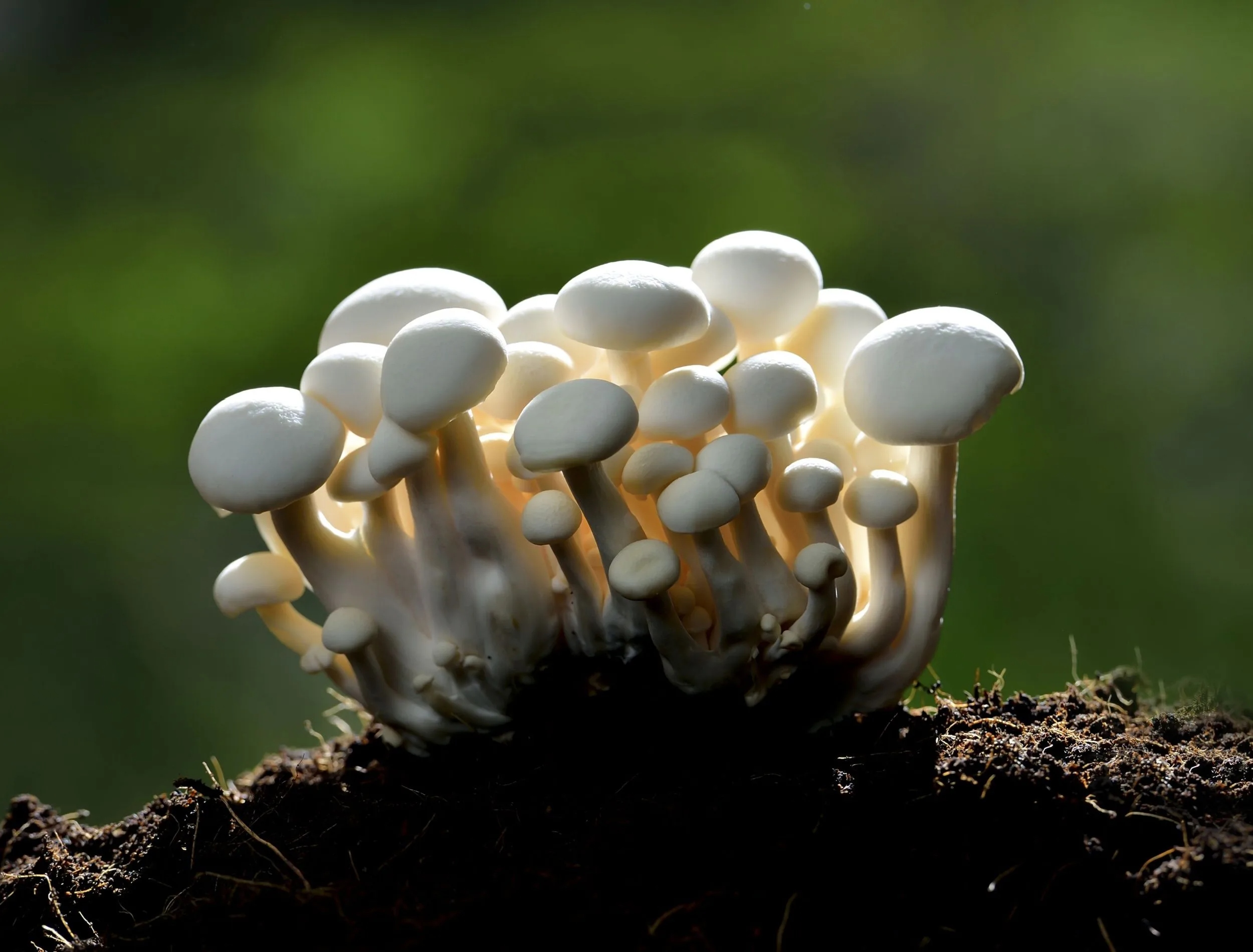
Mushrooms in Garden: What They Really Mean for Your Soil
So here’s something that trips people up constantly – you walk outside after a rainy week and boom, your lawn or garden beds are covered in mushrooms. And everyone’s first reaction is “oh no, I have a problem.”
Except here’s the thing. Most of the time? You don’t. Those mushrooms are basically your soil’s way of telling you it’s doing exactly what healthy soil should do.
I know that sounds backwards. We’re so used to thinking of fungi as bad – mold, disease, stuff that kills plants. But mushrooms in your garden are usually the opposite of a problem. They’re actually a sign things are working right underground.
Let me explain what’s really happening when you see those mushrooms, because once you understand the biology, it completely changes how you think about them.
The Part You Can’t See Is What Actually Matters
First off – and this confused me for years – the mushroom itself isn’t even the organism. It’s just the fruiting body, like an apple on a tree. The actual fungus lives underground year-round as this massive network of thread-like filaments called mycelium.
These networks can be huge. Like there’s one fungus in Oregon (Armillaria ostoyae) that’s over 9 square kilometers and more than 2,000 years old. That’s insane.
The mycelium can spread through your soil for literally years before it ever produces a single mushroom. Then when conditions finally hit just right – usually after rain when it’s not too hot or cold – boom, mushrooms pop up overnight to spread spores. Then they disappear again.
But that underground network? It’s still down there, doing its thing 24/7.
Two Types of Fungi Doing Completely Different Jobs
There are basically two main groups of fungi in your garden and they work in fundamentally different ways.
Saprotrophic fungi are the decomposers. These are the ones breaking down dead stuff – fallen leaves, old mulch, dead roots, buried wood. They produce enzymes that can break down lignin and cellulose, tough compounds that bacteria can’t handle.
Research from Yale found these fungi contribute up to 90% of decomposition activity in woodland ecosystems [1]. They’re converting all that dead organic matter into nutrients your plants can actually use. Without them, we’d literally be buried under mountains of unrotted leaves.
Mycorrhizal fungi are different – they form partnerships with living plant roots. Over 80-90% of plant species do this [2]. The plant gives the fungus sugars from photosynthesis. In return, the fungus extends the plant’s reach way out into the soil for water and nutrients.
University of Florida researchers measured this – mycorrhizal fungal threads grow at rates of 738-1,067 mm per day, extending 10-40 mm for every millimeter of root length [3]. That exponentially increases how much soil volume your plants can access.
The benefits are legit documented. A meta-analysis of 187 studies found mycorrhizal relationships improve plant biomass by 47%, phosphorus uptake by 105%, and nitrogen uptake by 67% [4].
This is the basis of what scientists call the “wood wide web” – these underground networks where nutrients and even chemical signals flow between connected plants. Sounds like science fiction but it’s been demonstrated repeatedly in peer-reviewed research [5].
Reading What Different Mushrooms Actually Mean
Not all mushrooms signal the same thing. Learning to interpret what you’re seeing can genuinely help understand your soil.
The Common Ones You’ll See
Ink caps (Coprinus species) – Those bell-shaped mushrooms that dissolve into black goo? They’re actually bioaccumulators that can extract heavy metals from contaminated soil [6]. Seeing them means active decomposition happening.
Puffballs – Big round mushrooms that release clouds of spores when you step on them. Their presence indicates good organic matter content and active nutrient cycling.
Bird’s nest fungi – These tiny cup-shaped structures speed up mulch decomposition nearly two-fold [7]. If you see them in your mulched beds, your mulch is breaking down properly.
Stinkhorns – Yeah they smell absolutely terrible (to attract flies for spore dispersal), but they’re champion decomposers. The smell goes away in a day or two.
According to the Royal Horticultural Society: “Without the decomposing activities of saprotrophic fungi we would disappear under a mountain of unrotted dead leaves and logs!” [8]
Fairy Rings Are More Complicated
Fairy rings – those circular mushroom patterns that grow outward 6-24 inches per year – tell different stories depending on the type.
Type II rings produce dark green circles of stimulated grass growth. That’s actually nitrogen being released from fungal decomposition activity. Not harmful at all.
Type I rings can create hydrophobic soil layers that cause dead patches. These are the ones that might actually need intervention.
Type III just produces mushrooms without affecting grass either way.
Field mushrooms (Agaricus campestris) strongly indicate well-fertilized, nutrient-rich soil. You find them in pastures and well-amended lawns. They don’t occur in forests at all – they specifically like rich, fertilized conditions [9].
When Mushrooms Actually Signal Problems
Most lawn and garden mushrooms are beneficial or neutral. But a few genuinely warrant concern.
Honey fungus (Armillaria species) is the big one to worry about. When you see honey-colored mushroom clusters at the base of trees in autumn, white fan-shaped mycelium under bark, and black root-like “bootlaces” spreading through soil – that’s honey fungus. This is the most destructive fungal disease in UK gardens according to multiple sources [10].
It attacks living trees and shrubs, can spread up to a meter per year, and may affect plants 30 meters from the original infection. If you suspect this, get an arborist to evaluate.
False parasol (Chlorophyllum molybdites) is different – it’s just a saprotrophic decomposer indicating nothing wrong with your soil. But it’s the most commonly eaten poisonous mushroom in North America [11]. The green spore print distinguishes it from edible lookalikes. If you have curious kids or pets, remove these.
Key distinction: honey fungus indicates an actual plant health problem. False parasol is just a safety hazard in an otherwise healthy garden.
Why Fungicides Won’t Work (Save Your Money)
Let me save you time and money right now – fungicides don’t work against mushroom-producing fungi. Multiple university extension services confirm this.
Virginia Tech Extension states clearly: “One thing that is almost always NOT recommended or warranted for home lawns is a chemical fungicide application. These soil-borne fungi are almost impossible to control with even the most active fungicides.” [12]
The reason is simple. Fungal mycelium can extend several feet below the soil surface. What you’re spraying barely touches it. Oregon State adds another concern: “Fungicides may be ineffective because the fungus mycelium may be several feet below the soil surface.” [13]
Worse, broad-spectrum fungicides harm beneficial mycorrhizal fungi that your plants actually depend on. University of Maryland Extension specifically warns that “over-fertilization and the use of pesticides in a lawn may harm these beneficial fungi, and their loss could make the turfgrass more susceptible to stress, pests, and diseases.” [14]
What You Can Actually Do About Unwanted Mushrooms
If mushrooms bother you aesthetically or you need to remove them for safety, the solutions are straightforward.
For Immediate Removal
Just mow them, rake them, or pick them by hand. Iowa State Extension recommends simply mowing them off or raking and discarding when they appear [15]. They’ll eventually stop emerging when environmental conditions change (usually warmer and drier weather).
For Longer-Term Reduction
You’re managing environmental conditions, not fighting the fungi:
- Water deeply but less frequently, allowing soil to dry between sessions
- Water early morning so grass can dry during the day
- Improve drainage in problem areas
- Remove organic debris like thatch, dead roots, old stumps that fungi feed on
- Increase air circulation by selective pruning
- Core aerate compacted soil in fall
For fairy rings specifically, University of Missouri Extension recommends core aerification to increase air exchange and soil drying [16]. For Type I rings with hydrophobic soil, aeration helps break through the fungal barrier allowing water penetration.
The critical mindset shift: you’re managing conditions, not fighting fungi. When you reduce moisture and organic debris, mushrooms have less reason to fruit. But the mycelium will remain in your soil – and that’s actually fine.
Maybe You Should Be Encouraging Fungi Instead
Here’s a different perspective. The research on mycorrhizal benefits is compelling enough that you might want MORE fungal activity, not less.
Oklahoma State Extension recommends [17]:
- Limiting synthetic fertilizer applications (especially high nitrogen and phosphorus)
- Using organic fertilizers instead
- Practicing low-till or no-till gardening
- Avoiding unnecessary fungicide use
Conventional tillage can decrease mycorrhizal fungal diversity by up to 40% [18]. Leaving land fallow for even one season can reduce fungal abundance by 40%. Cover crops, diverse plantings, and surface mulch all support healthier fungal communities.
Practical approach: apply compost regularly, minimize soil disturbance, keep something growing in beds year-round, resist treating every pest or disease with chemicals that might harm beneficial soil organisms.
How Soil pH Shapes Your Fungal Community
This is one of the most striking findings from soil science research. A landmark study at Rothamsted Research found that fungal growth increased 5-fold as pH decreased from 8.3 to 4.5, while bacterial growth decreased 5-fold in the same range. The result: a 30-fold increase in fungal importance in acidic versus alkaline soils [19].
Fungi exhibit wider optimal pH ranges than bacteria and dominate in undisturbed, slightly acidic soils. Forest soils – typically more acidic – show fungal-to-bacterial ratios around 10:1, while conventionally tilled agricultural soils hover around 0.1-0.3.
If you’re consistently seeing lots of mushroom activity, your soil is likely on the acidic side with good organic matter content. That’s not a problem unless your specific plants need different conditions.
Protecting Kids and Pets Without Harming Your Garden
If you have young children or dogs who put everything in their mouths, daily mushroom checks during wet weather make sense.
VCA Animal Hospitals advice is practical: “It’s not necessary to know the name of every single mushroom species if you avoid them all.” [20]
Check your yard each morning before giving pets access – mushrooms can appear overnight. Remove any you find by hand or with a shovel and dispose of them (not in compost where spores might spread).
If a child or pet ingests an unknown mushroom, contact poison control immediately (ASPCA: 888-426-4435 for pets) [21]. Collect samples in a paper bag and photograph the mushroom and where it grew.
The genuinely dangerous mushrooms – Amanita species (Death Cap, Destroying Angel), Cortinarius, false morels – aren’t super common in maintained lawns, but they can appear in gardens adjacent to wooded areas or in mulched beds.
What Actually Matters When You See Mushrooms
After researching this extensively, here’s what’s important to understand:
Mushrooms appearing in your lawn or garden beds are usually delivering good news. Your soil contains organic matter, biological activity, and the fungal networks that healthy plants depend on. The overwhelming scientific consensus from university extension services is that these fungi deserve appreciation, not elimination.
When intervention makes sense – for safety reasons, or if honey fungus threatens trees – the approach is cultural and mechanical, not chemical. Adjust moisture, remove debris, pick mushrooms as they appear. The mycelium continues its beneficial work underground regardless.
Next time you spot mushrooms after rain, consider what they represent: millions of years of evolved symbiosis, nutrient cycling that feeds your plants, and soil biology doing exactly what it should. That’s not a problem. That’s a garden working properly.
The key is understanding which mushrooms indicate genuine issues (very few) versus which ones are just doing their job in healthy soil (most of them). Focus on the actual problems – poor drainage, excess thatch, compaction – and the mushroom situation usually resolves itself naturally.
And seriously, don’t waste money on fungicides. They don’t work for this, and you might harm the beneficial fungi your garden actually needs.
Sources
[1] Royal Horticultural Society. “Saprotrophic Fungi in Gardens.” https://www.rhs.org.uk/biodiversity/saprotrophic-fungi
[2] University of Florida EDIS. “Biology, Ecology, and Benefits of Arbuscular Mycorrhizal Fungi in Agricultural Ecosystems.” Publication PP383. https://edis.ifas.ufl.edu/publication/PP383
[3] University of Florida EDIS. “Biology, Ecology, and Benefits of Arbuscular Mycorrhizal Fungi.”
[4] Rodale Institute. “Mycorrhizal Fungi: The Colonizers, Mediators, and Protectors of the Ecosystem.” https://rodaleinstitute.org/science/articles/mycorrhizal-fungi/
[5] PNAS. “At the Root of the Wood Wide Web: Self Recognition and Non-Self Incompatibility in Mycorrhizal Networks.” https://pmc.ncbi.nlm.nih.gov/articles/PMC2633692/
[6] New York Botanical Garden. “Shaggy Ink Cap: A Mushroom that Can Clean Up a Mess.” Science Talk, 2015. https://www.nybg.org/blogs/science-talk/2015/07/shaggy-ink-cap/
[7] Gardening Know How. “Bird’s Nest Fungus Control.” https://www.gardeningknowhow.com/ornamental/fungus-lichen/birds-nest-fungus.htm
[8] Royal Horticultural Society. “Saprotrophic Fungi in Gardens.”
[9] Zombie Myco. “Field Mushroom (Agaricus campestris).” https://zombiemyco.com/pages/field-mushroom-agaricus-campestris
[10] Gardening Know How. “What Mushrooms in Garden Beds & Lawns Say About Soil Health.” https://www.gardeningknowhow.com/ornamental/fungus-lichen/what-mushrooms-in-garden-beds-and-lawns-say-about-soil-health
[11] University of Florida EDIS. “The Green-Spore Poison Parasol Mushroom, Chlorophyllum molybdites.” Publication PP324. https://edis.ifas.ufl.edu/publication/PP324
[12] Virginia Tech Extension. “Managing Mushrooms in the Lawn.” https://ext.vt.edu/lawn-garden/turfandgardentips/tips/fairy-ring.html
[13] Oregon State Extension. “Mushrooms can mean healthy soil.” https://extension.oregonstate.edu/news/mushrooms-can-mean-healthy-soil
[14] University of Maryland Extension. “Mushrooms and Slime Molds in Lawns.” https://extension.umd.edu/resource/mushrooms-and-slime-molds-lawns
[15] Iowa State Extension. “How do I get rid of mushrooms in my yard or garden bed?” https://yardandgarden.extension.iastate.edu/faq/how-do-i-get-rid-mushrooms-my-yard-or-garden-bed
[16] Virginia Tech Extension. “Managing Mushrooms in the Lawn.”
[17] Oklahoma State Extension. “Beneficial Fungi in the Landscape.” GROW Gardening Columns, June 2020. https://extension.okstate.edu/programs/gardening/grow-gardening-columns/grow-columns-2020/june-21-2020-beneficial-fungi.html
[18] SPUN. “How to Encourage Healthy Mycorrhizal Networks in Your Own Soil.” https://www.spun.earth/articles/how-to-encourage-healthy-mycorrhizal-networks-in-your-own-soil
[19] NCBI/NIH. “Contrasting Soil pH Effects on Fungal and Bacterial Growth Suggest Functional Redundancy in Carbon Mineralization.” Applied and Environmental Microbiology. https://pmc.ncbi.nlm.nih.gov/articles/PMC2655475/
[20] VCA Animal Hospitals. “Mushroom Toxicity.” https://vcahospitals.com/know-your-pet/mushroom-toxicity
[21] ASPCA. “The Fungus Among Us: Mushroom Toxicosis.” https://www.aspca.org/news/fungus-among-us-mushroom-toxicosis
Additional Research Consulted:
- UC IPM. “Mushrooms and Other Nuisance Fungi in Lawns.” https://ipm.ucanr.edu/home-and-landscape/mushrooms-and-other-nuisance-fungi-in-lawns/
- Sky Nursery. “Mushrooms: A Sign of Healthy Soil.” 2020. https://www.skynursery.com/2020/09/30/mushrooms-a-sign-of-healthy-soil/
- Wikipedia. “Ectomycorrhiza,” “Mycorrhiza,” “Mycorrhizal network”
- Planet Natural. “Fairy Ring Treatment and Control”
- University of Illinois. “Home, Yard & Garden Newsletter”
- Texas A&M AgriLife. “What are those white mushrooms in my yard?”
- Mushroom Appreciation. “Toxic False Parasol Identification”
- MI Gardener. “Growing Garden Mushrooms at Home”
