Fruit Tree Pruning Guide: Best Timing for Each Tree Type
So here’s something that confused me for years when I first started growing fruit trees – everyone says to prune in winter when the tree’s dormant, right? But then you start reading about stone fruits and suddenly it’s all about summer pruning after harvest. What gives?
Turns out there’s actually solid science behind why timing matters so much. And honestly, getting this wrong can literally kill your trees. I learned that the hard way with a cherry tree that got slammed with silver leaf disease after I pruned it in November like an idiot.
The basic deal is this: some fruit trees are way more vulnerable to certain diseases during wet, cool weather. So pruning them when it’s warm and dry – right after you pick the fruit – gives them the best shot at healing up before disease season hits. Other trees don’t have this problem and do better with traditional winter pruning.
Why stone fruits basically demand summer pruning
If you’re growing cherries, plums, apricots, peaches, or nectarines, summer pruning isn’t just a good idea – it’s pretty much essential if you want to avoid some nasty diseases.
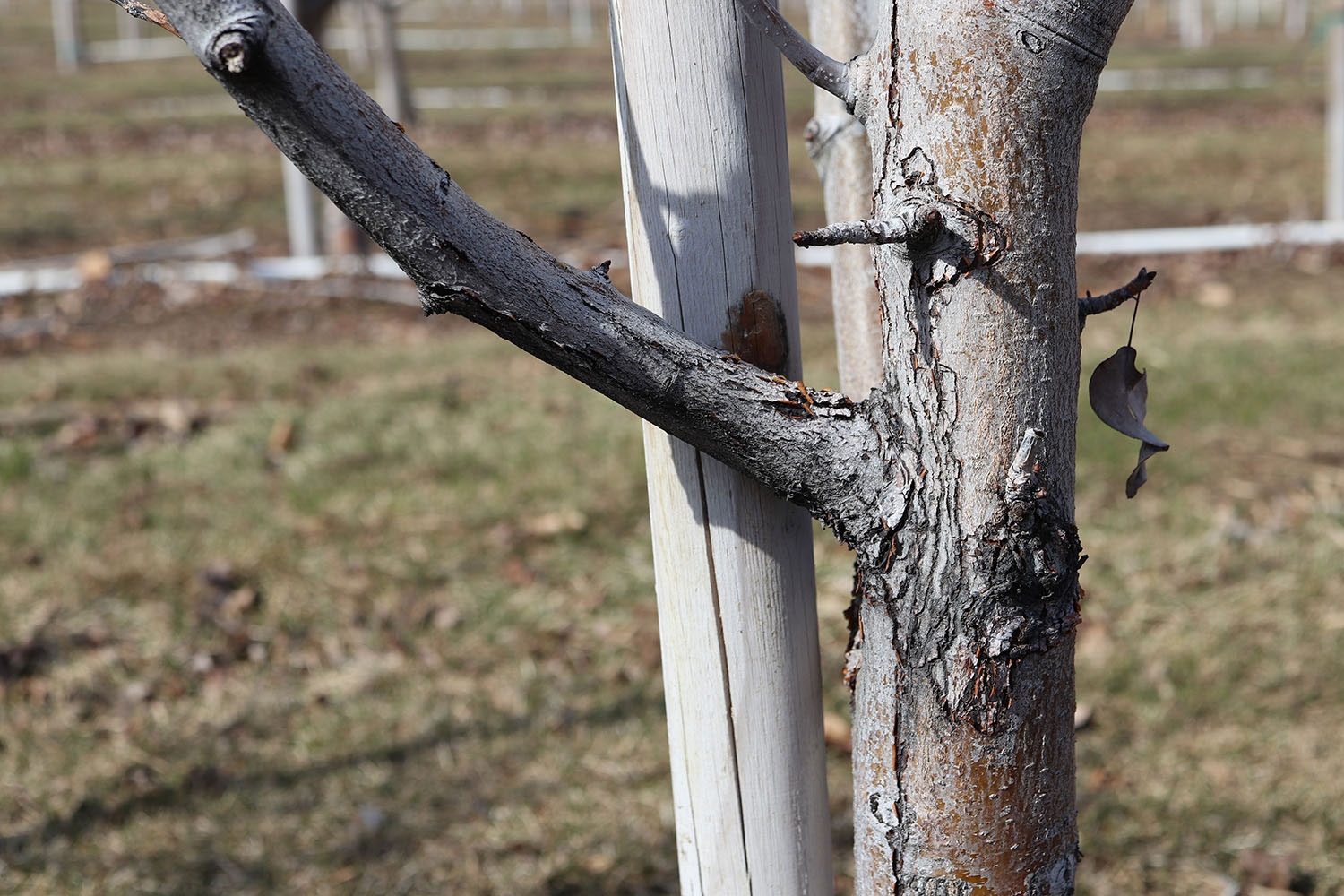
Silver leaf disease is the big one. It’s caused by a fungus called Chondrostereum purpureum that releases its spores mainly from September through May when it’s wet out.[1] The Royal Horticultural Society found that pruning cuts are most vulnerable to infection within the first week after you make them.[1] So if you prune in summer when spores are rare and wounds heal fast, by the time autumn rolls around with all its moisture, your cuts have already sealed themselves up.
Plums get hit especially hard – particularly ‘Victoria’ plums which are like magnets for this disease. Cherries and apricots are also high-risk.[1][2]
Bacterial canker is the other major problem. It’s caused by Pseudomonas syringae and thrives in cool wet conditions. Penn State research showed that this bacteria basically becomes inactive when temperatures stay above 85°F for extended periods.[3] Heading cuts (where you cut partway through a branch) become resistant to infection after about one week in summer, compared to three weeks in winter.[3]
The bacteria overwinter in the margins of cankers and in buds, then multiply and ooze out during wet spring weather.[4] Michigan State University found that managing this disease is all about timing your pruning when bacterial populations are at their lowest – which is summer during hot dry conditions.[4]
Specific timing for each stone fruit
Cherries (both sweet and sour) should be pruned immediately after harvest, usually in July. Penn State Extension specifically recommends sweet cherries “be pruned after they have fruited or in early July.”[5] Pick a day when no rain is expected for at least 36 hours. The RHS says to avoid pruning cherries in winter entirely because of silver leaf risk.[1]
Apricots want July or August pruning during dry weather. This prevents both bacterial canker and another disease called Eutypa dieback.[6] Washington State research found that trees are least susceptible to infection from summer through fall in dry weather.[7]
Plums can be pruned from mid-June onwards once they’re established (more than three years old). The RHS specifically cautions against winter pruning because of silver leaf disease.[8] BBC Gardeners’ World recommends that “established plum trees that are more than three years old can be pruned in summer, from mid-June onwards.”[9]
Peaches and nectarines are a bit more flexible. In eastern regions, late dormant season pruning (late February to March) is still pretty standard. But Illinois Extension notes that “pruning wounds heal more rapidly and with less chance of infection if these trees are pruned just before bloom or during bloom.”[10] California growers often use both dormant and summer pruning.
The key with all peaches is avoiding wet weather and, in colder areas, not pruning before February because of cytospora canker susceptibility.[11] Summer pruning after harvest works great for size control.
What about apples, pears, and citrus?
Not every fruit tree follows the summer pruning rule. Pome fruits and citrus have different needs.
Apples and pears traditionally get their major structural pruning in late winter – February to March – before bud break. Michigan State Extension points out that “pruning during the dormant season stimulates new top growth because more energy is available to the remaining parts of the tree.”[12]
However, Penn State research by Dr. Rich Marini found some interesting stuff about summer pruning. He did three years of experiments pruning ‘Delicious’, ‘Golden Delicious’, and ‘Stayman’ apples in mid-August versus March. Turns out summer pruning didn’t suppress vegetative growth the next year like everyone thought it would – but it did reduce trunk growth, fruit size, and sugar levels compared to dormant pruning.[13]
So for apples and pears, reserve summer pruning for specific purposes: maintaining trained forms like espaliers and cordons, controlling excessive vigor in trees that are growing too aggressively, and improving red fruit color 3-4 weeks before harvest (this is the one case where it really helps).[13]
The fire blight exception
Here’s where things get complicated. If fire blight (Erwinia amylovora) strikes during the growing season, you need to remove infected branches immediately – like, don’t wait for winter. Washington State University research found that a two-week delay in removal increased the amount of material needing removal by sixfold.[14]
Cut 12-18 inches below visible infection into two-year-old or older wood.[14] Ohio State Extension recommends cutting at least 4 inches below visible symptoms on apples, and 12 inches below on pears.[15] Speed really matters with this disease.
But here’s the thing – during dormancy, you can safely remove old fire blight cankers closer to the visible edge since both the tree and the pathogen are inactive.[16] Winter sanitation pruning to remove cankers is actually a key part of fire blight management.[17]
Citrus trees are way more chill about pruning timing. The University of Florida notes that pruning is “usually done after removal of the crop.”[18] In freeze-prone areas, avoid moderate to severe pruning in winter because tender regrowth becomes vulnerable to cold injury. Light maintenance pruning can happen throughout summer into early fall.
Figs prefer late winter to early spring pruning when sap flow is minimal. Light summer pruning (June-August) for essential growth removal is okay but not ideal.
Persimmons should primarily be pruned during dormancy since fruit forms at branch tips – summer pruning removes potential fruit sites you don’t need to lose.[19]
The biology behind wound healing (this part actually matters)
Understanding how trees respond to cuts makes the timing thing make way more sense.
Trees don’t heal wounds like animals do – they compartmentalize them. This process called CODIT (Compartmentalization of Decay in Trees) was developed by USDA researcher Dr. Alex Shigo. Trees wall off damaged tissue using four protective barriers, with the strongest one forming from the cambium along the outermost growth ring at the time of injury.[20]
This is why cutting just outside the branch collar – that slightly swollen tissue at a branch’s base – matters so much. The collar contains the specialized cells that seal wounds effectively.
Mississippi State University research showed that wounds inflicted in spring, summer, and winter close at similar rates, but wounds made in fall close about 20% slower.[21] The really scary part? Fall wounds may not close before pathogens become active in autumn rains. Winter wounds remain basically unhealed until spring arrives – sitting vulnerable for months.[21]
Even though spring wounds heal 3-6 times more area in the first season than summer wounds (because there’s more growing season left), summer wounds still heal well because: the cambium is actively dividing, carbohydrates from photosynthesis are abundant, and warm temperatures optimize cellular metabolism.[21]
Why some trees “bleed” when pruned
Ever notice how birch, maple, walnut, and grape trees ooze sap like crazy if you prune them in late winter? That’s because they develop strong positive root pressure in early spring as soil warms above 45°F. This pushes sap upward; cutting into the xylem releases this pressurized flow.[22]
The bleeding itself isn’t harmful – trees don’t “bleed to death” – but it can attract insects and pathogens.[22] Post-harvest pruning avoids this issue entirely since transpiration-driven flow dominates in summer and root pressure stays low.
Actually doing the pruning (the practical stuff)
Knowing when to prune only helps if you know how. Here’s what actually works.
Making cuts that heal properly
Every pruning cut should fall just outside the branch collar – at an angle equal and opposite to the branch bark ridge at the crotch. This preserves the tree’s wound-sealing apparatus while avoiding stubs.[23]
The two common screwups are: flush cuts (removing the collar entirely, creating unnecessarily large wounds that can’t compartmentalize properly) and stub cuts (leaving too much material, which dies and rots before healing begins).[23]
For branches over 2 inches in diameter, use the three-cut method: first an undercut from below 6-12 inches out, then a top cut slightly further out to drop the branch cleanly, and finally the proper collar cut to remove the stub.
Thinning vs heading cuts
Thinning cuts – removing entire branches at their point of origin – should make up 80-90% of your pruning. They open light channels throughout the tree without triggering the vigorous regrowth that heading cuts produce.[24]
Heading cuts, which remove only part of a branch, have their place for stimulating branching on young trees or stiffening overly long limbs. But overuse creates dense, problematic growth.[24]
Tools you actually need
Quality bypass hand pruners (Felco 2 gets recommended a lot by pros) handle branches up to 1/2 inch. Bypass loppers extend your reach to 2-3 inch diameter wood. A curved-blade pruning saw with 7-8 teeth per inch tackles anything larger.
Tool sanitation is non-negotiable, especially with stone fruits. Seventy percent isopropyl alcohol, applied for 1-2 minutes to cutting surfaces, prevents spreading bacterial and fungal diseases between cuts.[25] At minimum, sanitize between trees. When working with diseased material, sanitize between every cut.
That said, Washington State research found that when removing fire blight infections during dormancy, tool sterilization isn’t necessary since the bacteria are inactive.[14] But during the growing season? Definitely sanitize.
The “3 D’s” priority system
Start with removing all dead, diseased, and damaged wood. Then address: water sprouts (vigorous upright shoots from trunk or branches), suckers (shoots from roots or below the graft union), crossing or rubbing branches (keep whichever is better positioned), and final shaping for light penetration and air circulation.
Critical restraint: never remove more than 25-33% of the canopy in a single season. Excessive pruning stresses trees, triggers explosive water sprout production, can cause root dieback from reduced photosynthesis, and delays fruit production.[26]
Recognizing what needs to go
Water sprouts grow straight up – often at nearly 90 degrees from parent branches – with thin, weak stems and excessive vigor. They produce little quality fruit, create weak attachment points, and block light and air movement. Remove them while small; they snap off easily when under 12 inches.[24]
Suckers emerge from roots or the trunk at or below ground level. On grafted trees, these grow from rootstock rather than the desired variety and will produce different (usually inferior) fruit if allowed to mature.
Branch angles between 45-60 degrees from the trunk are ideal – wide enough for strong attachment, narrow enough for productive growth. Very upright branches (under 40 degrees) prove too vigorous and fruit poorly. V-crotches with narrow acute angles develop included bark and frequently split under fruit loads.[27]
Understanding fruiting wood by species
Apples and pears fruit primarily on spurs – short, stubby growths on two-year-old and older wood that grow very slowly and need good light exposure. Don’t go hacking these off.[28]
Peaches and nectarines fruit only on one-year-old wood, requiring heavy annual pruning to generate new fruiting shoots.[29] This is why their pruning strategy is completely different from apples.
Cherries and plums mostly fruit on spurs but also produce some fruit on one-year-old wood. They’re kind of in between.[5]
Skip the wound sealant – seriously
One of the most persistent myths in fruit tree care is that pruning wounds need sealing. The landmark 1983 study by Shigo and Shortle examining wound dressings over 13 years concluded: “No material prevented decay” and “the individual tree had a greater effect on the wound than the treatments.”[30]
Wound sealants actually cause harm. They: trap moisture against cut surfaces, creating ideal conditions for fungi and bacteria, interfere with the natural compartmentalization process, and sometimes contain petroleum or asphalt compounds harmful to living tissue.[30]
The tree’s own biology, given proper collar cuts and appropriate timing, provides better protection than any topical treatment.
The only legitimate exception involves preventing insect vectors of specific diseases. Oaks pruned during oak wilt season (spring and summer) benefit from latex-based paint applied immediately to deter beetles that spread the pathogen – but this protection is needed only for 2-4 days until the wound surface dries.[30]
What actually matters most (based on what works)
After messing this up enough times to figure it out, here’s what really makes the difference:
For stone fruits – cherries, plums, apricots, and to some extent peaches – post-harvest summer pruning is best practice. It reduces disease risk from silver leaf and bacterial canker while allowing wounds to heal before autumn moisture arrives. This isn’t optional if you want healthy trees long-term.
For pome fruits – apples and pears – dormant pruning remains standard for major structural work. Save summer pruning for trained forms, vigor control, and emergency fire blight removal. Don’t try to do your main structural pruning in summer or your fruit quality will suffer.
For citrus – prune after harvest or in early spring, avoiding winter in freeze-prone regions. They’re pretty forgiving.
Whatever you’re pruning, the fundamentals stay consistent: cut just outside the branch collar, prefer thinning cuts over heading cuts, never remove more than 25-33% of the canopy, sanitize tools between trees (and between cuts when disease is present), and skip the wound sealer entirely.
Step back frequently to assess balance. A moderate annual pruning beats dramatic intervention every few years. And honestly, some trees just aren’t worth overwintering or fighting with – sometimes it’s better to take cuttings or start fresh.
The research backs up what experienced growers figured out through trial and error – timing, technique, and disease prevention make the difference between trees that thrive and trees that barely survive. Get it right and you’ll actually have healthy trees that produce fruit you can eat instead of feeding whatever disease decides to move in.
Sources
[1] Royal Horticultural Society. (2025). “Silver leaf: Symptoms & Control.” Retrieved November 2025. https://www.rhs.org.uk/disease/silver-leaf
[2] Thompson & Morgan. “Silver Leaf Fungus: Garden Pests & Diseases.” https://www.thompson-morgan.com/diseases/silver-leaf-fungus
[3] Spotts, R.A., Wallis, K.M., Serdani, M., & Azarenko, A.N. (2010). “Bacterial canker of sweet cherry in Oregon – Infection of horticultural and natural wounds.” Plant Disease, 94:345-350.
[4] Sundin, G.W., et al. (2016). “Silver leaf of tree fruits.” Michigan State University Extension. https://www.canr.msu.edu/news/silver_leaf_of_tree_fruits
[5] Penn State Extension. (2023). “Pruning and Training Home Fruit Trees to an Open Center.” https://extension.psu.edu/pruning-and-training-home-fruit-trees-to-an-open-center
[6] UC Marin Master Gardeners. “Pruning Persimmon.” University of California Agriculture and Natural Resources. https://ucanr.edu/site/uc-marin-master-gardeners/documents/pruning-persimmon
[7] Washington State University. “Plum, Prune (Fresh): Silver leaf.” Hortsense. https://hortsense.cahnrs.wsu.edu/fact-sheet/plum-prune-fresh-silver-leaf/
[8] Royal Horticultural Society. “How to Prune Plum Trees Safely.” https://www.rhs.org.uk/fruit/plums/pruning
[9] BBC Gardeners’ World Magazine. (2025). “How and when to prune a plum tree.” https://www.gardenersworld.com/how-to/grow-plants/how-to-prune-a-plum-tree/
[10] Illinois Extension. (2024). “Making Pruning Cuts: Fruit Trees for Home Gardens.” https://extension.illinois.edu/fruit-trees/making-pruning-cuts
[11] Penn State Extension. “Stone Fruit Disease – Cytospora Canker.” https://extension.psu.edu/stone-fruit-disease-cytospora-canker
[12] Michigan State University. (2009). “Winter Pruning for Best Results.” CANR. https://www.canr.msu.edu/hrt/uploads/535/78649/Pruning-Concepts-MAC-09.pdf
[13] Marini, R. (2024). “Fruit Tree Pruning – Summer Pruning Cautions.” Penn State Extension. https://extension.psu.edu/fruit-tree-pruning-summer-pruning-cautions
[14] DuPont, T., et al. (2024). “Fire Blight of Apple and Pear.” Washington State University Tree Fruit. https://treefruit.wsu.edu/crop-protection/disease-management/fire-blight/
[15] Ivey, M.L. “Fire Blight of Apples and Pears.” Ohio State University Ohioline. https://ohioline.osu.edu/factsheet/plpath-fru-22-0
[16] Peter, K. (2020). “Apple and Pear Disease – Fire Blight, Dormant Removal of Cankers.” Penn State Extension. https://extension.psu.edu/apple-and-pear-disease-fire-blight-dormant-removal-of-cankers
[17] Pacific Northwest Pest Management Handbooks. (2024). “Fire Blight of Apple and Pear.” https://pnwhandbooks.org/plantdisease/pathogen-articles/common/bacteria-other-prokaryotes/fire-blight-apple-pear
[18] Zekri, M. “Mechanical Pruning of Citrus Trees.” University of Florida IFAS Extension. Publication HS1267. https://edis.ifas.ufl.edu/publication/HS1267
[19] UC Marin Master Gardeners. “Pruning Persimmon.” University of California Agriculture and Natural Resources. https://ucanr.edu/site/uc-marin-master-gardeners/documents/pruning-persimmon
[20] Shigo, A.L. & Marx, H.G. (1977). Compartmentalization of Decay in Trees (CODIT). USDA Agriculture Information Bulletin 405.
[21] Mississippi State University Extension. “Understanding Pruning and Injury Wounds in Fruit Trees.” https://extension.msstate.edu/publications/understanding-pruning-and-injury-wounds-fruit-trees
[22] MOOWY. “Tree Sapping: Why Can Trees Bleed After Pruning?” https://moowy.co.uk/tree-sapping/
[23] Penn State Extension. “Pruning and Training Home Fruit Trees to an Open Center.” https://extension.psu.edu/pruning-and-training-home-fruit-trees-to-an-open-center
[24] Illinois Extension. “Making Pruning Cuts: Fruit Trees for Home Gardens.” https://extension.illinois.edu/fruit-trees/making-pruning-cuts
[25] Peter, K. (2020). “Disease Update: Preventing Apple Fruit Rots and Pruning Blossom-Blasted Stone Fruit Trees.” Penn State Extension. https://extension.psu.edu/disease-update-preventing-apple-fruit-rots-and-pruning-blossom-blasted-stone-fruit-trees
[26] Oklahoma State University Extension. (2017). “Annual Pruning of Fruit Trees.” https://extension.okstate.edu/fact-sheets/annual-pruning-of-fruit-trees.html
[27] Penn State Extension. “Pruning and Training Home Fruit Trees to an Open Center.” https://extension.psu.edu/pruning-and-training-home-fruit-trees-to-an-open-center
[28] Michigan State University Extension. (2024). “Late winter pruning of fruit.” https://www.canr.msu.edu/news/late-winter-pruning-of-fruit
[29] Virginia Tech Extension. “Pruning Peach Trees.” https://www.pubs.ext.vt.edu/content/dam/pubs_ext_vt_edu/422/422-020/SPES-221.pdf
[30] Shigo, A.L. & Shortle, W.C. (1983). “Wound Dressings: Results of Studies Over 13 Years.” Journal of Arboriculture. USDA Forest Service.
