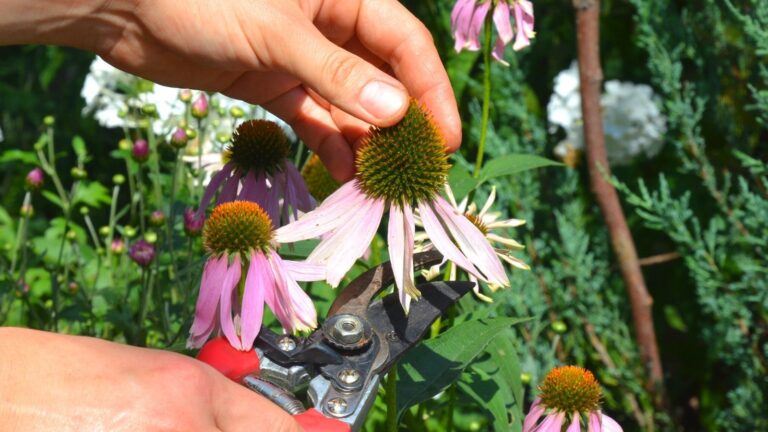
September Transplanting: Fall Perennial Division Guide
Alright so here’s something most people get backwards. Everyone thinks spring is the time to move plants around. You see those perfect garden magazines with people transplanting stuff in April and assume that’s when it’s supposed to happen.
But September? September is actually way better for moving perennials. Like significantly better. And there’s real science behind why this works.
I learned this the hard way after killing a bunch of hostas trying to move them in June because “the ground was soft and it seemed like a good time.” Spoiler: it was not a good time.
The Biology Behind Why Fall Transplanting Works
Here’s what’s happening that makes September so good for this. When you move a plant in fall, the above-ground part is winding down for the season. The leaves are slowing their growth, preparing to go dormant. So the plant isn’t trying to support all that leaf production anymore.
But underground? The roots are still growing like crazy. Research from 2025 actually found that woody roots keep growing during winter even when everything above ground has completely stopped [1]. They maintain what scientists call “a readiness to grow independent of the aboveground parts” [1].
So you’re catching the plant at this perfect moment where it’s not stressed about making leaves, but it’s still actively growing roots. That’s exactly what you want when transplanting – less stress on top, more root development below.
According to University of Illinois Extension, fall-planted perennials develop better root structures that make them more resistant to spring weather, bloom faster, and show better vigor throughout the growing season [2]. The warm soil plus cool air combo is basically ideal for root development.
Temperature Is Everything (And Not What You Think)
One thing people don’t realize – soil temperature and air temperature are totally different in fall. The air might be 55°F but the soil is still holding onto summer warmth at like 65-70°F.
Roots keep growing until ground temps hit about 40-45°F according to West Virginia University Extension [3]. In most zones that doesn’t happen until late November. So September-transplanted perennials get nearly three months of root growth before winter actually stops them [3].
Compare that to spring when you’re working with cold soil that’s just starting to warm up. The plant has to deal with establishing roots AND producing new growth at the same time. Way more stressful.
Penn State Extension found that the sweet spot for root growth is between 50-60°F soil temperature [4]. September delivers exactly that in most of the country.
Timing It Right Based on Your Zone
The critical rule everyone mentions is transplant 4-6 weeks before your first hard frost [5]. That window gives plants enough time to grow stabilizing roots before the ground freezes.
Different extension services recommend slightly different windows but they all agree on the basic principle – you need at least a month, preferably six weeks.
By zone here’s what that means:
- Zones 3-4: Early September, because frost can hit by late September
- Zones 5-6: Mid-September through early October
- Zones 7-8: Late September into October, even early November
- Zones 9-10: October through November works
Virginia Tech Extension notes that elevation and microclimates can create a 30-day planting difference even within the same county [6]. So if your garden has different sun exposures or sits on a hill, factor that in.
Which Plants Actually Want Fall Division
Not everything likes being moved in fall. The general rule from extension services: divide spring and summer bloomers in fall, divide fall bloomers in spring [4]. This way you’re not interrupting their bloom cycle.
Peonies – The Classic Fall Division
By September peonies have died back and stored enough food in their tuberous roots for next year’s growth [7]. Iowa State specifically recommends September transplanting.
Each division needs 3-5 eyes (those pink buds on the roots) and decent root mass. Plant them 1-2 inches below the soil surface – this is crucial. Too deep is the #1 reason peonies don’t bloom [7].
Don’t freak out if they don’t bloom for a year or two after division. That’s normal peony behavior, not a sign you screwed up.
Hostas – Shade Garden Workhorses
These things can double in size within a few seasons and often develop dead centers that look terrible [8]. Each division should have 3-5 shoots and generous roots. Plant with growing tips visible at soil surface.
Hostas are pretty forgiving about division. September gives them months to establish before they have to deal with summer heat.
Bearded Iris
These actually prefer summer division about 6 weeks after flowering, but September works in many climates [9]. The key thing with iris – plant rhizomes at or just below the soil surface with the top third exposed to sun. They need that sun exposure to bloom well.
Each division needs one fan of leaves, a chunk of rhizome, and several roots attached.
Daylilies
Super forgiving about division timing. They’ll tolerate being moved almost any time but fall gives them months to establish [10]. Cut foliage back to 6-8 inches and make sure each division has 2-3 fans of leaves with roots.
I’ve divided daylilies in the middle of summer when I shouldn’t have and they still survived. Fall is just way easier on them.
Coral Bells (Heuchera)
Benefit from division every 3-4 years to prevent woody centers [11]. Early fall is second-best after spring. Complete transplanting at least 30 days before first frost.
Phlox
Garden phlox can be divided late summer through September [12]. Each division needs at least 3 shoots with roots. Cut back foliage by one-third before moving.
What NOT to Divide in Fall
Ornamental grasses are tricky. Cool-season grasses like feather reed grass can be divided in early fall, but warm-season grasses like miscanthus should wait until late spring when new growth appears [13]. Dividing warm-season grasses in fall often results in winter kill, especially in cold climates.
Also skip fall division for asters and mums – they’re actively blooming. Wait until spring for those.
The Actual Process (What Works vs What You’ll See in Articles)
I’ve killed more plants learning this than I care to admit. Here’s what actually matters:
One to Two Days Before
Water deeply. This hydrates the plant tissue and softens soil for easier digging. Clemson Extension emphasizes this as critical for reducing transplant shock [14].
Prepare the New Site First
Dig the hole twice as wide as the root ball but no deeper. Mix compost into the surrounding soil, not just the planting hole. This encourages roots to spread outward rather than circling.
Test drainage by filling the hole with water – it should drain within a few hours. If it doesn’t, you’ve got a drainage problem to fix before planting anything.
Trim the Plant
Cut back stems and foliage to about 6 inches. This sounds wrong but it reduces water loss through transpiration while the damaged root system recovers [15]. You’re reducing the plant’s workload during recovery.
Dig Wide and Deep
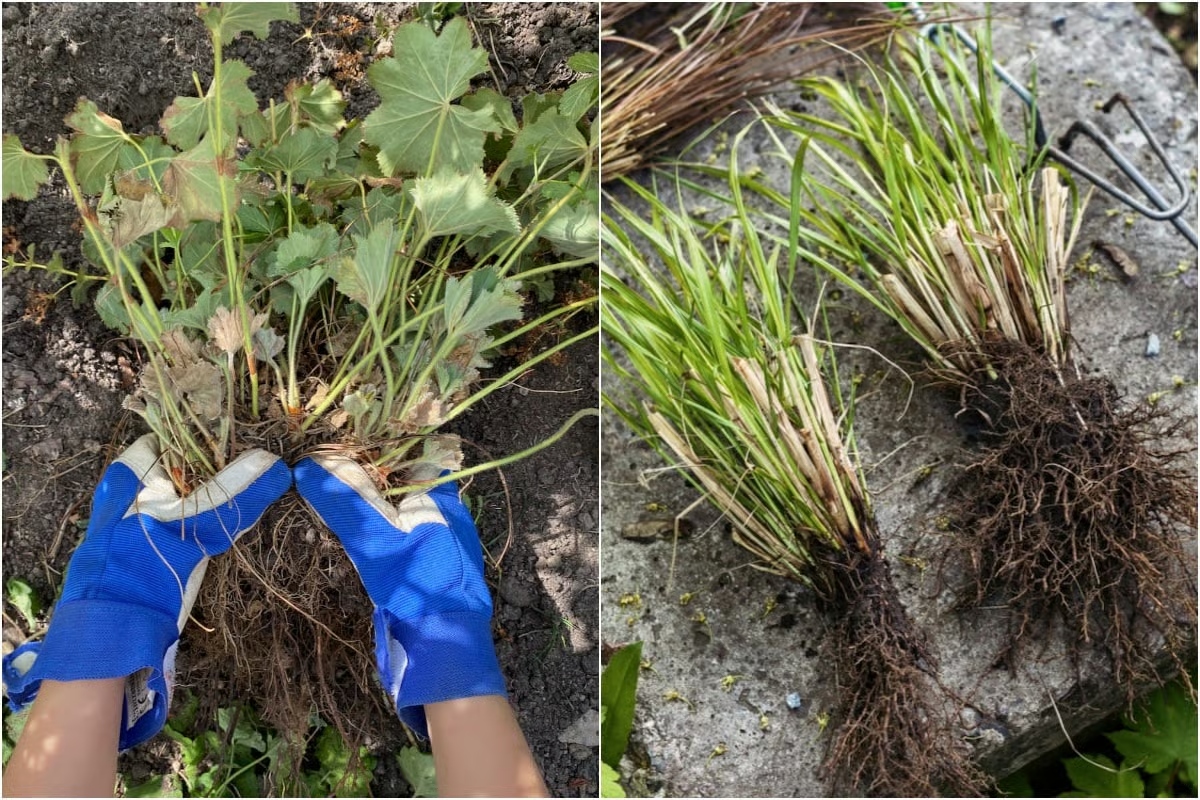
Start 6 inches from the plant base – at the drip line for larger perennials. Cut straight down on all sides with a sharp spade. A spading fork works better for fibrous root systems.
Undercut the roots and lift the whole clump. You’re gonna damage some roots no matter what – that’s unavoidable. Just try to minimize it.
Divide If Needed
For spreading root systems like asters you can often pull sections apart by hand. Clumping plants like hostas and daylilies may need a sharp knife through the crown.
For really dense clumps, the two-fork method works great – stick two digging forks back-to-back in the center and pry apart [4].
Always toss dead center sections. Keep only the young, healthy outer portions.
Replant Immediately
Position at exactly the same depth it grew before. Too deep invites rot, too shallow exposes roots to drying. Backfill with native soil, firm gently to eliminate air pockets, water thoroughly.
Skip fertilizer. Fall transplants don’t need it and forcing new growth before winter actually increases cold damage risk [2].
After Transplanting Care (Where Most People Screw Up)
The two weeks following transplant determine success or failure. Maintain consistent soil moisture – not soggy, not dry. Check every other day initially.
Water right up until the ground freezes [16]. This is important and something people forget about.
Apply 3-4 inches of mulch around transplanted perennials to conserve moisture and moderate soil temperature [17]. Keep mulch pulled back 2-3 inches from stems to prevent rot.
For late-season transplants Ohio State Extension recommends increasing mulch depth to 8-10 inches before winter [18].
About That Wilting and Leaf Drop
Don’t panic if plants look terrible for a few weeks. Wilting, yellowing leaves, dropped foliage – all normal transplant shock responses. Most plants recover within 2-3 weeks with proper care [19].
If wilting persists beyond this despite adequate watering, something else is wrong. Could be too deep, could be drainage issues, could be you didn’t get enough roots.
Do not fertilize fall transplants. I know you want to give them a boost but nitrogen encourages leaf growth that won’t survive winter. Wait until following spring [17].
Common Mistakes That Kill Transplants
After watching people (including myself) do this wrong repeatedly, certain errors show up constantly:
Transplanting too late – waiting until October in zone 5 is asking for failure. Mark your calendar for early-mid September and don’t procrastinate.
Insufficient watering after transplant – new transplants without established roots need more water than established plants. The wilting isn’t asking for less water, it’s signaling damaged roots can’t supply water fast enough.
Planting too deep – kills more perennials than any disease. Crown tissue buried in soil rots over winter. When unsure, err on the side of too shallow.
Rough handling of root balls – every damaged root hair reduces the plant’s water uptake ability. Move plants gently, keep roots moist throughout, never let them dry in sun while you prep the hole.
Fertilizing at transplant time – nitrogen forces leaf growth when the plant should focus energy on roots. This increases winter damage risk [2].
Transplanting fall-blooming plants in fall – asters, mums, goldenrods should be moved in spring. Fall division interrupts their bloom cycle and doesn’t allow adequate establishment time.
Detailed Guide for Specific Plants
Let me get into the specifics for some common perennials because they each have their quirks.
Hostas – Shade Garden Champions
Hostas are probably the most forgiving thing you’ll ever divide. I’ve literally hacked them apart with a rusty shovel and they still thrived.
That said, doing it right makes a difference. Wait until the foliage starts yellowing in September. Dig up the whole clump – these things can get massive so you might need help. Each division should have at least 3-5 eyes (the pointy growth buds) with roots attached.
The dead woody center that develops in old hostas? Toss it. Keep only the vigorous outer portions. Plant divisions at the same depth, water well, mulch. They’ll look sad for a bit but by next spring you’ll have full plants.
Some varieties like ‘Sum and Substance’ get so big you can get 10+ divisions from one mature clump. That’s a lot of free hostas.
Daylilies – Nearly Indestructible
Daylilies will forgive almost any abuse. I’ve divided them in July (don’t do this) and they still made it.
For September division, cut the foliage back to 6-8 inches first. This makes handling easier and reduces water loss. Dig around the clump about 8-10 inches from the center, get under it, lift the whole thing.
You can often pull fans apart by hand. If the clump is really old and tough, use a sharp spade to cut through. Each division needs 2-3 fans of leaves minimum with roots attached.
Interesting thing about daylilies – the more you divide them, the more they bloom. Overcrowded clumps produce fewer flowers. Dividing every 4-5 years keeps them flowering heavily.
Plant at the same depth as before. The crown should be about an inch below the soil surface. Water well, mulch, done.
Peonies – Worth the Wait
Peonies are fussy about being moved but September is when it works. The key thing everyone messes up – planting depth.
Dig up the whole root clump carefully. You’ll see these pink or white buds (eyes) on the crown. Each division needs 3-5 eyes minimum and a good chunk of root attached to each eye.
Here’s the critical part: plant with eyes 1-2 inches below the soil surface. Not 4 inches. Not at ground level. 1-2 inches [7]. Too deep and they won’t bloom for years. Too shallow and they can heave out of the ground in winter.
After planting, peonies often sulk for 1-2 years before blooming normally. This is just how they are. Be patient. Once established they’ll bloom for decades.
Iris – The Rhizome Weirdos
Bearded iris are strange because they want their rhizomes exposed to sun. This goes against everything you know about planting.
Divide them about 6-8 weeks after flowering (July-August ideally) but September works too if you’re in zones 6-7 or warmer. Dig up the clump and you’ll see these thick rhizomes growing horizontally.
Cut them into sections. Each division needs one fan of leaves, a piece of rhizome about 3-4 inches long, and some roots. Discard any soft or rotted sections.
When replanting, position the rhizome at or just below the soil surface with the top third exposed to sun. The fan of leaves should face the direction you want the plant to grow (they expand that way).
Plant them shallow – this is important. Too deep and they rot or don’t bloom. Water after planting but then keep them on the dry side. Iris hate soggy soil.
Garden Phlox – Disease-Prone but Worth It
Phlox needs division every 3-4 years because the centers die out and they get crowded. Crowded phlox gets powdery mildew like crazy.
Divide in September after flowering. Each division needs 3-5 stems with roots. Cut foliage back by one-third to reduce stress.
Plant divisions 2-3 feet apart with good air circulation – this helps prevent powdery mildew. Mulch but don’t let mulch touch the stems.
Phlox appreciates decent soil so work some compost in when planting. They’re heavier feeders than most perennials.
Astilbe – Moisture Lovers
Astilbe forms dense woody crowns that get harder to divide as they age. September works well for these shade garden favorites.
Dig up the clump and use a sharp knife or saw (seriously, old astilbes are tough) to cut through the crown. Each division needs several eyes with roots.
The key with astilbe is moisture. They hate drying out. Plant in consistently moist soil, mulch well, water religiously the first few weeks. If they dry out during establishment they’ll struggle.
Space divisions 18-24 inches apart. They fill in fast in good conditions.
Black-Eyed Susans – Tough as Nails
Rudbeckia species divide easily in fall. These spread by rhizomes so you can get tons of divisions from one mature clump.
Just dig them up and pull apart sections. Each needs a few stems with roots. These are so tough you can basically throw them in the ground and they’ll grow.
That said, they appreciate full sun and decent drainage. Plant 12-18 inches apart. Water the first few weeks then they’re pretty drought tolerant once established.
Plants to Avoid Dividing
Some perennials genuinely resent root disturbance. According to Penn State these include butterfly weed (Asclepias), false indigo (Baptisia), balloon flower, baby’s breath, gas plant, monkshood, and Russian sage [4].
These develop deep taproots or fragile root systems that rarely survive division. If you must move them, transplant the entire root ball without dividing.
Oriental poppies also hate being disturbed. Same with lupines – that deep taproot doesn’t appreciate division.
What to Do When Things Go Wrong
Because they will. I’ve been gardening for years and still occasionally kill stuff.
The Plant Looks Dead After Moving
Give it time. Some perennials, especially ficus species, drop all their leaves after moving then come back fine. Wait until the following spring before declaring it dead.
Keep the soil consistently moist but not waterlogged. Don’t fertilize. Just maintain conditions and see what happens.
Leaves Keep Dropping After a Month
If leaf drop continues beyond 3-4 weeks, something’s wrong. Usually it’s one of these:
Not enough light – Most common issue. Move to a brighter location or accept that the plant may struggle.
Watering problems – Could be too much or too little. Stick your finger in the soil. If it’s bone dry 2 inches down, you’re underwatering. If it’s constantly soggy, you’re overwatering or have drainage issues.
Planted too deep – If the crown is buried, carefully excavate around it and raise it up. Better to fix this now than lose the plant.
Cold damage – If you transplanted late and then got an early frost, some leaf damage is inevitable. Cut off the damaged parts and hope the crown survived.
The Plant Isn’t Growing Next Spring
Sometimes divisions take a full year before showing vigorous growth, especially if they were small divisions. Peonies commonly do this – skip a year or two of blooming while they rebuild.
If there’s no growth at all by late May, scratch the stem near the base. Green underneath means it’s alive, just slow. Brown and dry means it’s dead.
Pests Show Up
Moving plants can stress them enough that pests attack. Aphids, slugs, and spider mites are common on stressed transplants.
For aphids, blast them with water or use insecticidal soap. For slugs, set out beer traps or use iron phosphate bait. For spider mites, increase watering and use insecticidal soap.
The best defense is keeping the plant as healthy as possible during the transition. Stressed plants are pest magnets.
Real Talk About What Actually Matters
September transplanting works because of basic plant biology – active roots plus dormant shoots equals minimal stress. Every major university extension service confirms this.
The key is timing. Work backwards from your average first frost date, allow at least 4-6 weeks for root establishment, complete all transplanting before soil cools below 45°F.
Water consistently until freeze-up, mulch generously in late fall, resist fertilizing until spring.
Your spring garden bursting with vigorous, well-established perennials will thank you for the effort.
Sources
[1] Marchand, L.J. et al. University of Antwerp. Study published in Nature Ecology and Evolution, 2025. Reported by myScience. https://www.myscience.org/en/news/2025/roots_keep_growing_in_winter-2025-wsl
[2] University of Illinois Extension. “Establishing Perennials in Early Fall.” Extension News Releases. https://extension.illinois.edu/news-releases/establishing-perennials-early-fall
[3] West Virginia University Extension. “Which is Best: Fall Planting or Spring Planting.” https://extension.wvu.edu/lawn-gardening-pests/gardening/garden-management/which-is-best-fall-planting-or-spring-planting
[4] Penn State Extension. “Dividing Perennials.” https://extension.psu.edu/dividing-perennials
[5] University of Minnesota Extension via Ask Extension. “Dividing Perennials.” https://ask.extension.org/kb/faq.php?id=900145
[6] Virginia Tech Extension. “Virginia Hardiness Zones.” Publication 426-331. https://www.pubs.ext.vt.edu/426/426-331/426-331.html
[7] Iowa State University Extension. “Transplanting and Dividing Peonies.” https://yardandgarden.extension.iastate.edu/how-to/transplanting-and-dividing-peonies
[8] Piedmont Master Gardeners. “Propagating Hostas and Other Perennials by Division.” https://piedmontmastergardeners.org/propagating-hostas-and-other-perennials-by-division/
[9] Iowa State University Extension. “Transplanting and Dividing Iris.” https://yardandgarden.extension.iastate.edu/how-to/transplanting-and-dividing-iris
[10] University of Georgia Extension. “Daylilies.” https://newswire.caes.uga.edu/story/4521/daylilies.html
[11] NC State Extension. “Heuchera.” Plant Toolbox. https://plants.ces.ncsu.edu/plants/heuchera/
[12] University of Minnesota Extension. “Tall Garden Phlox.” https://extension.umn.edu/flowers/tall-garden-phlox
[13] Colorado State Extension. “Dividing Ornamental Grasses.” PlantTalk Colorado 1068. https://planttalk.colostate.edu/topics/annuals-perennials/1068-dividing-ornamental-grasses/
[14] Clemson Home & Garden Information Center. “Dividing Perennials.” Factsheet HGIC 1150. https://hgic.clemson.edu/factsheet/dividing-perennials/
[15] Gardening With Sharon. “How to Successfully Move a Perennial.” https://gardeningwithsharon.com/growing-perennials/how-to-successfully-move-a-perennial/
[16] Utah State University Extension. Goodspeed, J. “Fall’s a Good Time to Move Perennials.” https://extension.usu.edu/yardandgarden/research/falls-a-good-time-to-move-perennials
[17] Missouri Botanical Garden. “September/October: A Good Time for Perennial Gardening.” https://ipm.missouri.edu/meg/2018/9/perennials/
[18] Ohio State University Extension. Buckeye Yard & Garden Line (BYGL). “Dividing and Transplanting Perennials in the Fall.” https://bygl.osu.edu/node/589
[19] Epic Gardening. Estep, E. “17 Perennials You Can Transplant in Fall.” https://www.epicgardening.com/transplant-fall-perennials/