Spring-Flowering Bulbs to Plant in Fall: Complete Guide
So here’s the thing about fall-planted spring bulbs. Every gardening blog makes it sound super simple – just stick bulbs in the ground, wait til spring, boom flowers. And yeah, that’s the basic idea. But there’s actually a lot more to it if you want them to come back year after year and not just be sad one-season wonders.
I’ve been planting spring bulbs for probably 10+ years now and honestly the first few years were rough. Tulips that bloomed once then disappeared. Daffodils that came up with leaves but no flowers. Bulbs that just rotted in the ground. Classic mistakes.
But after screwing it up enough times and actually reading the research (not just Pinterest advice), I figured out what actually matters. And it turns out there’s real science behind why fall planting works, why some bulbs need specific conditions, and why so many people’s tulips fail after year one.
This is gonna be long because there’s a lot to cover. But if you’re tired of buying bulbs every fall that don’t perform, or you want bulbs that naturalize and multiply instead of disappearing, keep reading.
Why Fall Planting Actually Matters (The Science Part)
Before we get into which bulbs to plant, you gotta understand why we plant them in fall at all. Because it’s not just tradition – there’s real biology happening.
Spring-flowering bulbs need what’s called vernalization. That’s basically a fancy word for “they need to get cold for a specific amount of time or they won’t flower.” It’s not optional.[1]
Here’s what happens: when bulbs sit in soil at temperatures between 35-48°F for 12-16 weeks, specific genes get activated that tell the bulb “okay, it’s time to make flowers.”[2] Without that cold period, the bulb might grow leaves but you get no flowers. That’s called “blindness” and it’s super frustrating.
The cold does other stuff too. It breaks down starches in the bulb into sugars that act like natural antifreeze protecting the cells. And it triggers root growth – bulbs actually grow extensive root systems in fall before the ground freezes completely.[3]
Different bulbs need different amounts of cold though. Tulips are the pickiest – they want 13-20 weeks minimum.[1] Daffodils need about 12-15 weeks. Crocuses are similar. This is why you can’t just plant them in spring and expect results.
There’s this peer-reviewed study that identified like 14,000 different genes that get turned on or off during vernalization.[2] It’s way more complex than just “bulb gets cold, bulb makes flowers.” The biochemistry is actually really intricate.
The Timing Thing Everyone Gets Wrong
The universal advice is “plant spring bulbs in fall” which is technically true but way too vague. Because the specific timing depends on where you live and what you’re planting.
General rule I follow: plant when soil temperature drops to 50-60°F.[4] Not air temperature – soil temperature. You can test this with a cheap soil thermometer or just wait til a few weeks after your area’s first light frost.
For most regions this means:
- Northern areas (Zones 3-4): Mid-September to mid-October
- Mid regions (Zones 5-6): October to early November
- Warmer areas (Zones 7-8): Late October through November
- Really warm areas (Zones 9+): You need to pre-chill bulbs (more on this later)
There’s one exception – tulips. The Royal Horticultural Society specifically recommends planting tulips in November, deliberately later than other bulbs.[5] This reduces their susceptibility to a fungal disease called tulip fire. So I plant my daffodils and crocuses in September/October, but wait til November for tulips.
Planting too early in warm soil causes problems. Bulbs might sprout too soon, they’re more vulnerable to disease, and you’re wasting that vernalization time. Planting too late doesn’t give roots enough time to establish before the ground freezes hard. They’ll grow in spring but be weaker.
I learned this the hard way – one year I waited til December because I procrastinated. The bulbs that came up were really short and spindly. Timing actually matters.
The 2-3x Depth Rule (That’s Actually Validated By Research)
So everyone says plant bulbs at “two to three times their height” which sounds like one of those made-up garden myths. But multiple university extension services and the Royal Horticultural Society all confirm this is legit.[6][7]
Here’s what that looks like in practice:
- Large bulbs (tulips, daffodils, hyacinths): 6-8 inches deep
- Medium bulbs (large crocuses, small daffodils): 4-5 inches deep
- Small bulbs (species crocuses, grape hyacinths, snowdrops): 3-4 inches deep
- Really tiny stuff (scilla, chionodoxa): 2-3 inches deep
Colorado State Extension actually recommends going even deeper – up to 4x the bulb height – for extra protection and better perennialization.[8] Which brings up something important: deeper planting helps bulbs come back year after year.
I plant my tulips at 8 inches now instead of the 6 inches I used to do. The deeper ones definitely rebloom better. It’s more work digging but worth it.
Soil Type Matters Too
If you have sandy light soil, plant 1-2 inches deeper than standard recommendations because water drains fast and temp fluctuates more.[9] If you have heavy clay, go 1-2 inches shallower or the bulbs can rot from sitting in moisture.
Pointy end goes up. But honestly if you’re not sure which end is which, plant it sideways – the shoot will figure it out and curve upward. It just takes a few extra days to emerge.
The Drainage Thing Is Actually Critical
Every source I read emphasized this and it’s probably the single most important factor: drainage.
Spring-flowering bulbs originally come from places like the Mediterranean or Central Asia where summers are dry. They evolved to sit dormant underground during hot dry periods. What they absolutely cannot handle is sitting in waterlogged soil.[10]
Never plant bulbs where water pools after rain. Just don’t. They will rot.
The ideal soil drains well but holds some moisture. If you have heavy clay, you gotta amend it. I mix in compost, peat moss, or aged manure to the top 12-18 inches before planting. Some people add coarse sand or perlite but honestly compost works better because it improves drainage AND adds nutrients.
For really bad drainage situations you can plant on mounds or raised beds. Or just choose the few bulbs that tolerate moisture better (certain daffodils can handle damp conditions).
pH should be between 6.0-7.0.[10] Most bulbs aren’t super picky but way outside this range and they’ll struggle. I test mine every few years with cheap strips from the garden center.
Breaking Down Each Type of Bulb (The Real Talk Version)
Let’s go through the common spring bulbs because they’re definitely not all the same. Some are easy and reliable, some are beautiful but need replacement, some are borderline invasive.
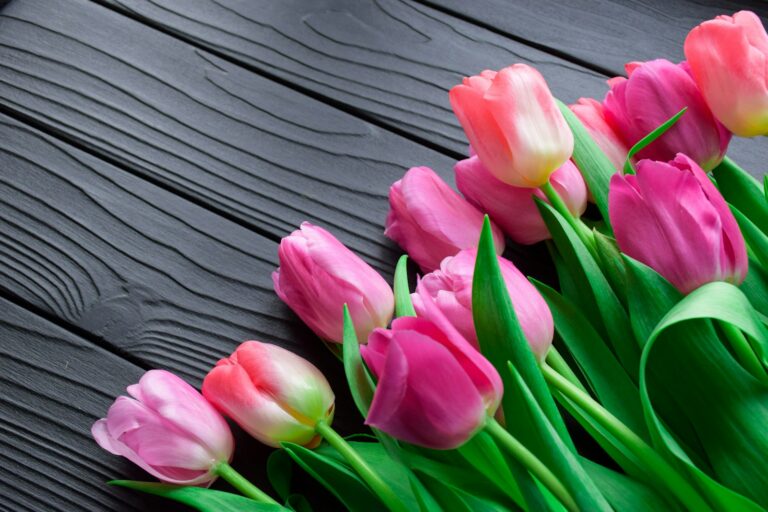
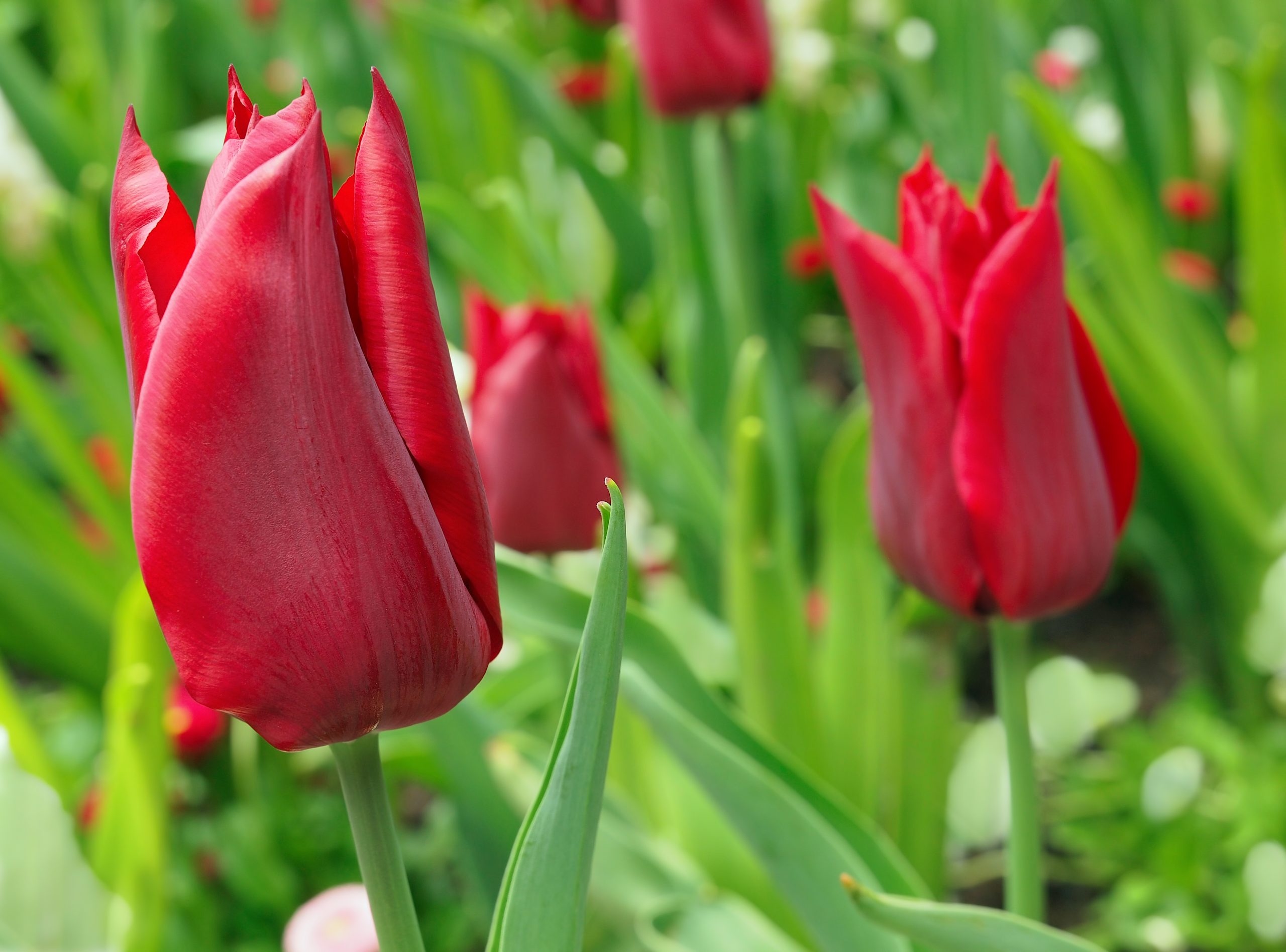
Tulips – Gorgeous But Usually Temporary
Tulips are probably the most popular spring bulb and honestly I get it – the color range is insane, they’re dramatic, they bloom at the perfect time. But here’s what most people don’t tell you: most hybrid tulips are basically annuals.
Standard border tulips will bloom really well for maybe 3-5 years, then they fade out.[11] A lot of gardeners (including me for years) thought they were doing something wrong when tulips didn’t come back. Nope, that’s just how most tulips work.
If you want tulips that actually perennialize, you need:
- Darwin hybrids (these are the reliable rebloomers)
- Emperor tulips (Fosteriana types)
- Species tulips like Tulipa clusiana, T. saxatilis, T. sprengeri
Those species tulips are smaller but they naturalize and multiply. I have a patch of lady tulips (T. clusiana) that’s been going for like 7 years now.
The deer problem: Tulips are NOT deer resistant. Deer actively seek them out and will mow down every single bloom.[12] If you have deer, either cage your tulips or plant them mixed with daffodils (which deer hate).
Squirrels and voles also love tulip bulbs. I’ve had squirrels watch me plant and then dig them up the same day. You gotta cover new plantings with chicken wire if this is an issue.
One safety thing – handling tulip bulbs can cause skin allergies in some people. Wear gloves if you’re planting a lot of them.[13]
Daffodils – The Reliable Workhorses
If I could only plant one type of bulb it would be daffodils. They’re basically the opposite of tulips in terms of maintenance.
Daffodils are deer resistant, rabbit resistant, rodent resistant – basically nothing eats them because they contain an alkaloid called lycorine that’s toxic to mammals.[14] This makes them perfect for planting around tulips as protection.
They naturalize excellently. I planted 50 daffodil bulbs maybe 8 years ago and now I probably have 150+. They just multiply on their own with zero effort from me.
They’re also way more cold hardy than tulips (Zones 3-9) and tolerate a wider range of conditions. You can plant them under deciduous trees, in partial shade, in full sun, whatever. They’re not picky.
Biggest mistake people make: cutting the foliage too early. Those leaves need to stay on for at least 6 weeks after flowering – that’s when they’re manufacturing food to store for next year’s bloom. I know they look messy as they die back but cutting them early means no flowers next year.
I plant mine in September, earlier than other bulbs, to give them time for really good root development. Earlier planting = better blooms.
Crocuses – Tiny But Tough
Crocuses are technically corms not true bulbs but we care for them the same way. They’re some of the earliest bloomers – often coming up in February or March while there’s still snow around.
Dutch hybrid crocuses (Crocus vernus) are the big showy ones you see everywhere. These are good for naturalizing in lawns. Species crocuses like C. tommasinianus are smaller but they multiply even faster and bloom earlier.
Crocuses are deer resistant but here’s the catch: squirrels love to dig up the corms. Like they’ll excavate every single one. The fix is covering plantings with chicken wire or hardware cloth and removing it in spring before foliage emerges.[15]
One cool thing about crocuses – they’re great for providing early nectar when barely anything else is blooming. Bees go crazy for them.
They handle lawn mowing okay if you wait til foliage yellows (usually by May). I have some naturalized in lawn and just don’t mow those spots til late May.
Hyacinths – Beautiful But Handle With Gloves
Hyacinths are amazing for fragrance – like you can smell them from across the yard. But they contain calcium oxalate crystals that can irritate skin, so wear gloves when handling them.[16]
The good news is those same compounds make them highly deer resistant. Deer won’t touch them.
Hyacinths naturalize moderately but the flower size usually decreases after that first spectacular year. First year you get these huge dense spikes, then years 2-3+ they’re more relaxed and smaller. Still nice though.
You can get “prepared” hyacinths that have been pre-chilled for forcing indoors. These need only 8-10 weeks of cold instead of the usual 12-15 weeks.[1]
The flower heads are heavy so staking might be needed especially in windy spots. I use those little circular plant supports.
Grape Hyacinths – Easy But Aggressive
Grape hyacinths (Muscari) are super reliable and deer resistant. They also naturalize so aggressively they can become invasive.[17]
These spread by both offsets and seeds. If you don’t deadhead them they’ll seed everywhere. I made this mistake and now I have grape hyacinths in parts of my yard I definitely didn’t plant them.
The solution is cutting off flower heads before they set seed. Or just embrace them – they make a really nice carpet of blue in spring and early pollinators like them.
One weird thing: the foliage often emerges in fall and stays green all winter. Some people find this messy looking. I kind of like it but fair warning.
They’re really low-maintenance though. Plant once, they’ll come back forever whether you want them to or not.
Alliums – Great for Deer but Ugly Foliage
Ornamental onions (Allium) are highly deer resistant because they smell and taste like onions. Makes sense.[18]
They bloom late spring to early summer (May-June) which is nice because it bridges the gap between early spring bulbs and summer perennials. The dried seedheads are really architectural and look cool even after flowering.
But here’s the problem nobody mentions: the foliage dies back right as the flowers are blooming. So you have these gorgeous purple globes on top and nasty yellowing leaves at the bottom. It looks terrible.
The fix is planting alliums among perennials that will cover the dying foliage. I plant mine with catmint, lady’s mantle, or daylilies that leaf out and hide the mess.
Note that alliums are toxic to dogs and cats.[19] The bulbs especially. Keep pets away.
Snowdrops – Best Planted “In the Green”
Snowdrops (Galanthus) are among the absolute earliest spring flowers – sometimes blooming in January-February depending where you live.
Here’s something most advice doesn’t mention: snowdrops are better planted “in the green” – meaning while still in leaf after flowering – rather than as dry bulbs.[20] Dry bulbs have a really high failure rate. So if you can find them sold as growing plants in spring, grab them. They establish way better.
They’re highly deer resistant (contain toxic lycorine like daffodils) and they naturalize slowly into drifts over years.
Snowdrops prefer part shade and humus-rich soil that stays somewhat moist. They’re one of the few bulbs that doesn’t want dry conditions – they actually don’t like sandy soil.[20] More of a woodland plant.
Once established they pretty much take care of themselves.
Other Bulbs Worth Mentioning
Scilla (Siberian Squill): Super cold hardy (Zones 2-8), naturalizes excellently, deer resistant. The bright blue flowers are really intense. Can get invasive in some regions so check local guidelines.[21]
Fritillaria: Two main types. Crown Imperial (F. imperialis) is really showy but fussy – needs perfect drainage and rich soil. It smells skunky which deters animals. Snake’s Head Fritillary (F. meleagris) is way easier and actually likes damp conditions most bulbs hate.[22]
Both are deer resistant. The bulbs are fragile and have a hollow center – if you’re not sure which way is up, plant them tilted at an angle.
The Warm Climate Problem (And How to Deal With It)
If you live in Zones 8-10, you face a fundamental challenge: not enough natural cold.
Bulbs need those 12-16 weeks at 35-48°F. If your winters don’t get cold enough, you have to pre-chill bulbs in your refrigerator before planting.[23]
Here’s how long different bulbs need:
- Tulips: 10-14 weeks minimum
- Daffodils: 16 weeks
- Hyacinths: 12-15 weeks
- Crocuses: 15 weeks
- Grape hyacinths: 12-15 weeks
Store them in the crisper drawer in ventilated bags. This is critical: do not store near ripening fruit. Apples, bananas, etc. give off ethylene gas that damages the flower embryo inside the bulb.[1]
Plant immediately after removing from cold storage. Don’t let them warm up and sit around.
Some bulbs don’t need pre-chilling even in warm climates:
- Daffodils (Mediterranean origin, handle warmth)
- Dutch iris
- Anemones
- Freesias
- Ranunculus
- Alliums
- Species tulips (better than hybrids in warm zones)
If you’re in Zones 9-11 along the Gulf Coast or in central/south Florida, even pre-chilled spring bulbs might perform poorly. You might want to just grow different plants.[24]
Troubleshooting Common Problems
Bulbs That Don’t Flower (Blind Bulbs)
This is the most common complaint and there are multiple causes:
Premature foliage removal: Cut leaves too early and you’ve removed the plant’s food factory. Leaves need 6+ weeks after flowering to yellow naturally.
Insufficient chilling: In warm climates, pre-chill wasn’t long enough.
Natural decline: Most hybrid tulips decline after 3-5 years. Not your fault.
Overcrowding: When bulbs multiply they compete for resources. Divide congested clumps every 3-4 years.
Shallow planting: Bulbs planted too shallow are exposed to temp fluctuations and can’t store enough energy.
Not enough sun: Bulbs need at least 6 hours of sun. Less than that and they can’t make enough food.
Bulbs That Rot
Almost always caused by poor drainage or planting in waterlogged soil.[25] Fungal pathogens like Fusarium love wet conditions.
You’ll see wilting, soft mushy bulbs, brown lesions. By the time you notice it’s usually too late for that bulb.
Prevention is everything:
- Choose well-drained sites
- Amend heavy clay before planting
- Don’t plant in warm soil (above 60°F)
- Inspect bulbs before planting – discard any with soft spots or mold
Infected bulbs should be thrown away not composted. The pathogens persist.
Animal Damage
Squirrels: Watch you plant and dig up fresh bulbs. Cover with chicken wire or ½-inch hardware cloth. Remove in spring before shoots emerge. Don’t use bone meal as fertilizer – attracts rodents.[15]
Voles: Make underground tunnels to access bulbs. Hardware cloth cages around bulbs work but are time-consuming. Easier to plant resistant bulbs (daffodils, alliums).
Deer: Love tulips, ignore daffodils. If you have deer either plant resistant types or use daffodils as a protective ring around tulips.[12]
Tulip Fire Disease
Fungal disease (Botrytis tulipae) causes brown spots on leaves, distorted growth, fuzzy gray mold on flowers and leaves.[26] Wet spring weather and dense plantings favor it.
No chemical controls available for home gardeners. Prevention:
- Don’t plant tulips in same spot for at least 3 years
- Space bulbs with good air circulation
- Remove affected plants immediately (destroy, don’t compost)
This is one reason why tulips are better as annuals in some situations.
Container Planting and the Lasagna Method
Bulbs work great in containers which lets you move them into prime viewing spots when blooming.
Use containers at least twice as deep as the bulbs with drainage holes. Plant at same depth as ground planting but space more densely – about one bulb-width apart.[27]
The “lasagna” or layering technique creates spectacular displays. You plant different bulbs at different depths in the same container:
- Bottom layer: Largest, latest-blooming bulbs (late tulips, late daffodils)
- Middle layer: Medium bulbs, mid-season bloomers
- Top layer: Smallest, earliest bulbs (crocuses, grape hyacinths)
The shoots from lower layers grow around bulbs above them. A 24-inch pot can hold like 50 tulips, 30 large daffodils, or 100 minor bulbs.[27]
Critical winter protection: Containers freeze way colder than ground. In Zones 5-6, store in cold frame, bury pots in ground, or wrap with insulation. Colder zones need storage in unheated garage or cold cellar at 35-45°F.[28]
Container bulbs need temps cold enough for vernalization but can’t freeze solid.
Companion Planting to Hide Dying Foliage
The requirement to leave foliage for 6+ weeks creates an aesthetic problem. Yellowing leaves are ugly.
Strategic companion planting solves this. Choose perennials that leaf out later and have dense foliage:
Great companions:
- Hostas (dense foliage emerges as bulbs finish)
- Daylilies (similar foliage to daffodils, disguises dying leaves)
- Catmint (Nepeta) – silvery foliage, deer resistant
- Coral bells (Heuchera) – colorful leaves, deer resistant
- Brunnera ‘Jack Frost’ – silver heart-shaped leaves
- Lady’s mantle – scalloped leaves complement late tulips
- Helleborus (Lenten rose) – blooms with early bulbs, evergreen foliage
Position companions 3-6 inches from bulbs so emerging growth draws the eye away from yellowing foliage.
What Actually Matters Most
After years of planting spring bulbs, here’s what I’ve figured out really matters:
- Timing – Plant when soil temp drops to 50-60°F, not when it’s convenient
- Depth – Follow the 2-3x rule, deeper for better perennialization
- Drainage – Cannot be overstated. Wet soil = rot
- Realistic expectations – Most tulips are temp bloomers, daffodils are forever
- Pest protection – Deer and squirrels are real problems that need real solutions
- Leave foliage alone – 6+ weeks after flowering, no exceptions
For low-maintenance long-term displays, daffodils are unbeatable. Deer resistant, naturalizing, cold hardy, reliable. If you want variety, add crocuses (early bloom), alliums (late bloom), and maybe some Darwin hybrid tulips if you’re willing to replant them every few years.
The single biggest mistake most gardeners make is removing foliage too early. Those yellowing leaves aren’t just unsightly – they’re essential for next year’s bloom. Plant companions to hide them or just embrace the messiness for a few weeks.
Skip the bulbs with no evidence (most of the “heirloom” varieties are just hyped-up marketing). Focus on proven performers. Plant deep, ensure drainage, protect from animals, and be patient. In a few years you’ll have drifts of spring color that basically take care of themselves.
Sources
[1] Iowa State University Extension. How to Force Spring-Flowering Bulbs Indoors. https://yardandgarden.extension.iastate.edu/how-to/how-force-spring-flowering-bulbs-indoors
[2] BMC Plant Biology. (2020). Crosstalk in the darkness: bulb vernalization activates meristem transition via circadian rhythm and photoperiodic pathway. https://bmcplantbiol.biomedcentral.com/articles/10.1186/s12870-020-2269-x
[3] South Dakota State University Extension. Spring-Flowering Bulb Basics.
[4] Rutgers NJAES. FS1220: Spring Flowering Bulbs. https://njaes.rutgers.edu/fs1220/
[5] Royal Horticultural Society. Tulip Planting Guide. https://www.rhs.org.uk/
[6] Colorado State University Extension. Fall Bulb Planting.
[7] Royal Horticultural Society. Bulb Planting Depths.
[8] Colorado State University Extension. How to Squirrel-Proof Your Bulbs. https://extension.colostate.edu/resource/how-to-squirrel-proof-your-bulbs/
[9] University of Minnesota Extension. Planting depth adjustments for soil type.
[10] Rutgers NJAES. FS1220: Spring Flowering Bulbs. https://njaes.rutgers.edu/fs1220/
[11] HD Landscaping. Tulips And Their Ideal Climate: Growing Guide. https://hdlandscapinginc.com/blog/tulips-ideal-climate-growing-guide/
[12] Michigan State University Extension. Smart gardening with deer: Deer-resistant bulbs to plant in fall. https://www.canr.msu.edu/news/smart-gardening-with-deer-deer-resistant-bulbs-to-plant-in-fall
[13] Amsterdam Tulip Museum. Do Tulips Need A Cold Period To Bloom? https://amsterdamtulipmuseum.com/blogs/tulip-facts/why-do-tulips-need-a-cold-period
[14] University of New Hampshire Extension. How can I keep wildlife from eating my new bulbs? https://extension.unh.edu/blog/2018/10/how-can-i-keep-wildlife-eating-my-new-bulbs
[15] Iowa State University Extension. How can I keep squirrels from digging up newly planted tulip bulbs? https://yardandgarden.extension.iastate.edu/faq/how-can-i-keep-squirrels-digging-newly-planted-tulip-bulbs
[16] The Practical Planter. Plants that Repel Spiders. https://thepracticalplanter.com/indoor-plants-that-repel-spiders/
[17] Mud & Bloom. How to plant a spring bulb lasagne. https://www.mudandbloom.com/blog/how-to-plant-a-bulb-lasagne
[18] Michigan State University Extension. Deer-resistant bulbs.
[19] Pet Poison Helpline. Plants Toxic to Pets.
[20] Royal Horticultural Society. Snowdrop Growing Guide.
[21] Pennsylvania Extension. Invasive Plant Information.
[22] Royal Horticultural Society. Fritillaria Growing Guide.
[23] Iowa State University Extension. How to Force Spring-Flowering Bulbs Indoors.
[24] Colorblends. Warm Climate Bulb Growing.
[25] Iowa State University Extension. Bulb Rot. https://hortnews.extension.iastate.edu/2003/5-9-2003/bulbrot.html
[26] Royal Horticultural Society. Tulip Fire: Causes & Control. https://www.rhs.org.uk/disease/tulip-fire
[27] Mud & Bloom. How to plant a spring bulb lasagne. https://www.mudandbloom.com/blog/how-to-plant-a-bulb-lasagne
[28] Iowa State University Extension. Container Storage Requirements.
Additional Research Consulted:
- University of Connecticut Home & Garden Education Center. Watch for Bulb Diseases. https://homegarden.cahnr.uconn.edu/2024/04/11/watch-for-bulb-diseases/
- Michigan State University Extension. Planting bulbs, lasagna style. https://www.canr.msu.edu/news/planting-bulbs-lasagna-style
- Royal Horticultural Society. Complete Bulb Growing Guides
- Penn State Extension. Spring Bulb Care and Maintenance
For current information specific to your region, check your local extension service or native plant society.