
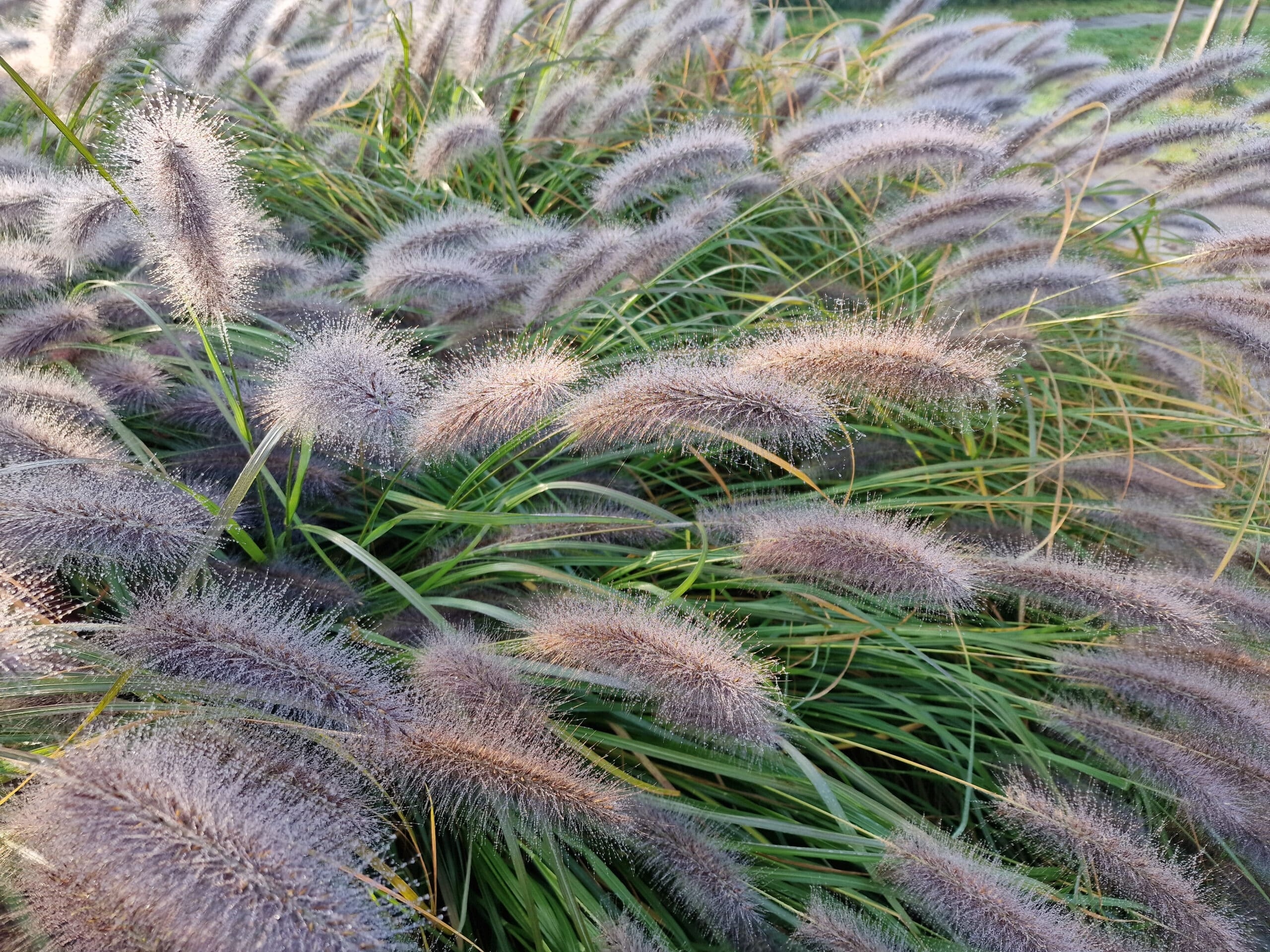
Ornamental Grasses for Fall Color: What Actually Works
Okay so I need to rant about ornamental grasses for a minute because there’s so much bad info out there. I spent like three years growing this huge bed of miscanthus after reading how amazing it would look in fall. You know what color it turned? Beige. Like boring tan-beige. Not the fiery orange-red the catalog photos showed.
Turns out I bought the wrong variety and nobody bothered mentioning that not all miscanthus cultivars are the same. Some grasses legitimately put on an incredible fall show – vibrant reds and oranges and deep burgundy that rivals any maple tree. Others just kinda fade to tan and that’s it.
The thing is most articles about ornamental grasses list like 15 different species and act like they’re all equally good for fall color. They’re not. After growing way too many varieties myself and actually reading the research on how grass physiology works (because apparently that’s what I do now), I’ve figured out which ones deliver and which ones are overhyped.
This is gonna be pretty long because there’s genuinely a lot to explain. But if you’re planning to add grasses to your garden and want ones that actually look amazing from September through winter, this’ll save you from making the mistakes I made.
The Science Part (I Promise This Matters)
Before jumping into specific plants I gotta explain why grasses change color because it affects which ones you should buy.
So grasses go through this thing called senescence which is basically them shutting down for winter in a controlled way. When days get shorter and temps drop, warm-season grasses stop producing chlorophyll – that’s the green pigment. As the green breaks down you start seeing other pigments that were there all along but hidden.[1]
There’s basically three types of pigments that determine what colors you get:
Carotenoids are yellow and orange. They’re always in the leaves but you can’t see them until the green fades. This is what gives you golds and ambers.
Anthocyanins are different – these red and purple pigments get manufactured by the plant specifically in fall when conditions are right. You need sunny days, cool nights around 40-50°F, and high sugar levels in the leaves.[2] Not every grass species makes anthocyanins which is why some turn brilliant red while others just go yellowish-tan.
Tannins give you brown tones – the nice bronze and copper shades.
Weather makes a huge difference. Best fall color happens with warm sunny days followed by cool (not freezing) nights.[3] Rainy gray autumns give muted colors. Early hard freeze shuts down the whole process before colors fully develop.
Here’s what’s cool about grasses vs trees though. Trees form this abscission layer that makes leaves drop off. Grasses don’t do that – the foliage dies back but stays attached all winter. So you get these dried architectural forms that hold their color (even if faded) until spring. A maple drops everything by November but your ornamental grass keeps its structure through February.
Native Prairie Grasses That Are Actually Worth Growing
Little Bluestem is Probably the Best One
If you can only plant one grass for fall color get Schizachyrium scoparium. Like seriously. The Perennial Plant Association made it their 2022 plant of the year so I’m not the only one who thinks this.[4]
It’s native all over North America, forms nice clumps 2-4 feet tall, has this blue-green summer color that’s already pretty. Then fall happens and oh man. The way botanists describe it sounds almost poetic – “an ever-changing kaleidoscope of gray-green, blue, pink, purple, copper, mahogany, red, and orange tones.”[5] Which sounds like marketing BS but actually no, that’s what it does.
I’ve grown three different cultivars:
‘Standing Ovation’ goes orange-red and the stems are super sturdy so they don’t flop over in snow. This was specifically bred to fix the flopping problem that regular little bluestem can have.
‘Blue Heaven’ turns this rich burgundy-red by October and holds that color all winter. The summer blue is really pronounced too.
‘Blaze’ starts orange in September then deepens to reddish-purple as temps drop. The color progression is really dramatic.
All of them get these silvery-white seed plumes that look amazing when winter light hits them.
Hardy zones 3-9 so it works for most of the country. Grows best in full sun and well-drained soil, actually prefers lean crappy soil – rich soil makes it floppy.[6] Perfect for those problem spots where nothing else grows well.
One thing researchers figured out – little bluestem supports way more wildlife than you’d expect. Female bumblebees overwinter at the base of the clumps and it’s a host plant for several skipper butterfly species.[7] So you’re getting fall color plus helping native insects which is cool.
Switchgrass Has So Many Options It’s Kinda Overwhelming
Panicum virgatum used to dominate the tallgrass prairie. Modern cultivars range from compact 3-footers to massive 8-foot plants with fall colors from gold to deep burgundy depending what you pick.[8]
For red tones, ‘Shenandoah’ is really good. This German cultivar starts turning burgundy-red in late JUNE which is insanely early. By fall it’s deep wine-red. Got some fancy Royal Horticultural Society award.[9]
‘Heavy Metal’ is different – metallic steel-blue foliage all summer that goes to rich amber and gold in fall. Really vertical and architectural looking.
‘Northwind’ was the 2014 perennial plant of the year, has the most upright form of any switchgrass. Olive-green leaves turn tawny gold and the stems never need staking.[10]
Switchgrass tolerates an insane range of conditions. Dry sandy soil? Fine. Wet boggy areas? Also fine. The roots go 5-6 feet deep so once it’s established it basically never needs water.[11] Hardy zones 4-9, some to zone 3.
Big Bluestem If You Have Room For It
Andropogon gerardii – sometimes called “King of the Prairie” because it used to be everywhere across the Midwest.[12] This is big, like 4-8 feet depending on moisture, with these distinctive three-branched seed heads that look like turkey feet.
Blue-green summer foliage gets reddish-bronze tones with lavender highlights in fall, fades to amber and copper through winter. Nice color progression.
Best for larger landscapes because it spreads through short rhizomes. Needs full sun, don’t plant in rich soil or it flops. Hardy 4-9.
Supports numerous skipper butterflies and provides cover for ground-nesting birds.[13] Good for wildlife.
Asian Grasses (With Some Important Warnings)
Miscanthus – It’s Complicated
Miscanthus sinensis has been grown for forever with tons of named cultivars. For fall color specifically, ‘Purpurascens’ (flame grass) is the one you want. The summer foliage is medium-green, gets reddish tinges before going brilliant orange-red in September, then deepens to burgundy by winter.[14]
Most other miscanthus cultivars just turn golden-yellow to tan which is fine but not dramatic.
The graceful arching form of ‘Gracillimus’ and ‘Morning Light’ made them super popular. ‘Adagio’ is a dwarf one that only gets 3-4 feet and flowers reliably even in colder zones.[15] Hardy 4-9, some cultivars to zone 5.
Now here’s where it gets messy. Miscanthus sinensis is listed as invasive in a bunch of eastern and midwestern states because the seeds spread by wind and travel really far.[16] Research at Chicago Botanic Garden found that cultivars everyone thought were sterile actually produce viable seeds. So this is a problem.
If you want miscanthus without being part of the invasive species problem, get sterile or reduced-fertility cultivars:
- ‘Scout’ from University of Georgia
- My Fair Maiden™ ‘NCMS1’ from NC State
- Bandwidth™ ‘NCMS2B’ from NC State[17]
These were specifically bred to fix the invasiveness issue. The hybrid Miscanthus × giganteus is totally sterile but it grows 8-12 feet which is way too big for most yards.
Pink Muhly Grass For That Instagram Moment
For pure spectacle Muhlenbergia capillaris is hard to beat when it blooms in October. Native to eastern North America, forms neat clumps 2-3 feet tall with fine dark green leaves. Then fall hits and it produces these massive airy pink to pinkish-red flower plumes that hover above the foliage like clouds of cotton candy.[18]
Each bloom cluster gets 12-18 inches long and lasts for weeks before fading to tan. When evening sun hits it the effect is legitimately magical.
Unlike most ornamental grasses pink muhly actually prefers dry rocky or sandy soil. Handles drought, heat, humidity, salt, air pollution – basically everything.[19] Native to pine barrens and similar harsh spots. Hardy 5-9 but winter wetness kills it more than cold does up north.
‘White Cloud’ has white flowers instead of pink, blooms slightly later, shows resistance to tar spot disease.[20] Both colors support songbirds and butterflies and beneficial insects.
Feather Reed Grass For Cold Climates
Calamagrostis × acutiflora ‘Karl Foerster’ is one of the most planted ornamental grasses in North America for good reason. Was 2001 perennial plant of the year. This cool-season grass has exceptional vertical form with flower stems hitting 5-6 feet above the 2-3 foot leaves.[21]
Plumes come out pinkish-purple in early summer, go through maroon and bronze, then hold tan upright form all winter. Really architectural.
What makes ‘Karl Foerster’ great for northern gardens is it’s hardy to zone 3 and it’s sterile – produces no viable seeds so can’t become invasive.[22] One of the few ornamental grasses that does well in heavy clay soil which would rot most others.[23]
Fall foliage goes golden-tan in cold climates but might stay green in milder areas. Not the most dramatic fall color but the reliability makes up for it.
If you have more shade try Calamagrostis brachytricha (Korean feather reed grass) – unusual for grasses because it tolerates partial shade. Blooms later, August through December, with big feathery pink-tinted plumes that go cream.[24]
Fountain Grass But Watch Out For The Species
Pennisetum alopecuroides (Chinese fountain grass) makes the classic arching form with bottlebrush flowers. ‘Hameln’ forms compact 2-3 foot mounds with white plumes. ‘Burgundy Bunny’ adds red leaf colors. ‘Little Bunny’ stays tiny at 12-18 inches.[25]
Fall color is mostly golden-yellow leaves with tan plumes that last til late fall before falling apart. Pretty but not as dramatic as native grasses. Hardy 5-9 though not super reliable in zone 5 without protection.[26]
Important warning – the related species Pennisetum setaceum (African fountain grass) that gets sold as an annual with purple or red leaves is highly invasive in warm climates. It’s a noxious weed in Hawaii and California rates it as a moderate threat.[27] If you’re in a mild-winter area stick with P. alopecuroides cultivars.
How to Actually Grow These (The Stuff That Matters)
Planting Basics
Spring planting is best for warm-season grasses which is most of what we’re talking about here. Wait til soil temps hit 60°F before planting.[28] Fall planting works for cool-season grasses like feather reed grass but you gotta finish 6-8 weeks before frost hits.
Most grasses tolerate various soils but they’re happiest in well-drained garden loam with decent organic matter.[29] Biggest mistake people make is planting too deep – put them at the same depth they were in the container, not deeper.
Water deeply during establishment, like 1 inch per week for first 4-6 weeks. Once they’re established most barely need water except during serious drought.
Taking Care of Them Through the Year
Leave grasses standing all winter. This isn’t just about looks – the dried foliage insulates the crown from cold damage, gives food and shelter for wildlife, and honestly looks really cool when it catches snow or frost.[30]
Cut them back late winter to early spring before new growth starts. Chop stems to 4-6 inches above ground with hand pruners or loppers or hedge shears. Tying the clump with twine before cutting makes cleanup way easier. Wear long sleeves because those dried blades are sharp as hell.
Most grasses need hardly any fertilizer. Like a light sprinkle of 10-10-10 in spring, maybe 1/4 to 1/2 cup per plant, that’s it.[31] Too much nitrogen makes weak floppy stems and more disease problems. Native prairie grasses evolved in low-fertility soils and honestly thrive on neglect.
Divide clumps every 3-5 years when the center starts dying out. Warm-season grasses divide in late spring when growth starts, cool-season types divide in early fall.[32]
What Works Where
Not every grass performs the same everywhere which is annoying but important to know:
Cold climates zones 3-5: Little bluestem, switchgrass, feather reed grass ‘Karl Foerster’. These handle serious cold.
Hot humid climates zones 8-10: Pink muhly, switchgrass, certain miscanthus cultivars bred for southern heat. Watch irrigation because many don’t want constant moisture in summer.
Dry western climates: Little bluestem, big bluestem if you have space, pink muhly. These handle heat and drought really well once established.
Heavy clay soil: Feather reed grass ‘Karl Foerster’, switchgrass. Most others need better drainage.
Design Stuff
Lighting Makes a Huge Difference
Put grasses where they’ll get backlit by morning or evening sun. Light filtering through the plumes and leaves is genuinely magical looking. I moved my ‘Shenandoah’ switchgrass like 10 feet last spring just so it’d catch evening light and wow, huge difference.
Mass Plantings Look Better
Planting multiple of the same species together creates way more impact than one of everything scattered around.[33] Like three ‘Standing Ovation’ little bluestems grouped looks so much better than three different grass species. This is how they grow naturally in prairies anyway.
Mixing Textures
Pair fine-textured grasses (little bluestem, prairie dropseed) with bold foliage plants. The contrast makes both look better. Or combine different grass textures – upright switchgrass behind arching fountain grass creates nice layers.
Color Combos I Use
- Pink muhly with ‘Autumn Joy’ sedum and purple asters – the pink, rust, and purple work together
- Switchgrass ‘Shenandoah’ behind black-eyed Susans – burgundy grass makes the seed heads pop
- Little bluestem with late-season goldenrod – copper-orange with bright yellow looks really good
When Things Go Wrong
Flopping stems – too much nitrogen, too much shade, or wrong species for your spot. Little bluestem in rich soil flops like crazy. Fix: stop fertilizing, move to sun, or switch to ‘Standing Ovation’.
Poor fall color – not enough sun is the usual cause. Also genetics, some cultivars just have better color than others. That miscanthus I mentioned earlier that turned beige? Turns out it was ‘Gracillimus’ which is bred for form not color. Switched to ‘Purpurascens’ and problem solved.
Seeding everywhere – you planted an invasive species or fertile cultivar. Remove seed heads before they mature or replace with sterile varieties.
Dead center with green edges – normal aging. Dig it up, divide it in spring. Cut into sections with a sharp spade, replant the outer sections.
Winter damage – usually from cutting back too early in fall or really exposed sites in cold zones. Wait til late winter to cut and mulch around crowns in zone 4 and colder.
Bottom Line
After growing ornamental grasses for like 10+ years and reading way too much research on plant physiology, here’s what actually makes the difference:
- Match the grass to your site – sun, drainage, hardiness zone, space
- Pick the right cultivar – not all switchgrass has good fall color, not all miscanthus is the same
- Plant at the right time – spring for warm-season, early fall for cool-season
- Leave them alone – don’t overfertilize, don’t overwater, don’t fuss
- Be patient – most take 2-3 years to reach full size and effect
The research backs up what experienced gardeners figured out through screwing up a bunch – native grasses support ecosystems while needing barely any inputs, sterile cultivars prevent invasiveness problems, proper site matching prevents most issues.
Some plants just work you know? Ornamental grasses when you pick the right ones for your conditions are genuinely low-maintenance with spectacular results. They get better every year, support wildlife, handle weather extremes, give you that fall-through-winter interest that most perennials can’t match.
Try a couple species from this list. Give them decent conditions and a year or two to establish. You’ll see what I mean about the fall display.
Sources
[1] Crawford, Rod. “Spider Myths: Spider Repellents.” Burke Museum, University of Washington. https://www.burkemuseum.org/collections-and-research/biology/arachnology-and-entomology/spider-myths/myth-spider-repellants
[2] University of Minnesota Extension. “The Science Behind Fall Colors.” https://extension.umn.edu/yard-and-garden/fall-color
[3] Iowa State University Extension. “Fall Color Science.” Yard and Garden Extension. https://yardandgarden.extension.iastate.edu
[4] Perennial Plant Association. “2022 Perennial Plant of the Year: Schizachyrium scoparium.” https://perennialplant.org/page/2022POY
[5] Wikipedia. “Schizachyrium scoparium.” https://en.wikipedia.org/wiki/Schizachyrium_scoparium
[6] Laidback Gardener. “The 2022 Perennial Plant of the Year.” August 21, 2022. https://laidbackgardener.blog/2022/08/21/little-bluestem/
[7] Lady Bird Johnson Wildflower Center. “Schizachyrium scoparium.” Native Plant Database. https://www.wildflower.org/plants/result.php?id_plant=SCSC
[8] Missouri Botanical Garden. “Panicum virgatum.” Plant Finder. https://www.missouribotanicalgarden.org/PlantFinder/PlantFinderDetails.aspx?kempercode=l460
[9] Missouri Botanical Garden. “Panicum virgatum ‘Shenandoah’.” Plant Finder. https://www.missouribotanicalgarden.org/PlantFinder/PlantFinderDetails.aspx?kempercode=y310
[10] Missouri Botanical Garden. “Panicum virgatum ‘Northwind’.” Plant Finder. https://www.missouribotanicalgarden.org/PlantFinder/PlantFinderDetails.aspx?kempercode=z240
[11] Maryland Department of Natural Resources. “Native Plant Profile: Switchgrass.” September 20, 2020. https://news.maryland.gov/dnr/2020/09/20/native-plant-profile-switchgrass-panicum-virgatum/
[12] USDA Forest Service. “Andropogon gerardii Plant of the Week.” https://www.fs.usda.gov/wildflowers/plant-of-the-week/andropogon_gerardii.shtml
[13] Missouri Botanical Garden. “Andropogon gerardii.” Plant Finder. https://www.missouribotanicalgarden.org/PlantFinder/PlantFinderDetails.aspx?kempercode=g720
[14] Missouri Botanical Garden. “Miscanthus ‘Purpurascens’.” Plant Finder. https://www.missouribotanicalgarden.org/PlantFinder/PlantFinderDetails.aspx
[15] Missouri Botanical Garden. “Miscanthus sinensis ‘Adagio’.” Plant Finder. https://www.missouribotanicalgarden.org/PlantFinder/PlantFinderDetails.aspx?kempercode=i500
[16] USDA Forest Service Fire Effects Information System. “Miscanthus sinensis.” https://www.fs.usda.gov/database/feis/plants/graminoid/missin/all.html
[17] Meyer, Mary Hockenberry, et al. “Differences in Seed Set and Fill of Cultivars of Miscanthus Grown in USDA Cold Hardiness Zone 5.” Journal of Environmental Horticulture, vol. 30, no. 1, 2012, pp. 42-46. https://meridian.allenpress.com/jeh/article/30/1/42/78988/
[18] Gardenia. “Muhlenbergia capillaris (Pink Muhly Grass).” https://www.gardenia.net/plant/muhlenbergia-capillaris-pink-muhly-grass
[19] Missouri Botanical Garden. “Muhlenbergia capillaris.” Plant Finder. https://www.missouribotanicalgarden.org/PlantFinder/PlantFinderDetails.aspx?taxonid=285282
[20] NC State Extension. “Muhlenbergia capillaris.” Plant Toolbox. https://plants.ces.ncsu.edu/plants/muhlenbergia-capillaris/
[21] University of Wisconsin-Madison Extension. “Feather Reed Grass (Calamagrostis × acutiflora ‘Karl Foerster’).” https://hort.extension.wisc.edu/articles/feather-reed-grass-calamagrostis-x-acutiflora-karl-foerster/
[22] NC State Extension. “Calamagrostis × acutiflora.” Plant Toolbox. https://plants.ces.ncsu.edu/plants/calamagrostis-x-acutiflora/
[23] Missouri Extension. “Ornamental Grasses.” Publication G6661. https://extension.missouri.edu/publications/g6661
[24] NC State Extension. “Calamagrostis arundinacea.” Plant Toolbox. https://plants.ces.ncsu.edu/plants/calamagrostis-arundinacea/
[25] Missouri Botanical Garden. “Pennisetum alopecuroides.” Plant Finder. https://www.missouribotanicalgarden.org/PlantFinder/PlantFinderDetails.aspx?kempercode=e500
[26] The Gateway Gardener. “Ornamental Grasses.” https://gatewaygardener.com/perennials/ornamental-grasses
[27] California Invasive Plant Council. “Pennisetum setaceum Profile.” https://www.cal-ipc.org/plants/profile/pennisetum-setaceum-profile/
[28] University of Illinois Extension. “Ornamental Grasses.” https://web.extension.illinois.edu
[29] University of Illinois Extension. “Planting and Care of Ornamental Grasses.” https://web.extension.illinois.edu
[30] Clemson Cooperative Extension. “Ornamental Grasses.” Home & Garden Information Center. https://hgic.clemson.edu
[31] Missouri Extension. “Ornamental Grasses.” Publication G6661. https://extension.missouri.edu/publications/g6661
[32] Iowa State University Extension. “Ornamental Grass Care.” https://store.extension.iastate.edu
[33] Missouri Extension. “Ornamental Grasses in the Landscape.” Publication G6661. https://extension.missouri.edu/publications/g6661
