
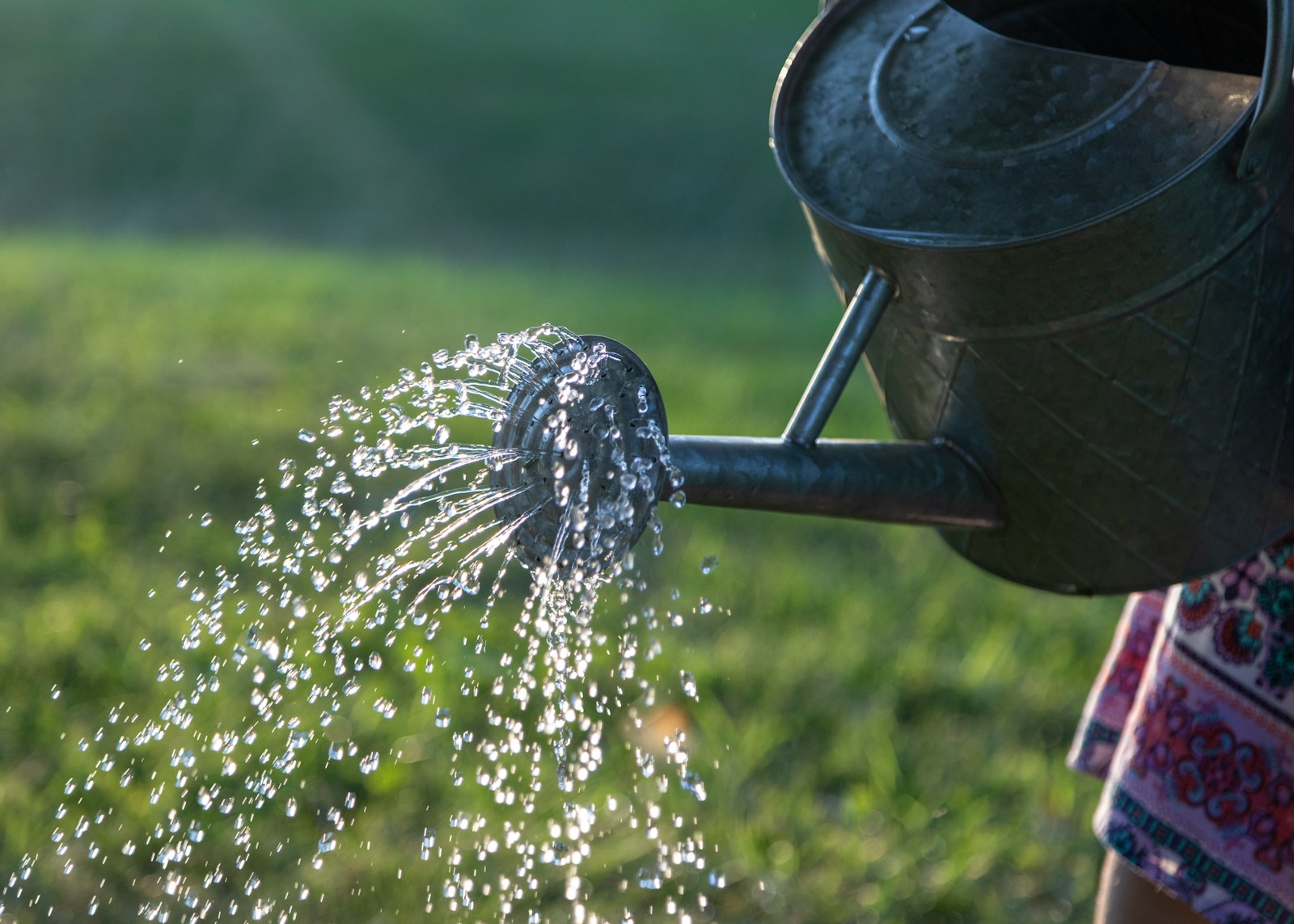
Why You Should Never Leave Water in Your Watering Can
Look, that half-full watering can sitting by your back door isn’t just untidy – it’s basically a mosquito breeding ground, bacterial soup, and plant pathogen delivery system all rolled into one.
What seems like a harmless shortcut (leaving water for tomorrow’s rounds) creates conditions that encourage bacterial growth, attract disease-carrying insects, and can actually harm the very plants you’re trying to help. Within just a few days, clean tap water transforms into something you really shouldn’t be pouring on anything, let alone your prize tomatoes.
The Mosquito Breeding Problem (It’s Worse Than You Think)
Here’s a fact that honestly shocked me when I first learned it: mosquitoes can complete their entire life cycle in as little as five days and they need only a bottle cap’s worth of water to do it [1]. That quarter-inch of water in the bottom of your watering can? Prime real estate for these disease vectors.
The CDC recommends eliminating standing water at least once per week to disrupt the mosquito breeding cycle [2]. This isn’t just overly cautious advice – it’s based on solid entomology. The EPA confirms that the complete mosquito life cycle typically takes 7 to 14 days but can happen in as few as four days when it’s warm outside [3].
Female mosquitoes actively seek out small containers for egg-laying, and they’re really not picky. The Los Angeles County Vector Control District specifically identifies “buckets, watering cans, drinking glasses, cups, bottle caps” as mosquito breeding sites that need attention [4]. Penn State Extension points out that “many mosquito infestations can, in fact, be traced to backyard containers filled with water” [5].
The health implications aren’t theoretical either. West Nile virus, which is the leading mosquito-borne illness in the continental United States, caused 2,628 documented cases in 2023 – that resulted in 2,022 hospitalizations and 208 deaths [6]. Since 1999, more than 59,000 cases have been reported to the CDC [7]. Meanwhile locally acquired dengue cases have appeared in Florida, Texas, and California, and 2023 saw the first locally transmitted malaria cases in the U.S. in two decades [8].
So yeah, emptying your watering can actually matters.
Stagnant Water Becomes Bacterial Soup Surprisingly Fast
Your tap water arrives treated and relatively safe. Within 48 hours at warm temperatures though, that same water can harbor bacterial counts that have exploded from less than 1 colony per milliliter to 38,000 colonies per milliliter [9]. The protective chlorine in municipal water starts breaking down almost immediately – residual chlorine concentration can decrease by up to 85% within two to three days [10].
What grows in that water matters a lot for gardeners. Pythium and Phytophthora, commonly called water molds, are among the most destructive plant pathogens out there, and they thrive in exactly the conditions a neglected watering can provides. These organisms produce zoospores – basically swimming spores that use flagella to actively hunt for plant roots [11]. When you water your seedlings with old, stagnant water, you might be delivering these pathogens directly to their targets.
Michigan State University Extension researchers describe how “Pythium favors wet, saturated soil conditions” and note that this pathogen “can ‘nibble’ the feeding roots of plants, resulting in stunted growth and delayed flowering” [12]. UC Davis IPM confirms that “sporangia and zoospores” survive poorly in dry conditions but flourish in water, which is why contaminated irrigation water poses such risks [13].
The situation gets even more concerning with Legionella, the bacterium responsible for Legionnaires’ disease. A study conducted by Public Health England at Porton Down tested garden water butts across the UK and found 95% were contaminated with Legionella bacteria – that’s 107 positive samples out of 113 tested [14]. The Royal Horticultural Society notes that Legionella “occurs naturally at low levels in watercourses but can multiply in standing water to potentially harmful levels when the water temperature is between 20°C to 45°C (68°F to 113°F)” [15]. On a warm summer day, the water in your watering can easily reaches these temperatures.
What Happens Inside That Can Affects Your Plants’ Roots
Beyond the pathogens, water quality degrades in ways that directly impact plant health. Dissolved oxygen – which is essential for healthy root function – depletes in stagnant water. According to HORIBA Scientific, irrigation water is “marginally acceptable for plant health at DO levels above 5 mg/L,” with levels below 4 mg/L considered hypoxic and detrimental to plants [16]. Standing water in a warm container quickly becomes oxygen-depleted as bacteria consume available oxygen during their population boom.
HortiDaily reports that “water poor in dissolved oxygen will take away oxygen from plants through the root system as well as deplete soil oxygen” [17]. The effects cascade from there: oxygen-poor conditions favor harmful organisms like root-feeding nematodes while compromising plants’ ability to absorb nitrate and water effectively.
Then there’s biofilm – that slimy coating you might notice inside a neglected container. Biofilm begins forming on surfaces within hours after water contact, according to research cited by the CDC [18]. The EPA describes biofilm as “a complex mixture of microbes, organic and inorganic material accumulated amidst a microbially produced organic polymer matrix” [19]. This coating provides a protected environment where bacteria can survive disinfection attempts and multiply undisturbed.
Biofilms can harbor Pseudomonas aeruginosa, Klebsiella, E. coli, and Legionella [20]. Once established, they’re nearly impossible to eliminate completely without aggressive cleaning. Every time you refill a biofilm-coated watering can, that new water becomes contaminated almost immediately.
Mineral Buildup Creates Long-Term Problems
Even clean water used regularly causes issues over time. Tap water contains dissolved minerals – calcium, magnesium, iron, and others – that remain behind when water evaporates. Utah State University Extension explains that “salt moves with water, concentrated in the soil when water is removed through evaporation” [21]. The same process occurs inside your watering can.
The University of Maryland Extension warns that mineral salt deposits “can cause harm to plants by competing for the available moisture and causing desiccation or ‘burning’ of tissues” [22]. These deposits also affect growing media pH and can block absorption of essential plant nutrients. Inside the watering can, minerals accumulate on interior surfaces and – critically – clog the rose (the sprinkler head attachment), reducing water flow and creating uneven watering patterns.
White, crusty deposits indicate significant mineral accumulation. At this point, a 1:1 solution of white vinegar and water can dissolve most mineral buildup, according to Kent & Stowe, a British garden tool manufacturer [23]. Let it soak for several minutes before scrubbing gently.
Metal Watering Cans Face Rust, Plastic Ones Face UV Damage
Material matters when it comes to water-related damage. Rust forms when iron or steel contacts oxygen and water – the exact conditions inside a metal watering can that’s never completely emptied. Galvanized steel cans have a protective zinc coating, but this “sacrificial protection” wears away over time, especially where acidic fertilizer residues accelerate corrosion [24]. Stainless steel resists rust better due to its chromium content which forms a protective oxide layer, but even stainless can deteriorate without proper care.
Fertilizer residue compounds the problem. As Horticulture Magazine notes, “both organic and non-organic fertilizers can contribute to rust because they are acidic and/or salty” [25]. Always rinse thoroughly after using liquid fertilizers or water-soluble plant foods.
Plastic watering cans avoid rust but face different challenges. UV radiation from sunlight causes photo-oxidation and weathering, making plastic brittle and prone to cracking [26]. According to research published in Photochemical & Photobiological Sciences, UV-induced degradation also “results in leaching of chemicals from plastic fragments” [27]. Haws, the British watering can manufacturer established in 1886, notes that “plastic cans become more brittle in lower temperatures, leaving them even more susceptible to damage when it drops below zero degrees” [28].
For plastic containers used in gardening, Epic Gardening recommends choosing HDPE (#2) or polypropylene (#5) plastics, and avoiding polycarbonate (#7) which has “proven time and time again to leach BPA” [29]. Look for UV-stabilized plastic that can withstand prolonged sun exposure without degrading.
Proper Cleaning Requires the Right Approach
Regular maintenance prevents most problems. Empty your watering can after each use – not just when you remember. The Royal Horticultural Society advises that “ideally, garden tools should be cleaned after every use” to reduce pests and diseases [30].
For routine cleaning, warm soapy water and a brush handle most situations. For sanitizing after suspected contamination or before seasonal storage, the CDC recommends 4 teaspoons of household bleach per quart of water, applied for at least one minute [31]. Rutgers University specifies 1/8 teaspoon (8 drops) of bleach per gallon for water treatment, noting that you should wait 24 hours after adding bleach before using the water on plants to allow chlorine to dissipate [32].
Never mix bleach with vinegar or other cleaners – this creates toxic chlorine gas.
For stubborn algae, Colorado State University’s Stormwater Center recommends a 2% diluted bleach solution, but emphasizes discharging this solution to a sewer rather than onto plants [33]. After any bleach treatment, rinse thoroughly with clean water.
Copper watering cans offer an interesting advantage here: antimicrobial properties. Haws describes this as “the same principle behind the old gardener’s trick of dropping a copper penny in cut flower vases” [34]. The gradual development of patina on copper isn’t damage – it’s a protective layer that tells the story of use.
Winter Storage Demands Complete Attention to Moisture
Freezing water expands, and in a confined space like a watering can this expansion cracks bases, warps seams, and ruptures plastic. Haws warns that even “a small amount can freeze and expand, potentially causing cracks” [35]. Melnor Gardening advises that “when temperatures get below 40°F, and your region experiences frost, the water left behind in your tools and equipment will freeze and expand, damaging the product” [36].
Before winter storage, clean your watering can thoroughly. Remove the rose and clean it separately – an old toothbrush reaches into small holes effectively. Dry everything completely; trapped moisture in seams or crevices causes problems even in above-freezing storage.
Store watering cans indoors when possible – a garage, shed, or basement where temperatures stay above freezing protects against cold damage. If outdoor storage is unavoidable, keep the can upside down or covered to prevent rain collection, and consider a protective cover or bag.
For metal cans, WD-40 or a rust-resistant spray on exterior surfaces adds a protective layer [37]. Avoid spraying the interior where residue could contaminate water later. Polish brass roses to prevent tarnishing and corrosion that could fuse parts together over winter.
The Weekly Routine That Keeps Everything Safe
Establishing a simple habit eliminates most risks. After watering:
- Empty all remaining water completely
- Rinse briefly if you used fertilizer
- Store upside down or on its side to drain fully
- Position out of direct sunlight to reduce UV damage and temperature spikes
Weekly, give your watering can a quick inspection. Check for algae growth (greenish film), biofilm (slimy coating), or mineral deposits (white crust). Catching problems early means they don’t require aggressive cleaning later.
Seasonally, before and after periods of heavy use, do a thorough cleaning with soapy water and a brush, paying attention to the rose holes and interior bottom corners where debris accumulates.
Why This Matters More Than It Might Seem
The effort required to maintain a watering can properly is minimal – seconds per use, a few minutes seasonally. The consequences of neglect extend way beyond a ruined garden tool though. You’re potentially creating mosquito breeding habitat that contributes to public health concerns, culturing plant pathogens that will attack your garden, and degrading water quality in ways that stress rather than support plant health.
Your watering can should be a tool that delivers clean, oxygenated water to plants that need it. That simple function requires keeping the can empty, clean, and dry between uses. It’s one of those gardening practices that costs almost nothing in time or money but makes a genuine difference – to your plants, your garden’s ecosystem, and the broader community dealing with vector-borne disease.
The next time you finish watering and that can feels heavy with leftover water, take the extra ten seconds to dump it out. Your tomatoes will thank you. So will your neighbors.
Sources
[1] San Diego County Department of Environmental Health. “West Nile Virus Prevention.” https://www.sandiegocounty.gov/content/sdc/deh/pests/wnv/prevention.html
[2] Centers for Disease Control and Prevention. “Mosquito Control Programs.” https://www.cdc.gov/mosquitoes/mosquito-control/mosquito-control-programs.html
[3] U.S. Environmental Protection Agency. “Mosquito Life Cycle.” https://www.epa.gov/mosquitocontrol/mosquito-life-cycle
[4] Greater Los Angeles County Vector Control District. “Do-It-Yourself Solutions for Mosquito Problems.” https://www.glamosquito.org/do-it-yourself-solutions-for-mosquito-problems
[5] Penn State Extension. “Mosquito Biology and Control.” https://extension.psu.edu/mosquito-biology-and-control
[6] Centers for Disease Control and Prevention. Morbidity and Mortality Weekly Report, 2023 Arboviral Disease Data. https://www.cdc.gov/mmwr/volumes/74/wr/mm7421a1.htm
[7] U.S. Environmental Protection Agency. “Climate Change Indicators: West Nile Virus.” https://www.epa.gov/climate-indicators/climate-change-indicators-west-nile-virus
[8] U.S. Department of Health and Human Services. “West Nile Climate Health Outlook.” https://www.hhs.gov/climate-change-health-equity-environmental-justice/climate-change-health-equity/climate-health-outlook/west-nile/index.html
[9] PubMed. “Bacterial growth in bottled water.” https://pubmed.ncbi.nlm.nih.gov/16381148/
[10] PubMed Central. “Water stagnation study.” https://pmc.ncbi.nlm.nih.gov/articles/PMC9752782/
[11] Utah State University Extension. “Pythium Root and Crown Rot.” https://extension.usu.edu/planthealth/ipm/notes_ag/veg-pythium-root-crown-rot
[12] Michigan State University Extension. “Pythium Root Rot on Ornamentals.” https://www.canr.msu.edu/news/pythium_root_rot_on_ornamentals
[13] UC Statewide IPM Program. “Pythium Root Rot.” https://ipm.ucanr.edu/agriculture/floriculture-and-ornamental-nurseries/pythium-root-rot/
[14] Chartered Institute of Plumbing and Heating Engineering. “Gardens and Plumbing Health Hazards.” https://www.ciphe.org.uk/public/plumbing-health-hazards/gardens/
[15] Royal Horticultural Society. “Minimising Health Risks in the Garden.” https://www.rhs.org.uk/advice/health-and-wellbeing/minimising-health-risks-in-the-garden
[16] HORIBA Scientific. “Dissolved Oxygen in Greenhouse.” https://www.horiba.com/int/water-quality/applications/agriculture-crop-science/dissolved-oxygen-in-greenhouse/
[17] HortiDaily. “The Importance of Dissolved Oxygen in Irrigation Water.” https://www.hortidaily.com/article/6025147/the-importance-of-dissolved-oxygen-in-irrigation-water/
[18] Aqua Free. “What is a Biofilm.” https://www.aqua-free.com/en/magazine/what-is-a-biofilm
[19] U.S. Environmental Protection Agency. “Health Risks from Microbial Growth and Biofilms in Drinking Water Distribution Systems.” https://www.epa.gov/sites/default/files/2015-09/documents/2007_05_18_disinfection_tcr_whitepaper_tcr_biofilms.pdf
[20] Centers for Disease Control and Prevention. “Infection Control: Appendix C – Water.” https://www.cdc.gov/infection-control/hcp/environmental-control/appendix-c-water.html
[21] Utah State University Extension. “Managing Saline and Sodic Soils.” https://extension.usu.edu/irrigation/research/managing-saline-and-sodic-soils
[22] University of Maryland Extension. “Mineral and Fertilizer Salt Deposits on Indoor Plants.” https://extension.umd.edu/resource/mineral-and-fertilizer-salt-deposits-indoor-plants
[23] Kent & Stowe. “Metal Watering Can Care.” https://kentandstowe.com/products/kent-stowe-metal-watering-can-galv-steel-9ltr
[24] HJPots. “How to Prevent Rust on a Metal Watering Can.” https://www.hjpots.com/blog/how-to-prevent-rust-on-a-metal-watering-can-20642.html
[25] Horticulture Magazine. “Watering Cans: How to Use and Care for Them.” https://www.hortmag.com/smart-gardening/watering-cans-how-to-use-and-care-for-them
[26] Essentra Components. “UV and Its Effect on Plastics: An Overview.” https://www.essentracomponents.com/en-us/news/manufacturing/injection-molding/uv-and-its-effect-on-plastics-an-overview
[27] UNEP Environmental Effects Assessment Panel. Photochemical & Photobiological Sciences, Springer. https://link.springer.com/article/10.1007/s43630-024-00552-3
[28] Haws Watering Cans. “Prepare Your Watering Can for Winter.” https://haws1886.com/blogs/news/prepare-your-watering-can-for-winter
[29] Epic Gardening. “Which Plastics Are Safe for Gardening?” https://www.epicgardening.com/which-plastics-are-safe-for-gardening/
[30] Royal Horticultural Society. “Cleaning Tools.” https://www.rhs.org.uk/garden-jobs/cleaning-tools
[31] Centers for Disease Control and Prevention. “Cleaning and Disinfecting with Bleach.” https://www.cdc.gov/hygiene/about/cleaning-and-disinfecting-with-bleach.html
[32] Rutgers New Jersey Agricultural Experiment Station. “Rain Barrel Cleaning.” https://njaes.rutgers.edu/fs1218/
[33] Colorado Stormwater Center, Colorado State University. “Rain Barrel Maintenance.” http://stormwatercenter.colostate.edu/resources/rain-barrels/maintenance/
[34] Haws Watering Cans. “The Timeless Beauty of Copper and Brass Watering Cans.” https://haws.co.uk/blogs/news/the-timeless-beauty-of-copper-and-brass-watering-cans-and-how-to-care-for-them
[35] Haws Watering Cans. “Prepare Your Watering Can for Winter.” https://haws1886.com/blogs/news/prepare-your-watering-can-for-winter
[36] Melnor Gardening. “Store Your Garden Tools the Right Way.” https://www.melnor.com/blog/store-your-garden-tools-the-right-way/
[37] Gardening Know How. “2 Tasks I Never Skip Before Storing Garden Tools for Winter.” https://www.gardeningknowhow.com/garden-how-to/tools/2-tasks-i-never-skip-before-storing-garden-tools-for-winter
