
Professional Pruning Shears Guide: Top Brands Reviewed
Look, I’m just gonna come right out with it – most pruners you grab at the garden center are pretty mediocre. And honestly? For most weekend gardening, mediocre probably works fine. But here’s something that really got me when I started digging into the research: the quality of your pruning cut directly affects how well your plants heal.
Like, we’re not just talking about convenience or your hand getting tired. There’s actual university research showing that clean cuts from good bypass pruners let plants compartmentalize wounds way faster than the crushing damage from dull blades or those anvil-style pruners everyone’s grandpa used.[1] Mississippi State researchers found that trees don’t even “heal” wounds like we do – they basically wall off damaged tissue by forming these specialized cell barriers that prevent decay from spreading.[2]
So when you make a ragged cut with cheap pruners, you’re making the plant work harder to protect itself. And yeah, that matters.
Why the Type of Cut Actually Matters
Before we get into which brands are worth your money, let’s talk about why this even matters. Because understanding the plant science side really changed how I thought about pruning tools.
When you cut a branch, you’re wounding living tissue. The University of Maryland Extension puts it straight: “Bypass pruners are superior to anvil pruners because they reduce the tearing or crushing of tissues.”[3] University of New Hampshire adds that dull tools “are likely to crush or tear plant tissue, increasing the likelihood of infection.”[4]
There’s this fascinating recent study from University of Florida (like, 2025 recent) where they actually tested bypass vs. anvil pruners on plant tissue.[5] They found anvil pruners cause way more crushing damage to internal tissue even though both types eventually showed similar wound closure after a year. But here’s the thing – bypass cuts showed slightly better long-term healing at the five-year mark.
For home gardeners, the takeaway is pretty simple: get sharp bypass pruners and keep them sharp. Iowa State Extension sums it up well: “Bypass hand pruners are preferred over the anvil types. Sharp, properly used bypass pruners make close, clean cuts.”[6]
Bypass vs. Anvil – The Real Difference
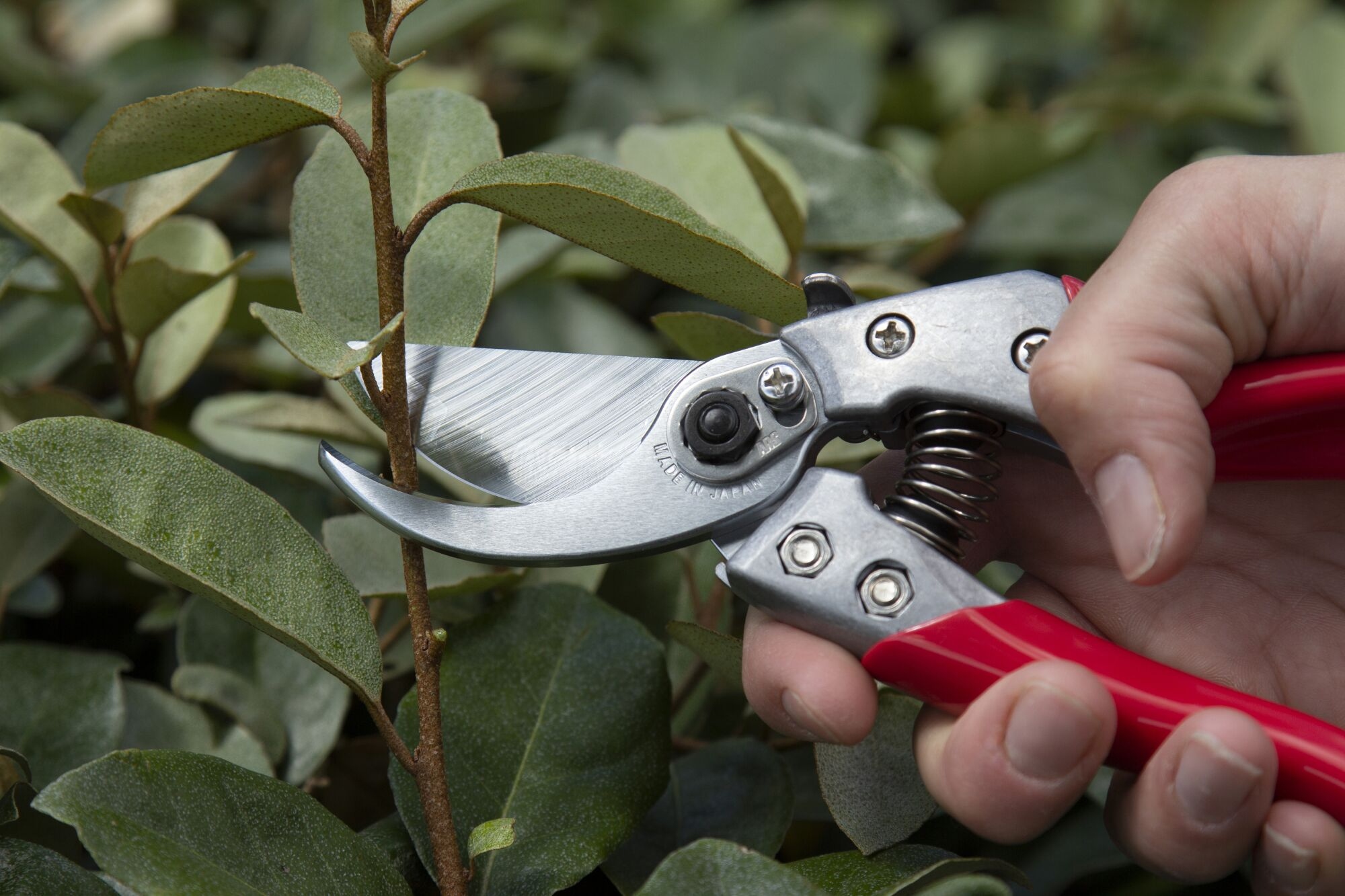
Okay so bypass pruners work like scissors. Two curved blades slide past each other – the upper blade does the cutting while the lower one holds the branch steady. This scissor action creates clean cuts through live tissue without crushing cells.
Anvil pruners have a single sharp blade that closes down onto a flat surface, more like a knife on a cutting board. UC Marin Master Gardeners explain that “anvil shears tend to crush branch tissue… they are not recommended for pruning live wood.”[7] Montana State backs this up, noting that “the blunt edge of anvil tools can result in stress and damage to branches.”[8]
The professional consensus is pretty clear. Pete Strasser, who was a plant pathologist at Capital Nursery, puts it bluntly: “Anvils are for deadheading annuals, and that’s about it.”[9] Chuck Ingels, Sacramento County Farm Advisor, adds: “I never use anvil pruners because you often can’t cut close enough to the branch collar without leaving a stub.”[9]
That said, anvil pruners aren’t completely useless. They work fine for cutting dead, dry wood where crushing doesn’t matter and their design provides more leverage. Some pros keep both types – using anvils exclusively for dead material.
The Brands That Actually Last
Walk behind any professional landscaper or through a botanical garden, and you’ll notice certain red, orange, or green handles showing up again and again. These aren’t random choices.
Felco – The Swiss Standard
Felco has this “gold standard” reputation that’s been building since 1945 when Felix Flisch founded the company in Switzerland. Jeff Gillman, Director of UNC Charlotte Botanical Garden, tested pruners for Fine Gardening and noted that “most landscapers consider Felco 2 the industry standard.”[10]
The Felco 2 features forged aluminum handles, hardened carbon steel blades, a wire-cutting notch, and – this is huge – every single part is replaceable.[11] Professional gardener Drew Swainston reports using the same Felco pair “throughout my professional gardening career – almost a decade later.”[12]
Jenny Rose Carey captures why pros choose Felco: “I like the weight of them and I’ve had the same ones for years. The replaceable blades help with longevity too.”[12]
Price-wise they run about $58-65, which seems steep until you realize they can last 20+ years with maintenance.
Bahco – Swedish Engineering
Bahco brings Swedish ergonomic innovation to the table. The company spent five years developing their ERGO concept – an 11-point ergonomic program validated through hundreds of user tests.[13] Their PX and PXR series feature Xylan-coated blades that resist sap buildup and stay sharper longer.
Scott Seargeant of Seargeant Landscape & Arboriculture specifically recommends “the Bahco pruners with the swivel handle as there is far less wear on your hand.”[13] One professional shared: “I sharpen mine about once a week after 20 hours of pruning, while my Felcos needed sharpening after 4-8 hours.”[13]
They’re priced around $35-45, which is honestly a pretty good deal for the quality.
ARS – Japanese Blade Tradition
ARS represents Japan’s 600-year blade-making tradition from Sakai, historically one of the country’s cutlery centers. Tom’s Guide testing found “the Japanese ARS VS8Z had the sharpest blade of all the pruners tested.”[14] Their hard chrome-plated blades resist rust and sap, needing less maintenance than traditional carbon steel.
A professional sharpener commented: “I am disappointed with Felco now. ARS are my pick if you can get something to fit your hand.”[14] Price runs around $35-50.
Corona – American Reliability
Corona offers professional reliability at more accessible prices. Founded in the late 1920s in Corona, California, they built their reputation supplying the citrus industry. Master florist Amy McCord calls her Corona clippers “nonnegotiable – they protect my wrist and hand, but power through woody branches like butter without dulling quickly.”[15]
Fine Gardening’s testing identified the Corona BP 6250 (around $32) alongside Felco 2 as pruners “to consider for their long-term reliability.”[10]
Fiskars – Democratizing Quality
Fiskars is this 375-year-old Finnish company that’s made quality tools more accessible with lifetime warranties and their PowerGear compound leverage mechanism. Their mechanism multiplies cutting force, which is pretty clever engineering. Ashlie Thomas notes that “Fiskars is a favorite brand among experts” according to NBC News testing.[16]
Budget-friendly options start around $14, though their professional models cost more.
Finding Pruners That Actually Fit Your Hands
This is huge and nobody talks about it enough. Using ill-fitting pruners causes fatigue, blisters, and can lead to repetitive strain injuries over time. Most professional brands now offer multiple sizes for exactly this reason.
Susan, a physical therapist and Master Gardener, recommends the Felco F-6 specifically for smaller hands, noting she’s “been using the Felco F-6 for my medium sized hands for 10 years.”[17] The Felco 8 suits larger hands with its ergonomic angled blade. For carpal tunnel or arthritis, rotating-handle models like the Felco 7 or Bahco PXR series reduce cutting effort by approximately 30%.[17]
Fine Gardening’s testing identified the most comfortable pruners as Felco 2, Corona BP 6250, and Fiskars Professional. For smaller hands specifically: Fiskars PowerGear, Wolf-Garten, and Felco 6.[10]
Ratchet pruners deserve mention for anyone with reduced grip strength. They cut in progressive stages – each squeeze advances the blade incrementally while the mechanism holds position, effectively multiplying hand strength by roughly three times. Really valuable for seniors or those with arthritis.
Left-handed gardeners should look for the Felco 9 (dedicated left-hand design), ARS models with ambidextrous locking, or Bahco’s PX-M2-L.
What Your Blades Are Made Of (And Why It Matters)
Professional pruner blades typically use one of three steel types, each with distinct characteristics.
High-carbon steel (Felco, traditional Corona) offers exceptional initial sharpness and is easier to resharpen. The downside? It’s susceptible to rust and needs regular oiling. Felco notes they use 95% recycled steel in their blades, which is cool.[18]
Hard chrome-plated carbon steel (ARS specialty) combines carbon steel’s cutting performance with a protective chrome layer that resists rust and prevents sap adhesion. These blades require less cleaning and stay sharper between maintenance sessions.
SK5 Japanese carbon steel, with its high hardness rating (approximately 65 HRC), appears in many professional-grade pruners including some Bahco models. This steel holds an edge really well and offers decent corrosion resistance.
Blade coatings add another dimension. Bahco’s Xylan coating creates a non-stick surface that sheds sap and debris. Fiskars’ UltraBlade titanium coating reportedly stays sharp up to five times longer than standard steel.[19]
Keeping Your Pruners Actually Sharp
Sharp pruners aren’t just more pleasant to use – they’re essential for plant health. University of New Hampshire explains that sharp tools produce cuts that “heal better” while dull tools “crush or tear plant tissue, increasing infection likelihood.”[4]
Sharpening frequency depends on use. Professional pruners working 20+ hours weekly typically sharpen every week. Casual gardeners pruning four hours weekly might need sharpening only annually. The process takes roughly ten minutes with proper tools.
The professional method: clean blades first with warm soapy water and a scouring pad, remove rust with steel wool, then use diamond files in progressive grits (coarse to extrafine). Critical technique: match the file angle to the factory bevel (typically 10-20 degrees for bypass pruners), work in one direction only, and sharpen only the outer face of the cutting blade – never both faces.[20] After sharpening, run the extrafine file flat against the back to remove any burr.
Sanitizing Between Plants (Because Disease Spreads)
This is something most gardeners skip but really shouldn’t. Disease transmission between plants via pruners is a real thing.
Iowa State Extension recommends 70% isopropyl alcohol as the easiest and most effective disinfectant for home gardeners – simply wipe or dip the blade, no prolonged soaking needed.[21] For serious bacterial infections like fire blight, a 10% bleach solution (one part bleach to nine parts water) is more effective but requires a 10-minute soak and thorough rinsing to prevent corrosion.[22]
The critical protocol: disinfect between every plant when pruning, ideally between each cut when working with prized specimens or disease-prone species. Keep two pruners handy – one soaking while you use the other.
Lubrication keeps mechanisms smooth and prevents rust. Apply oil (3-IN-ONE, mineral oil, or traditional Japanese camellia oil) to the pivot point, spring, and blade surfaces after cleaning. Store pruners dry, oiled, and locked closed in a protected location. A bucket of sand makes excellent rust-preventing storage by wicking moisture.[4]
The Investment Math Actually Makes Sense
Quality pruners aren’t cheap. Felco 2 runs around $58-65, Bahco PX models approximately $35-45, ARS VS-8Z around $35-50. Budget options like the Fiskars Bypass Pruner start around $14.
But the math favors quality. Mike McGroarty, Master Gardener and nursery propagation expert, frames it directly: “High-end pruners like Felco and ARS can run you $50-$250 depending on style. Are they really any better than the $10 pair from a box store? In a word: yes.”[23]
The longevity argument is compelling. With replaceable blades, springs, and handles, a well-maintained Felco can last 20+ years. Professionals report multi-decade service from single pairs. Replacement blades cost a fraction of new pruners.
For budget-conscious gardeners seeking professional performance, the Corona BP 6250 (around $32) consistently earns expert recommendations alongside tools costing twice as much.[10]
What I’d Actually Do If Starting Fresh
If I was dealing with a pruning situation right now and had to start from scratch, here’s what I’d do based on all this research:
Week 1:
- Measure my hand and figure out which size pruner actually fits
- Check which plants I’ll be pruning most (roses, shrubs, vegetables, etc.)
- Set a realistic budget ($30-70 is the sweet spot for most people)
Week 2:
- Order either Felco 2 (if budget allows), Corona BP 6250 (budget option), or Bahco PX (middle ground)
- Get isopropyl alcohol for sanitizing
- Pick up a diamond sharpening file (or get the Felco sharpener if going that route)
Week 3:
- Practice making cuts on sacrificial branches to get the feel
- Learn proper cutting technique (cutting at branch collar, not leaving stubs)
- Set up a maintenance routine
What I wouldn’t do:
- Buy anvil pruners for live wood pruning
- Get the cheapest thing at the hardware store
- Skip the sanitizing between diseased plants
- Let them rust in a damp shed
- Try to power through thick branches they’re not rated for
Some Real Talk About Expectations
Even the best pruners won’t magically make you a better pruner. Technique matters. Understanding where to make cuts matters. Keeping blades sharp matters.
Plants like roses, fruit trees, and woody shrubs benefit most from quality pruners. If you’re just snipping herbs and deadheading annuals, honestly a decent $20 pair will probably serve you fine.
But if you’re doing serious pruning work – training fruit trees, managing rose gardens, maintaining woody shrubs, cutting back perennials – the difference between mediocre and excellent pruners is something you’ll feel in your hands and see in your plants’ recovery.
University research backs up what professional gardeners have known for generations: clean cuts heal faster, reduce disease entry points, and let plants direct energy toward growth instead of wound response.[1][2] That’s not marketing hype – that’s plant physiology.
Common Mistakes People Make
Buying the wrong type – Getting anvil pruners for all your pruning when you really need bypass for live wood. They’re different tools for different jobs.
Wrong size – Using pruners too large or small for your hands. This causes fatigue and poor cuts. Try before you buy if possible.
Never sharpening – Even great pruners get dull. Expecting them to work like new after years of use without maintenance is unrealistic.
Cutting branches too thick – Most hand pruners max out around 3/4 to 1 inch diameter. Pushing them past that damages the tool and makes crappy cuts. Use loppers or a saw for bigger stuff.
Skipping sanitization – Then wondering why disease spreads through your garden. Alcohol wipes between plants take like 5 seconds.
Storing them dirty – Sap and moisture sitting on blades causes rust and gumming. Wipe them down after use.
Final Thoughts
Look, you don’t need to drop $70 on Felco 2s if you’re pruning your herb garden twice a year. But if you’re spending real time pruning – like, hours every month – quality tools make a noticeable difference.
The science is clear that cut quality affects plant health. The anecdotal evidence from professionals who’ve been in the field for decades is equally clear that certain brands hold up better than others. And the economics make sense when you consider that a $60 pair of pruners that lasts 20 years costs way less than buying $15 pruners every two years.
Personally? After going through all this research, I’d probably go with the Corona BP 6250 as a budget option or save up for Felco 2s if I was doing serious work. Bahco’s are intriguing too, especially for people with hand issues.
Just… please don’t buy pruners based on color or how cute they look. Get ones that fit your hand, have replaceable parts, and are designed for the work you’re actually doing. Your plants will thank you with faster healing and better growth. Your hands will thank you by not developing tendonitis.
And for the love of all that’s green and growing, keep them sharp and clean.
Sources
[1] Laznik, Ž., & Trdan, S. (2018). Natural Compounds as Spider Repellents: Fact or Myth? Journal of Economic Entomology, 111(1), 314-320. University of Maryland Extension. (n.d.). Pruning Tools. https://extension.umd.edu/resource/pruning-tools
[2] Mississippi State University Extension. (n.d.). Tree Wound Compartmentalization and Healing. MSU Extension Service.
[3] University of Maryland Extension. (n.d.). Pruning Tools. https://extension.umd.edu/resource/pruning-tools
[4] University of New Hampshire Extension. (2018). How to Clean and Sharpen Your Pruners. https://extension.unh.edu/blog/2018/01/how-clean-sharpen-your-pruners
[5] University of Florida IFAS Extension. (2025). Anvil Pruners vs. Bypass Pruners – Which are Better? Part 1 & 2. https://blogs.ifas.ufl.edu/gcrec/2025/03/11/anvil-pruners/
[6] Iowa State University Extension. (n.d.). Guide to Pruning Equipment. Yard and Garden. https://yardandgarden.extension.iastate.edu/how-to/guide-pruning-equipment
[7] UC Agriculture and Natural Resources. (n.d.). Pruning Tools. UC Marin Master Gardeners. https://ucanr.edu/site/uc-marin-master-gardeners/pruning-tools
[8] Montana State University Extension. (n.d.). The Basics of Pruning Trees and Shrubs. https://www.montana.edu/extension/lila_extn/basicsofpruningtreesandshrubs.html
[9] Gillman, J. (n.d.). Bypass or Anvil Pruners? We Ask the Experts. Garden Basics. https://gardenbasics.substack.com/p/bypass-or-anvil-pruners-we-ask-the
[10] Fine Gardening. (n.d.). Which Pruner Is Right for You? https://www.finegardening.com/project-guides/pruning/which-pruner-is-right-for-you
[11] Gardening Know How. (2025). I Splurged on the Cult-Favorite Pruners Gardening Pros Swear By. https://www.gardeningknowhow.com/garden-how-to/tools/the-pruners-gardening-pros-swear-by
[12] Gardening Know How. (2025). I Asked Professional Gardeners Which Pruners They Use. https://www.gardeningknowhow.com/garden-how-to/tools/i-asked-professional-gardeners-which-pruners-they-use-and-there-was-one-clear-winner
[13] Arborist Site Forums. (n.d.). Helpful Guide to Finding the Best Hand Pruner/Shear. https://arboristsite.com/threads/helpful-guide-to-finding-the-best-hand-pruner-shear.312511/
[14] Gardening Products Review. (n.d.). ARS Bypass Pruner With Rotating Handle (HP-VS8R): Product Review. https://gardeningproductsreview.com/ars-hp-vs8r-pruning-shears-review/
[15] Corona Tools. (n.d.). The Importance of Using the Right Type of Hand Pruner. https://coronatools.com/blogs/news/the-importance-of-using-the-right-type-of-hand-pruner
[16] Various news and gardening sources consulted for brand comparisons and testing results.
[17] In the Garden Sue. (n.d.). Best Hand Pruners for Small Hands. https://inthegardensue.com/blog/best-hand-pruners-for-small-hands
[18] Felco company materials and specifications.
[19] Manufacturer specifications for coating technologies.
[20] Fine Gardening. (n.d.). The Comprehensive Way to Sharpen Pruners. https://www.finegardening.com/project-guides/pruning/the-comprehensive-way-to-sharpen-pruners
[21] Iowa State University Extension. (n.d.). How Do I Sanitize My Pruning Shears? https://yardandgarden.extension.iastate.edu/faq/how-do-i-sanitize-my-pruning-shears
[22] University of Georgia Extension. (2021). Rules for Pruning. https://site.extension.uga.edu/paulding/2021/02/rules-for-pruning/
[23] Mike’s Backyard Nursery. (2015). Best Pruning Shears. https://mikesbackyardnursery.com/2015/05/best-pruning-shears/
Additional Research Consulted:
- This Old House pruning tool guides
- Various professional landscaper forums and discussions
- University extension publications on proper pruning techniques
- Manufacturer technical specifications and materials
