Best Fall Plants That Actually Thrive on Neglect | Expert Tips
Look, I get it. Every fall gardening article tells you to plant a bunch of stuff that supposedly “thrives on neglect” and then you end up babysitting these high-maintenance divas all season. Been there, done that, got the sad-looking mums to prove it.
But here’s the thing – some fall plants genuinely do better when you basically ignore them. I’m talking about plants that have evolved to handle harsh conditions, native species that are already adapted to your region’s soil and weather, and those tough-as-nails perennials that almost seem offended if you try to care for them too much.
After years of killing plants with kindness (and killing even more through actual neglect), I’ve figured out which ones really mean it when they say low-maintenance. These are the plants that’ll give you gorgeous fall color, support pollinators when other food sources are scarce, and won’t make you feel guilty every time you forget to water for two weeks.
Why Native Fall Plants Are Actually Better (Not Just Trendy Talk)
Before we jump into specific plants, let’s talk about why native species keep showing up on these lists – and no, it’s not just because they’re having a moment on Instagram.
Native plants evolved alongside local pollinators, adapted to your specific soil pH, rainfall patterns, and temperature swings. They’ve got deep root systems built for your climate [1]. That oak tree in your yard? It supports over 500 different caterpillar species. That fancy imported ornamental from the garden center? Maybe 5 [1].
And here’s something that blew my mind when I started reading research papers instead of just blog posts – 96% of our backyard birds feed insects to their young [1]. So when you plant natives, you’re not just getting pretty flowers, you’re setting up an entire ecosystem.
More people are finally catching on. About 17% of Americans bought native plants in 2024, which is almost double what it was back in 2019 [2]. Some states like Maryland are even making it illegal for HOAs to force you to have nothing but grass.
The Science Behind “Thriving on Neglect”
So what does it actually mean when a plant “thrives on neglect”? Because I used to think it meant “you can treat it like garbage and it’ll be fine,” which… no.
What it really means is these plants have adaptations that make them less needy:
- Deep taproots that access water way below the surface, so they don’t need you watering constantly
- Tough leaves (think thick, waxy, or fuzzy) that reduce water loss
- Native soil preferences meaning they already like whatever dirt you’ve got
- Built-in pest resistance from evolving alongside local insects
- Natural dormancy cycles that match your local seasons
University research shows these plants actually perform worse with too much attention – overwatering causes root rot, fertilizer makes them grow weak and floppy, and constant deadheading can stress them out [3]. Basically they’re like that friend who gets weird when you text too much.
Native Asters – The Fall Workhorses Everyone Should Plant
Okay so if you only plant one thing from this whole list, make it native asters. I’m specifically talking about aromatic aster (Symphyotrichum oblongifolium) here.
This thing is legit bulletproof. Hardy in zones 3a-8b, it handles clay, loam, sand, and even crappy soil without complaint [4]. Once it’s established (give it one season), it actually prefers dry conditions. I learned this the hard way when I kept watering mine and they got all leggy and flopped over.
The flowers are these purple-blue daisies with yellow centers that show up late September through early October, right when everything else is giving up. But here’s what really sold me: NC State research shows aromatic aster supports seven specialized bee species that literally depend on it for survival [4]. Plus migrating monarchs, hover flies, and butterflies.
One mistake everyone makes (including me the first few years): cutting back dead stems in fall. Don’t. Those hollow stems provide winter nesting sites for native bees [4]. Just leave everything standing until spring, then cut to 12-24 inches. It looks kind of messy but it’s way more important for wildlife than having a “tidy” garden.
For bigger spaces, New England aster (Symphyotrichum novae-angliae) works too – taller (3-7 feet) with bigger flowers, hardy to zone 4a [5]. The lower leaves can look rough by fall, but you can fix that by cutting the whole plant back by half in June. Forces bushier growth.
Growing tips:
- Zones 3a-8b (aromatic) or 4a-8 (New England)
- Full sun to part shade
- Any decent soil, really
- Water first year, then ignore
- Space 18-24 inches apart
- Don’t fertilize (they hate it)
Sedum ‘Autumn Joy’ – Easier to Kill with Kindness Than Neglect
Here’s a plant that has won awards from the Royal Horticultural Society but that people still manage to kill [6]. And it’s almost always from overwatering.
UC Master Gardener research found that wet soils cause root rot in ‘Autumn Joy’, and excess moisture makes those thick stems flop open into an unsightly mess [7]. University of Florida extension confirms it tolerates drought and salt, grows in basically any well-drained soil [8].
This succulent perennial (which is actually Hylotelephium spectabile now, not Sedum, if you want to get technical about it) has these amazing flower clusters that start pink in late summer, age to rose, then turn this gorgeous copper-rust color in fall [9]. The browned seed heads stay ornamental through winter.
But you gotta plant it right – well-drained or even gravelly soil, full sun, and then basically forget about it [10]. Water the first season to get it established, then only during extended droughts.
One heads up from UC Davis research: despite being listed as deer-resistant everywhere, deer will browse it in fall when native vegetation dries up [7]. So if you have heavy deer pressure and need something truly deer-proof, keep reading.
Growing tips:
- Zones 3a-10b
- Full sun (tolerates afternoon shade in hot climates)
- Sandy to gravelly soil, NOT rich or moist
- Height 1.5-2 feet
- Cut stems back in early spring, not fall
- If stems flop, you’re watering too much
Goldenrod – Let’s Kill the Hay Fever Myth Already
Okay first things first – goldenrod does NOT cause allergies. Ragweed does. They bloom at the same time. Goldenrod gets blamed because it’s visible and showy while ragweed is small and green. This has been scientifically settled for decades but people still repeat the myth [11].
Now that we’ve got that out of the way: goldenrod is spectacular for fall color and pollinator support. Rough goldenrod (Solidago rugosa) thrives in zones 4a-8b and handles everything from sand to occasional flooding [12]. The cultivar ‘Fireworks’ is especially well-behaved – it spreads slowly via rhizomes instead of taking over your entire yard.
University of Wisconsin research shows those arching sprays of bright yellow blooms lift everyone’s spirits during the darkening weeks of autumn [13]. More importantly, Xerces Society studies document that goldenrods support over 100 species of caterpillars and tons of specialized native bees [14]. They’re also critical for migrating monarch butterflies loading up on nectar.
If you’ve got really terrible soil (dry, poor, compacted), try stiff goldenrod (Solidago rigida) instead. This one has unusual flat-topped flower clusters and is adapted to zones 3-9. Too much water and rich soil actually hurt it – genuine neglect-tolerant [15].
Growing tips:
- Full sun to light shade
- Any soil type (they’re not picky)
- Water first season only
- Space 2-3 feet apart
- Cut back by half in June if you want shorter plants
- Let seed heads stand for winter birds
Mums – The Most Misunderstood Fall Plant
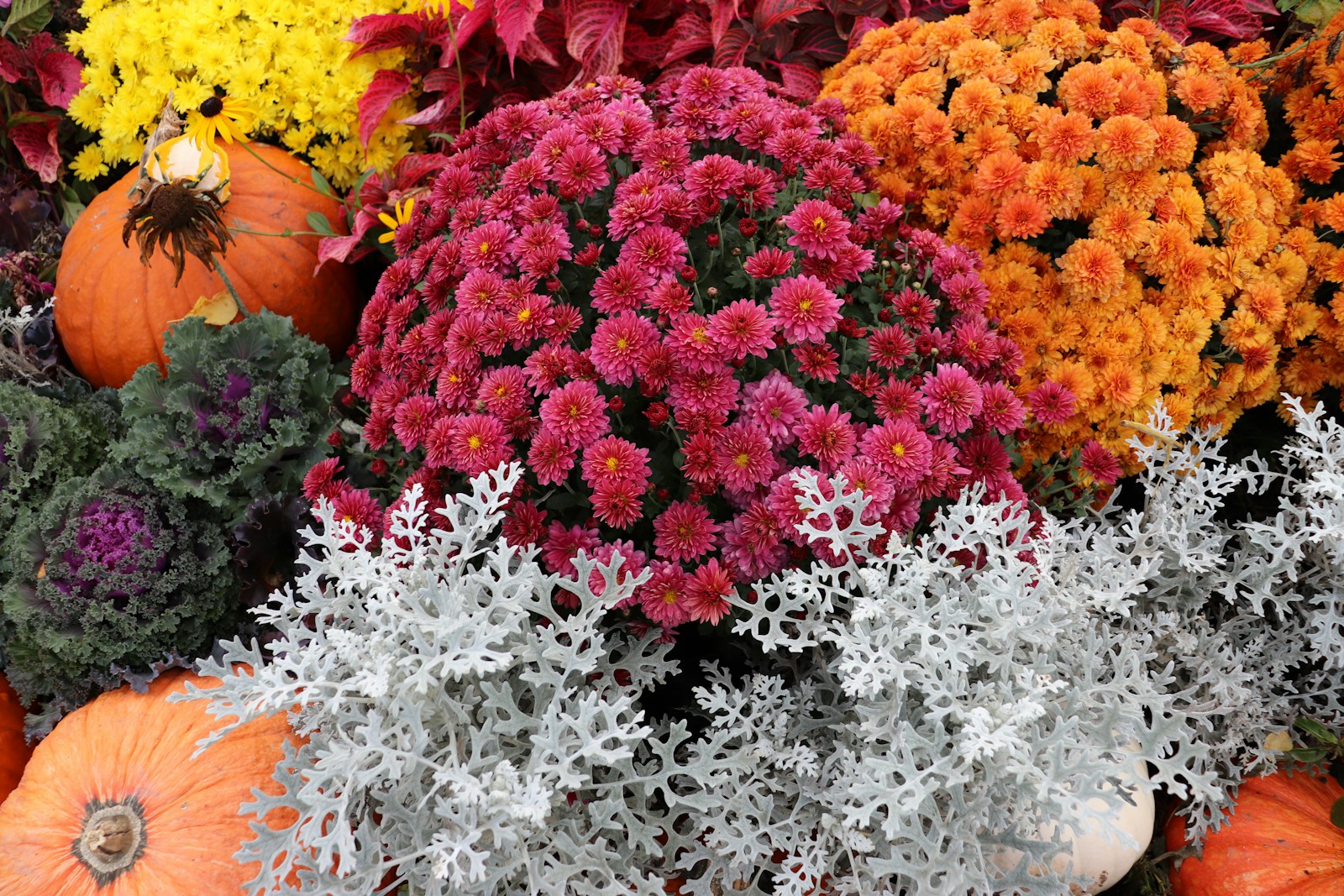
Garden mums (Chrysanthemum × morifolium) are everywhere in fall but their reputation for dying over winter frustrates people. The problem isn’t usually cold – it’s timing and drainage.
Virginia Cooperative Extension research shows that mums planted in late August or early September establish root systems strong enough to survive winter [16]. Those gorgeous full-bloom mums you buy at the grocery store in October? They haven’t developed adequate roots. You’re basically buying cut flowers in soil.
For overwintering success:
- Plant early (August-September, not October)
- Excellent drainage (wet winter soil kills them)
- Don’t cut foliage back in northern zones until spring (it insulates the crown)
- Mulch heavily after ground freezes
- Water during establishment, then leave alone
University of Missouri research confirms the main killer is wet soil through winter, not cold temperatures [17]. If your soil tends to stay soggy, either plant in raised beds or just treat mums as annuals.
Growing tips:
- Zones 3-9 (with proper care)
- Full sun (6+ hours)
- Well-drained soil is critical
- Space 18-24 inches
- Deadhead for longer bloom
- Water at soil level, not overhead
Russian Sage – For the Xeriscape Garden
Russian sage (Salvia yangii, formerly Perovskia atriplicifolia) evolved in the arid steppes of Central Asia, so it handles drought like a champ [18]. Those silvery leaves and lavender-blue flower spikes bloom from midsummer into late October.
But here’s what trips everyone up: Russian sage needs full sun. In shade it flops pathetically. It also hates rich soil and overwatering – both damage roots and cause rapid decline [19].
Penn State research emphasizes that this is a true xeriscape plant once established [20]. That deep taproot accesses water you’ll never reach with a hose.
Growing tips:
- Zones 4-9
- Full sun only (6-8 hours minimum)
- Poor to average soil (rich soil makes it weak)
- Drought tolerant after first season
- Height 3-4 feet
- Cut back in early spring, never fall
- Space 2-3 feet apart
Native Ornamental Grasses Add Movement Without Work
Once established, ornamental grasses need basically nothing from you. Just an annual haircut in late winter.
Little bluestem (Schizachyrium scoparium) won the 2022 Perennial Plant of the Year and deserves it [21]. The foliage turns these amazing shades of copper, bronze, and mahogany in fall, with fluffy white seed heads that catch light beautifully. Zones 3-9, and get this – it grows better in dry, poor soil. Rich conditions make it flop [22].
Switchgrass (Panicum virgatum) is another prairie native that handles zones 3-9 with yellow or burgundy fall color depending on cultivar [23]. Tolerates both drought and wet conditions once established. ‘Heavy Metal’ has steel-blue summer foliage turning amber in fall; ‘Shenandoah’ develops burgundy tints.
The mistake everyone makes: not being patient. Most warm-season grasses take 2-3 growing seasons to really establish [24]. First year they sleep, second year they creep, third year they leap.
Karl Foerster feather reed grass (Calamagrostis × acutiflora) behaves differently as a cool-season grass – greens up early, stays upright through winter storms [25]. Unlike many ornamental grasses it tolerates heavy clay beautifully. The 2001 Perennial Plant of the Year is also sterile so no surprise seedlings.
Growing tips:
- Full sun to light shade
- Any soil (truly not picky)
- Water first year, ignore after
- Don’t cut back until late winter
- Space 2-4 feet depending on variety
- Never fertilize
Mountain Mint – The #1 Pollinator Plant You’ve Never Heard Of
If there’s one plant that absolutely crushes it for pollinator support, it’s blunt mountain mint (Pycnanthemum muticum). Penn State’s multi-year study of 86 plant species ranked it #1 for pollinator diversity and #1 for total insect visits [26].
Named the 2025 Perennial Plant of the Year, it’s hardy zones 3-8 and spreads via shallow rhizomes [27]. Those silvery-white bracts around the flowers create this frosted appearance that glows in the garden. The aromatic foliage repels deer, rabbits, groundhogs, and voles – basically every critter that makes you want to scream [28].
Missouri Botanical Garden notes it needs moderate moisture, making it slightly less drought-tolerant than some others on this list [29]. But for a native that supports more beneficial insects than almost any other plant, occasional watering during dry spells is worth it.
Growing tips:
- Zones 3-8
- Full sun to part shade
- Moderate moisture (not soggy, not bone dry)
- Height 2-3 feet
- Spreads steadily, not aggressively
- Cut back in late winter
- Space 18-24 inches
Purple Coneflower – Classic for a Reason
Purple coneflower (Echinacea purpurea) has become a garden staple because once those deep taproots establish – usually by the second growing season – these zone 3-8 natives become remarkably drought tolerant [30].
They need about an inch of water per week during establishment, then can largely fend for themselves. Penn State research shows the critical mistake is poor winter drainage [31]. Wet winter soils kill more coneflowers than cold ever will.
If your soil stays soggy, plant in raised beds or amend heavily. And leave those seed heads standing through winter – American goldfinches depend on them, and hollow stems shelter native bees [32].
Growing tips:
- Zones 3-8
- Full sun (6+ hours)
- Well-drained soil crucial
- Water during establishment only
- Height 2-4 feet
- Let seed heads stand for wildlife
- Space 18-24 inches
Japanese Anemones for Part-Shade
Japanese anemones (Anemone × hybrida) fill a specific niche – part-shade gardens with consistently moist (not wet) soil. Zones 4-8, they take a year or two to establish but then become incredibly low-maintenance [33].
Wisconsin Extension confirms ‘Honorine Jobert’ with pure white flowers won the 2016 Perennial Plant of the Year award [34]. That elegant late-summer to fall bloom period when most shade plants have given up.
One warning: these spread via rhizomes and can get aggressive once happy [35]. Best in larger landscapes where they have room.
Growing tips:
- Zones 4-8
- Part shade to light shade
- Consistently moist soil
- Height 2-4 feet
- Can spread aggressively
- Space 18-24 inches
- Mulch to maintain moisture
Sneezeweed for Wet Spots
Got a low, damp area where nothing thrives? Sneezeweed (Helenium autumnale) is your answer. Despite the terrible name (it was historically used to make snuff, doesn’t cause sneezing), this zones 3-9 native produces cheerful yellow-orange daisy flowers in fall [36].
Lady Bird Johnson Wildflower Center confirms it grows 3-5 feet tall and prefers moist to wet soil [37]. Highly attractive to native bees and completely deer-resistant.
Dry conditions cause scorched-looking leaves, so this isn’t one for xeriscape gardens. But for rain gardens or naturally damp spots, it’s perfect.
Growing tips:
- Zones 3-9
- Full sun
- Moist to wet soil
- Height 3-5 feet
- Cut back by half in June for bushier plants
- Space 18-24 inches
Common Mistakes That Kill “Neglect-Tolerant” Plants
Even tough plants fail when you make these errors:
Overwatering established plants. Research shows lawns and landscapes are overwatered by 30-300% [38]. Drought-tolerant perennials with constantly soggy roots develop rot, fungal diseases, and weak growth. Water deeply but infrequently.
Poor winter drainage. Heavy clay that stays wet through winter kills more perennials than cold [39]. Test drainage by digging a 12-inch hole, filling with water – it should drain within 24 hours. If not, raise beds or amend heavily.
Cutting back in fall. Leave healthy stems standing through winter for wildlife habitat and crown insulation [40]. Only remove disease-prone plants like peonies. Do cleanup in late winter.
Wrong zone selection. Verify your USDA hardiness zone at planthardiness.ars.usda.gov – zones shifted warmer in the 2024 update [41]. A zone 5 plant won’t survive in zone 3 no matter how much you baby it.
Too much fertilizer. Most natives evolved in lean soil. Fertilizer makes them grow weak, floppy, and pest-prone [42]. Exception: if your soil is truly terrible (heavy clay, pure sand, super compacted), add compost at planting then leave alone.
Regional Planting Timeline
When you plant matters as much as what you plant.
Northeast and Midwest (zones 3-6): Plant perennials 4-6 weeks before ground freezes, typically late August through September [43]. Winter mulching prevents freeze-thaw heaving.
Southeast (zones 7-8): Mild winters extend planting into October and November. Finish 4-6 weeks before first frost [44].
Southwest: Fall planting is ideal – roots establish before summer heat. Match plants to existing soil rather than fighting alkaline, rocky conditions.
Pacific Northwest: Fall is actually best here. Wet winters and dry summers favor establishment during rainy season [45].
Building Your Lazy Gardener’s Fall Paradise
The easiest fall gardens group plants with similar needs. Put drought-lovers together (Russian sage, sedum, little bluestem, coneflowers) and moisture-lovers together (sneezeweed, Japanese anemone, mountain mint).
Layer heights with tall species in back (switchgrass, Joe Pye weed), medium in middle (goldenrod, asters), low growers up front (aromatic aster, sedum).
The classic combo of purple asters with golden goldenrod never fails. It’s a color palette perfected by millions of years of prairie evolution – both plants take care of themselves.
What Actually Matters
After years of trial and error, here’s what really makes the difference:
- Choose the right plant for the spot – sun/shade, wet/dry, your actual zone
- Water consistently first season – even drought-tolerant plants need help establishing
- Stop watering after establishment – overwatering kills more plants than underwatering
- Leave it alone in fall/winter – resist the urge to “clean up”
- Never fertilize natives – they evolved for lean soil
Some plants just aren’t worth overwintering. Basil is an annual, trying to keep it alive all winter is more trouble than it’s worth. Sometimes better to take cuttings or buy new in spring.
Plant these neglect-tolerant species, water through first season, step back. They’ll reward your restraint with years of spectacular autumn color, happy pollinators, and a beautiful garden that doesn’t demand constant attention.
Sources
[1] Tallamy, D.W. “Bringing Nature Home: How You Can Sustain Wildlife with Native Plants.” University of Delaware, Department of Entomology and Wildlife Ecology. National Wildlife Federation. https://www.nwf.org/nativeplantfinder/about
[2] National Wildlife Federation. “2024 National Gardening Survey Results.” Press Release, May 1, 2024. https://www.nwf.org/Home/Latest-News/Press-Releases/2024/5-1-24-National-Gardening-Survey
[3] Feehan, K. University of Nebraska-Lincoln Extension. “Avoid Overwatering Lawns and Landscapes.” Nebraska Drought Resources. https://droughtresources.unl.edu/avoid-overwatering-lawns-landscapes
[4] NC State Extension Gardener Plant Toolbox. “Symphyotrichum oblongifolium (Aromatic Aster).” North Carolina State University. https://plants.ces.ncsu.edu/plants/symphyotrichum-oblongifolium/
[5] NC State Extension Gardener Plant Toolbox. “Symphyotrichum novae-angliae (New England Aster).” North Carolina State University. https://plants.ces.ncsu.edu/plants/symphyotrichum-novae-angliae/
[6] Royal Horticultural Society. “Sedum ‘Herbstfreude’ (Autumn Joy) Award of Garden Merit.”
[7] UC Master Gardener Program, Sonoma County. “Sedum ‘Autumn Joy’.” University of California. https://sonomamg.ucanr.edu/Plant_of_the_Month/Sedum_Autumn_Joy
[8] Gilman, E.F. & DelValle, T. “Sedum x ‘Autumn Joy’.” University of Florida IFAS Extension. FPS-543. https://edis.ifas.ufl.edu/publication/FP543
[9] NC State Extension Gardener Plant Toolbox. “Hylotelephium spectabile ‘Autumn Joy’.” https://plants.ces.ncsu.edu/plants/hylotelephium-spectabile-autumn-joy/
[10] Texas Master Gardeners, Henderson County. “Sedum ‘Autumn Joy’.” https://txmg.org/hendersonmg/plant-library/sedum-autumn-joy/
[11] American Academy of Allergy, Asthma & Immunology. “Ragweed Allergy: Facts and Common Myths.” https://www.aaaai.org/tools-for-the-public/conditions-library/allergies/ragweed-plants
[12] NC State Extension Gardener Plant Toolbox. “Solidago rugosa (Rough Goldenrod).” https://plants.ces.ncsu.edu/plants/solidago-rugosa/
[13] University of Wisconsin-Madison Division of Extension. “Fireworks Goldenrod, Solidago rugosa.” https://hort.extension.wisc.edu/articles/fireworks-goldenrod-solidago-rugosa/
[14] Xerces Society for Invertebrate Conservation. “Goldenrods: A Vital Late-Season Resource.” Pollinator Conservation.
[15] Missouri Botanical Garden. “Solidago rigida (Stiff Goldenrod).” Plant Finder. https://www.missouribotanicalgarden.org/PlantFinder/
[16] Virginia Cooperative Extension. “Growing Chrysanthemums.” Publication 426-203. https://ext.vt.edu/lawn-garden/Timely_Topics/mums.html
[17] University of Missouri Integrated Pest Management. “Winter Care of Hardy Mums.” https://ipm.missouri.edu/MEG/index.cfm?ID=766
[18] Missouri Botanical Garden. “Salvia yangii (Russian Sage).” Plant Finder. https://www.missouribotanicalgarden.org/PlantFinder/
[19] University of Wisconsin-Madison Division of Extension. “Russian Sage (Perovskia atriplicifolia).” https://hort.extension.wisc.edu/articles/russian-sage-perovskia-atriplicifolia/
[20] Penn State Extension. “Russian Sage for Pennsylvania Gardens.” https://extension.psu.edu/
[21] Perennial Plant Association. “2022 Perennial Plant of the Year: Little Bluestem.” https://perennialplant.org/
[22] University of Wisconsin-Madison Division of Extension. “Little Bluestem (Schizachyrium scoparium).” https://hort.extension.wisc.edu/articles/little-bluestem-schizachyrium-scoparium/
[23] Penn State Extension. “Energy Crop Profile: Switchgrass.” https://extension.psu.edu/
[24] University of Minnesota Extension. “Ornamental Grasses for Cold Climates.” https://extension.umn.edu/
[25] University of Wisconsin-Madison Division of Extension. “Feather Reed Grass.” https://hort.extension.wisc.edu/articles/feather-reed-grass-calamagrostis-x-acutiflora-karl-foerster/
[26] Penn State Extension. “Mountain Mint: A Pollinator Powerhouse.” https://extension.psu.edu/mountain-mint-a-pollinator-powerhouse
[27] Perennial Plant Association. “2025 Perennial Plant of the Year: Mountain Mint.” https://perennialplant.org/
[28] Prairie Moon Nursery. “Pycnanthemum muticum (Clustered Mountain Mint).” https://www.prairiemoon.com/pycnanthemum-muticum-clustered-mountain-mint
[29] Missouri Botanical Garden. “Pycnanthemum muticum.” Plant Finder. https://www.missouribotanicalgarden.org/PlantFinder/PlantFinderDetails.aspx?taxonid=293531
[30] NC State Extension Gardener Plant Toolbox. “Echinacea purpurea (Purple Coneflower).” https://plants.ces.ncsu.edu/plants/echinacea-purpurea/
[31] Penn State Extension. “Purple Coneflower Care and Maintenance.” https://extension.psu.edu/
[32] Clemson Cooperative Extension HGIC. “Echinacea (Coneflower).” https://hgic.clemson.edu/
[33] NC State Extension Gardener Plant Toolbox. “Anemone x hybrida ‘Honorine Jobert’.” https://plants.ces.ncsu.edu/plants/anemone-x-hybrida-honorine-jobert/
[34] University of Wisconsin-Madison Division of Extension. “Anemone ‘Honorine Jobert’.” https://hort.extension.wisc.edu/articles/anemone-honorine-jobert/
[35] Missouri Botanical Garden. “Anemone x hybrida (Japanese Anemone).” Plant Finder. https://www.missouribotanicalgarden.org/PlantFinder/
[36] NC State Extension Gardener Plant Toolbox. “Helenium autumnale (Common Sneezeweed).” https://plants.ces.ncsu.edu/plants/helenium-autumnale/
[37] Lady Bird Johnson Wildflower Center. “Helenium autumnale.” Native Plant Database. https://www.wildflower.org/plants/result.php?id_plant=heau
[38] University of Nebraska-Lincoln Extension. “Landscape Irrigation: Avoiding Overwatering.” https://droughtresources.unl.edu/avoid-overwatering-lawns-landscapes
[39] University of Illinois Extension. “Perennials: Drainage Requirements.” https://extension.illinois.edu/flowers/perennials
[40] Penn State Extension. “Care and Maintenance of Perennials.” https://extension.psu.edu/care-and-maintenance-of-perennials
[41] USDA. “Plant Hardiness Zone Map (2024 Update).” https://planthardiness.ars.usda.gov/
[42] University of Maryland Extension. “Fertilizing Native Plants.” https://extension.umd.edu/
[43] University of Vermont Extension. “Planting Perennials in Fall.” https://www.uvm.edu/extension
[44] University of Georgia Extension. “Fall Planting Guide for the Southeast.” https://extension.uga.edu/
[45] Oregon State University Extension. “Fall Planting in the Pacific Northwest.” https://extension.oregonstate.edu/