
How to Plant Red Chokeberry in Fall: Native Shrub Guide
So here’s something I learned after years of trying different plants – if you’re only gonna add one native shrub to your garden this fall, red chokeberry should be it. And honestly, I had never even heard of it until a few years ago when I was looking for alternatives to burning bush (which turns out is invasive and banned in some states).
Red chokeberry gives you all the things: fall color that rivals any burning bush, red berries that stick around all winter for birds, flowers in spring for pollinators, and it basically takes care of itself once it’s established. Plus September happens to be the perfect time to plant it.
The scientific name is Aronia arbutifolia and it’s native to eastern North America – basically everywhere from Nova Scotia down to Florida and west to Texas [1]. It’s in the rose family and has been growing in swamps, bogs, and woodland edges forever. But most people walk right past it at the nursery because it’s not showy sitting there in a pot. That’s a mistake though, because this shrub delivers way more than the typical landscaping stuff everyone plants.
Why planting in September actually makes sense
Here’s the thing about fall planting that most people don’t get – while you’re raking leaves and thinking the gardening season is over, conditions underground are actually perfect for root growth. The soil is still warm from summer (usually 55-65°F), but the cooler air means your plant isn’t losing tons of water through its leaves like it would in June [2].
This creates like a sweet spot. Your red chokeberry can focus all its energy on pushing roots into the soil instead of supporting leaves and flowers above ground. Oregon State University Extension actually documented that fall-planted shrubs develop way more extensive root systems than spring-planted ones by the time summer hits [3]. That head start means better drought tolerance and more vigorous growth the second year.
September also brings something else – rain. Autumn showers cut your watering work way down, and weed pressure drops off so there’s less competition. Just make sure you’re planting at least six weeks before your first hard frost so roots have time to establish before the ground freezes [4].
What red chokeberry actually looks like and how it grows
Red chokeberry is what they call a multi-stemmed deciduous shrub – basically it grows as a bunch of stems clustered together rather than one trunk. Mature plants reach 6 to 12 feet tall with a spread of 3 to 6 feet [1]. The growth habit is upright and kind of vase-shaped, though I’ll be honest – older ones can get leggy and bare at the base. But there are ways to deal with that which I’ll get into later.
The flowers show up in late April or May – clusters of small white to pale pink blooms about an inch across with five petals and dark red anthers. Not super showy like a rhododendron but pretty enough. What they lack in drama they make up for in utility though. One naturalist documented at least 30 species of pollinators visiting red chokeberry blooms including mason bees, bumblebees, mining bees, and several butterflies [5].
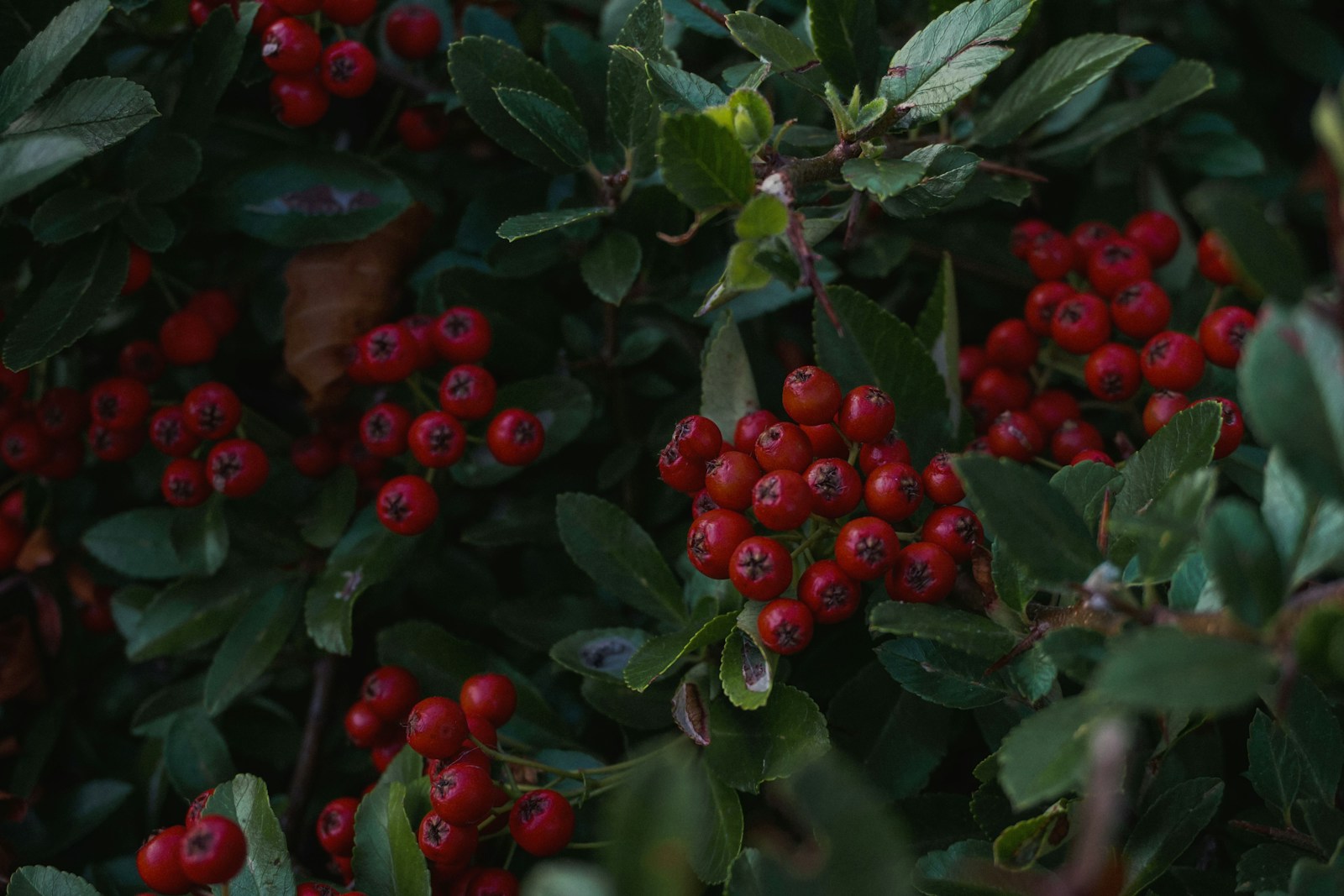
Those flowers turn into glossy red berries that ripen through autumn. The fruits are technically small pomes (like tiny apples) rather than true berries, and they cluster in groups of 9 to 18. Here’s what makes red chokeberry particularly valuable – unlike black chokeberry berries that drop pretty quick, these red fruits hang on well into winter, often staying on bare branches through December, January, or even later [1].
The fall foliage nobody talks about
Okay so let’s address the elephant in the room. For decades gardeners wanting fall color have defaulted to burning bush (Euonymus alatus), which is an invasive Asian species now banned or restricted in several states. Red chokeberry offers a legit alternative with fall color that’s genuinely comparable – sometimes even better.
When cool nights arrive, the foliage transforms into brilliant scarlet, orange-red, and sometimes purple shades [6]. There’s a cultivar called ‘Brilliantissima’ that was specifically selected for enhanced fall color with glossier leaves and more vivid autumn tones [1]. Against an evergreen backdrop like white pines or hollies, the effect is honestly electric.
One thing to know though – full sun produces the best fall color. In partial shade the foliage tends more toward orange than red, and you’ll get fewer flowers and berries [7]. If you’re mainly planting for autumn impact, give your chokeberry at least six hours of direct sun daily.
Why birds and wildlife love this thing
The wildlife benefits go way beyond pretty berries for songbirds – though that alone would be worth it. Research compiled by the Connecticut Audubon Society found that chokeberry berries attract about 40 wildlife species including thrushes, cedar waxwings, cardinals, mockingbirds, blue jays, woodpeckers, sparrows, and even wild turkeys in some areas [8].
The timing is ecologically significant too. Most birds skip chokeberries in autumn when sweeter fruits are abundant. But after repeated freeze-thaw cycles through winter, the berries become more palatable and serve as critical emergency food when other sources are gone [8]. On a cold February morning when food is scarce, those persistent red fruits could literally mean survival for wintering songbirds.
Red chokeberry’s value extends beyond berries though. It serves as a host plant for 29 species of butterflies and moths including the coral hairstreak butterfly and promethea moth [9]. The caterpillars become essential protein for nesting songbirds feeding their young in spring – it’s all connected. Bears have been documented eating the berries, and while deer will browse the foliage they tend to avoid the sour-smelling fruit [10].
How to actually plant red chokeberry
Red chokeberry’s adaptability is genuinely impressive – this plant grows naturally in both swamps and dry woodland thickets. Still, following proper planting technique will set you up for long-term success.
Site selection should prioritize full sun (six or more hours daily), though it tolerates partial shade with reduced flowering. Red chokeberry accepts an impressive range of soil conditions: clay, loam, or sandy soils; acidic to slightly alkaline pH (5.0-8.0); and everything from occasionally flooded sites to average garden conditions [1][7]. That said, moist well-drained soil produces the best growth.
For planting, dig a hole roughly twice as wide as the root ball and slightly deeper. If your soil is heavy clay, work some compost into the backfill – maybe one part organic matter to two parts native soil. Set the plant with the top of the root ball level with or slightly above the surrounding ground. For container-grown shrubs, gently tease apart any circling roots before planting [11].
Spacing depends on your goals. For a hedge or screen, plant shrubs 3 feet apart for a dense barrier. For specimen plantings or mass groupings where you want each plant to develop its natural form, allow 4 to 6 feet between plants. Remember that red chokeberry spreads via root suckers and will gradually form colonies if left unmanaged [1].
After planting, apply a 3 to 4-inch layer of mulch over the root zone but keep it 6 inches away from the stems to prevent rot and discourage rodents [12]. Water deeply right after planting, then continue watering regularly through fall until the ground freezes. Plants need roughly one inch of water weekly during establishment.
Year-round care (that won’t eat up your weekends)
Once established – usually after two growing seasons – red chokeberry requires remarkably little maintenance. This is a plant that survived thousands of years without human help after all.
Watering: After establishment, supplemental watering is only necessary during extended drought. The Morton Arboretum notes that mature plants tolerate dry conditions pretty well [6].
Fertilizing: Red chokeberry needs little to no supplemental fertilizer. If you want to give it a boost, apply a balanced slow-release fertilizer in spring, but honestly this isn’t necessary in reasonably fertile garden soil [11].
Pruning: This is where red chokeberry asks for a bit of attention. Prune in spring after flowering – the plant blooms on previous season’s growth so fall pruning would sacrifice next year’s flowers and berries [6]. Remove dead wood and any suckers you don’t want spreading. Every few years you might consider rejuvenation pruning: cut the oldest one-third of stems to ground level over a three-year rotation to keep the plant vigorous [13].
Speaking of suckers – that tendency to spread via root suckers can be either a feature or a bug depending on your landscape. In naturalized areas or wildlife gardens, let them spread. In a more controlled setting, remove suckers monthly during the growing season by cutting them as close to ground level as possible.
Dealing with the leggy-base problem
I mentioned earlier that red chokeberry tends to get bare and leggy at the base with age. This is completely natural but can look awkward in certain spots. The solution? Smart companion planting.
Plant red chokeberry toward the back of borders with lower shrubs or perennials in front to mask the bare stems [6]. Virginia sweetspire (Itea virginica), inkberry (Ilex glabra ‘Shamrock’), or a sweep of native sedges work beautifully for this. Or mass multiple chokeberries together – when planted in groups they form a thicket where the bare stems are way less noticeable.
For a native wildlife hedge with year-round interest, try this: red chokeberry (mid-ground) with winterberry holly (similar height, provides contrast when chokeberry is bare), summersweet for fragrant summer bloom, and low inkberry as an evergreen anchor in front [14]. Add native grasses like little bluestem for fall texture and winter structure.
Best companion plants for red chokeberry
The best companions share similar growing conditions – native to eastern North America, adaptable to various moisture levels, and supportive of wildlife.
Shrub companions: Coastal serviceberry for spring bloom, fringe tree for early summer fragrance, Virginia sweetspire for overlapping fall color (its foliage turns red, orange, and yellow too), and winterberry holly to extend the berry display into winter after chokeberry fruits are gone [14].
Perennial companions: Cardinal flower for brilliant red summer bloom, purple coneflower for pollinator value and contrasting texture, and Joe Pye weed for late-summer butterfly activity [14]. Native grasses – especially little bluestem with its orange-purple fall tones – create stunning seasonal combinations.
Red chokeberry also excels in rain gardens and bioswales. Its FACW (Facultative Wetland) status means it naturally occurs in wetland-adjacent habitats and handles the wet-dry fluctuations of stormwater features without complaint [7]. Partner it with blue flag iris, swamp milkweed, and buttonbush for a rain garden that manages runoff while supporting wildlife.
Regional considerations across different zones
Red chokeberry grows in USDA Zones 3a through 9b – an impressive span from Minnesota to Florida [1]. But a few regional adjustments can optimize your success.
Northern gardeners (Zones 3-5) should plant by early October to allow adequate root establishment before the ground freezes. Winter mulch is particularly important the first year or two – apply 4 to 6 inches after the first hard frost to prevent freeze-thaw heaving [12]. The good news? Red chokeberry is hardy to -40°F so cold itself isn’t the issue, it’s the root establishment window you need to plan around.
Southern gardeners (Zones 8-9) can plant later into fall but should ensure adequate irrigation during dry periods. In the hottest areas, afternoon shade may actually benefit the plant during summer heat waves.
For rain gardens and wet sites, red chokeberry is an obvious choice across all regions. Its native habitat includes swamps, bogs, and pond margins so it handles seasonal flooding better than most ornamental shrubs [1].
The rare problems you might encounter
Red chokeberry experiences remarkably few pest and disease issues – this is not a plant that’ll demand fungicide sprays or constant monitoring. NC State Extension, Morton Arboretum, and Missouri Botanical Garden all describe it as having no serious pest or disease problems [1][6].
Occasionally you might see:
Leaf spot caused by various fungi can appear during humid weather. Management is simple: remove fallen leaves in autumn and avoid overhead irrigation. Severely affected leaves may drop but the plant typically recovers without treatment [15].
Aphids sometimes visit in spring. A strong spray of water knocks them off; insecticidal soap handles serious infestations.
Deer browse can be an issue, particularly in early spring when other food sources are limited. Red chokeberry has relatively low deer resistance so if deer pressure is severe in your area, consider protective fencing during establishment [1].
Why native plant gardening matters (especially in September)
September might feel like the season for endings – shorter days, falling leaves, the slow fade toward winter. But for native plant gardeners it’s actually a time of beginnings. The red chokeberry you plant this month will develop roots all fall, survive winter easily, burst into pollinator-supporting bloom next spring, develop berries through summer, ignite with color in autumn, and feed overwintering songbirds on cold January days.
That’s four full seasons of ecological function from a single planting decision. And honestly isn’t that what native plant gardening is all about? Not just creating something beautiful for ourselves but participating in the living systems that support wildlife, filter water, build soil, and make our corner of the planet more resilient.
Red chokeberry won’t demand much from you. A few hours of planting now, occasional pruning, maybe some watering during drought. In return you’ll get brilliant fall color, cheerful winter berries, and the genuine delight of watching cedar waxwings feast outside your window on a snowy morning.
That seems like a pretty good trade.
References
[1] NC State Extension Gardener Plant Toolbox. “Aronia arbutifolia.” North Carolina State University. https://plants.ces.ncsu.edu/plants/aronia-arbutifolia/
[2] University of New Hampshire Extension. “Fall is a Good Time to Plant Trees and Shrubs.” August 2019. https://extension.unh.edu/blog/2019/08/fall-good-time-plant-trees-shrubs
[3] Oregon State University Extension Service. “Fall Planting Offers Long-term Benefits for Trees, Shrubs, Perennials.” https://extension.oregonstate.edu/news/fall-planting-offers-long-term-benefits-trees-shrubs-perennials
[4] Penn State Extension. “Rain Garden Plants: Red Chokeberry.” Pennsylvania State University. https://extension.psu.edu/rain-garden-plants-red-chokeberry
[5] Washington, Betsy. Virginia Native Plant Society. “Red Chokeberry Shines in All Seasons.” https://vnps.org/red-chokeberry-shines-in-all-seasons/
[6] Morton Arboretum. “Red Chokeberry.” The Morton Arboretum, Lisle, IL. https://mortonarb.org/plant-and-protect/trees-and-plants/red-chokeberry/
[7] Lady Bird Johnson Wildflower Center. “Aronia arbutifolia.” University of Texas at Austin. https://www.wildflower.org/plants/result.php?id_plant=ARAR7
[8] Connecticut Audubon Society. “May 2023: Chokeberry.” May 2023. https://www.ctaudubon.org/2023/05/may-2023-chokeberry/
[9] Leaves for Wildlife. “Chokeberry, Red (Aronia arbutifolia).” https://www.leavesforwildlife.com/product-page/chokeberry-red-aronia-arbutifolia
[10] Florida Wildflower Foundation. “Flower Friday: Aronia arbutifolia.” https://www.flawildflowers.org/flower-friday-aronia-arbutifolia/
[11] Proven Winners. “How to Plant: Chokeberry (Aronia).” https://www.provenwinners.com/learn/how-plant/chokeberry-aronia
[12] University of Minnesota Extension. “Protecting Trees and Shrubs in Winter.” https://extension.umn.edu/planting-and-growing-guides/protecting-trees-and-shrubs-winter
[13] Native Plant Trust. “Aronia arbutifolia – Red Chokeberry.” https://plantfinder.nativeplanttrust.org/plant/Aronia-arbutifolia
[14] Mt. Cuba Center. “Red Chokeberry.” https://mtcubacenter.org/plants/red-chokeberry/
[15] University of Missouri Extension. “Integrated Pest Management.” https://ipm.missouri.edu/
