
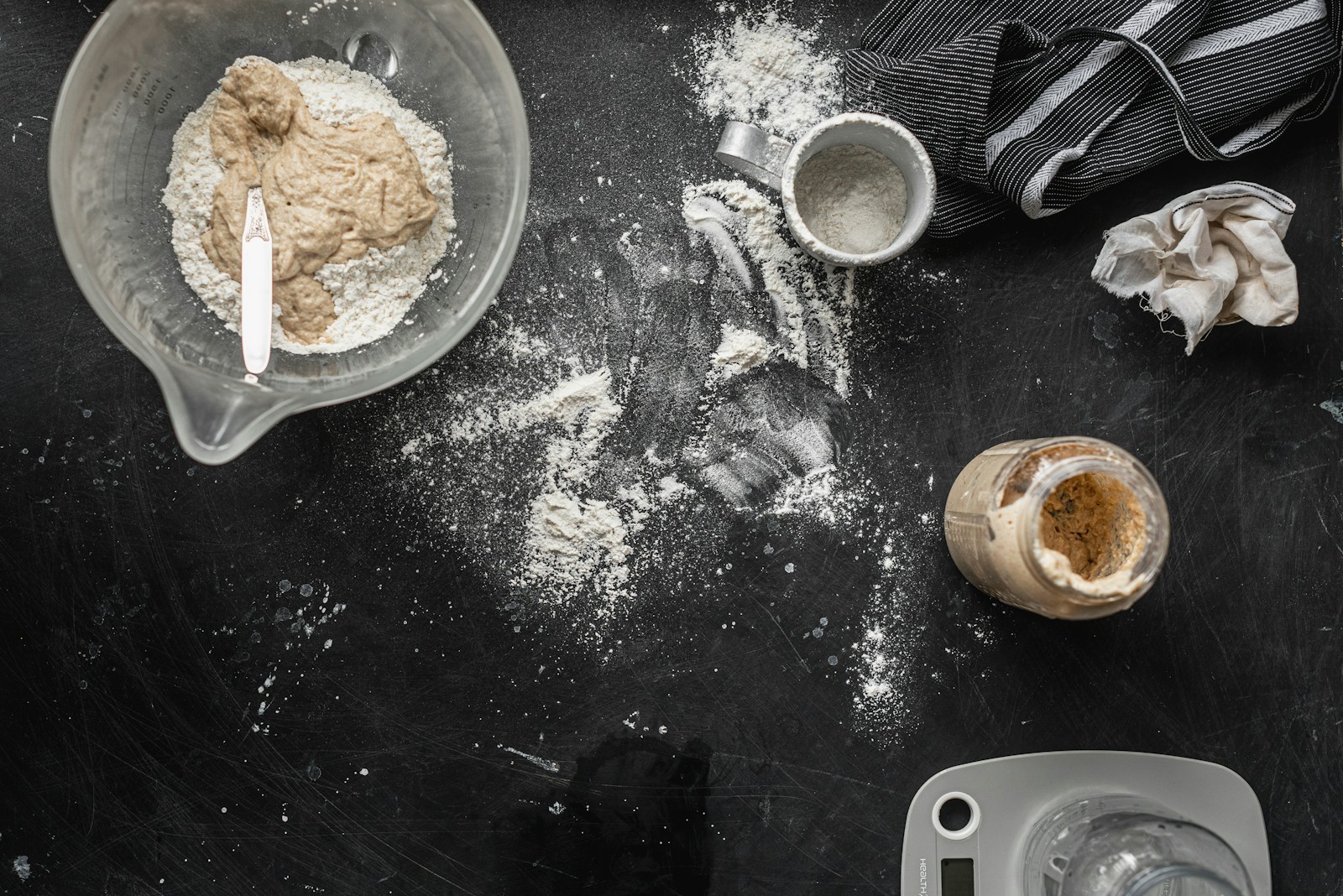
Can You Compost Sourdough Starter? Science-Based Guide
So I’ve been baking sourdough for years now and honestly the discard situation gets ridiculous. Like, every time I feed my starter I’m dumping out a cup of this bubbly fermented flour-water mix, and for a while I was trying all these discard recipes – pancakes, crackers, whatever. But sometimes you just want to use your starter for actual bread and not have a million random baked goods piling up.
Which got me thinking – can you just toss this stuff in the compost? It’s already fermenting, it’s got live microbes, it seems like it should work. But then I started reading about it and the advice online is all over the place. Some people swear by it, others say it’ll mess up your pile, and honestly most articles don’t actually explain the science behind what’s happening.
So I did what I always do – went down a research rabbit hole reading actual composting studies, sourdough microbiology papers, extension service guidelines, all that fun stuff. And what I found is that yeah, you can definitely compost sourdough starter. But there’s more to understand about why it works, what it actually does in your pile, and how to do it without creating problems.
First – What’s Actually In Your Sourdough Starter?
Before we talk about composting it, you gotta understand what sourdough starter even is on a microbial level. Because it’s not just flour and water sitting there.
A 2021 study analyzed 500 sourdough starters from around the world – like, they sequenced the DNA of everything living in these starters.[1] What they found is that most traditional sourdoughs are dominated by a bacterium called Fructilactobacillus sanfranciscensis (it used to be called Lactobacillus sanfranciscensis but they renamed it). There’s also Lactiplantibacillus plantarum and Levilactobacillus brevis showing up a lot.
The American Society for Microbiology notes that researchers have identified more than 50 species of lactic acid bacteria and more than 20 yeast species across different sourdoughs.[2] So your starter is basically this complex ecosystem.
The bacteria-to-yeast ratio is interesting
In most starters it’s about 100:1 – way more bacteria than yeast.[1] Though it can range from 10:1 to 1000:1 depending on how you maintain it and where you live. The yeasts are primarily Saccharomyces cerevisiae (found in 77% of starters) and Kazachstania humilis.
This matters for composting because you’re adding vastly more bacteria than yeast when you dump in starter. And those bacteria are mostly lactic acid bacteria – the same types that show up in yogurt, kimchi, sauerkraut, all that fermented stuff.
What about the pH and all that acid?
Mature sourdough starter sits at a pH of around 3.5 to 4.5 – pretty acidic.[3] That acidity comes from two main organic acids: lactic acid (typically 0.5-1% of the starter) and acetic acid (0.03-0.7%).[3] The optimal ratio is about 3:1 to 4:1 lactic to acetic, which is what gives sourdough that tangy but not vinegary taste.
So you’re dumping this fairly acidic material into your compost. More on why that’s not actually a problem in a sec.
It’s also producing a bunch of other stuff
The fermentation process creates several byproducts:
CO2 and ethanol from the yeasts
Various organic acids from the bacteria
Active enzymes like amylase (breaks down starches), protease (breaks down proteins), and phytase
Research shows these enzymes can stay active even at the acidic pH of starter,[4] which means they might keep working when you add the starter to compost.
Is Sourdough Starter a Green or Brown Material?
This is where it gets interesting. Most composting advice divides everything into “greens” (nitrogen-rich) and “browns” (carbon-rich). Optimal ratio is around 25:1 to 30:1 carbon to nitrogen according to Cornell Composting.[5]
So where does sourdough starter fall? Well, it’s complicated.
Flour is approximately 70-75% carbohydrates and 10-14% protein. The carbohydrates push it toward being carbon-rich. But that protein content contributes nitrogen, plus you’ve got all the microbial biomass which also contains nitrogen.
Honestly, sourdough starter sits somewhere in between – it’s neither purely green nor brown. At 100% hydration (equal weights flour and water), it’s about 50% moisture, which is way wetter than most brown materials but not as wet as fresh grass clippings.
Cornell research establishes that compost moisture should stay between 45-60% by weight.[6] Below 40% and decomposition slows way down; above 65% and you start getting anaerobic conditions where oxygen gets displaced.
With starter at 50%+ moisture, you’ll need roughly 2-3 parts dry brown material for every part starter to maintain proper moisture balance. This is actually really important and something most articles skip over.
What Actually Happens When You Add It to Compost?
The pH situation
Adding acidic material to compost triggers a predictable sequence. Normal composting pH goes something like this:[7]
Initial phase (days 1-7): pH drops to 5.0-6.0 as organic acids form from initial decomposition
Thermophilic phase: pH rises as acids get consumed and ammonia releases from protein breakdown
Mature compost: pH stabilizes at 6.0-8.0
When you add sourdough starter (pH 3.5-4.5), you temporarily acidify the pile a bit more. But here’s what Cornell Composting says: “The resulting drop in pH encourages the growth of fungi and the breakdown of lignin and cellulose.”[7]
Fungi actually prefer slightly acidic conditions and can handle pH ranges of 5.5-8.0 just fine. The organic acids from the starter serve as food for composting microbes and get consumed within days in an aerobic pile.
Cornell’s monitoring guidelines note that if pH drops below 4.5 in a compost pile, it usually indicates anaerobic problems – but “aeration usually is sufficient to return the compost pH to acceptable ranges.”[7] So unless you’re dumping huge amounts of starter, the pH thing isn’t really an issue.
Do the sourdough microbes actually help?
This is the claim you see everywhere – that adding starter “boosts beneficial microbes” in your compost. Let me unpack what’s actually happening.
The sourdough microbes won’t survive hot composting. Both Lactobacillus species and Saccharomyces yeasts are mesophilic organisms – they thrive between 70-100°F (21-38°C). When your compost pile heats up to the thermophilic range (131-160°F or 55-71°C), which EPA guidelines say it should do to kill pathogens,[8] your sourdough microbes die off quickly.
So they’re not hanging around long-term contributing to your compost ecosystem.
But that doesn’t mean they’re useless. Research shows the value isn’t the living microbes – it’s that:[9]
The organic matter has already been partially broken down by fermentation
Those organic acids (lactic and acetic) serve as readily available energy for native composting bacteria
Dead microbial cells contribute nitrogen and decompose easily
The pre-digestion gives compost microbes a head start
NC State Extension confirms that bokashi (another fermented food waste) “can accelerate the decomposition process” when added to compost.[10] And sourdough starter is basically already fermented – same principle applies.
One study on bokashi found that pre-fermented organic matter breaks down faster than fresh material when added to soil or compost.[10] So even though your sourdough microbes aren’t the ones doing the work, they’ve already done work that makes the material easier to decompose.
What about attracting pests?
Here’s something most articles gloss over – fermented foods attract fruit flies. Like, a lot. The yeasty smell is basically a beacon for them.
Compost Magazine notes that fruit flies are “drawn to the fermentation process.”[11] And if you’ve ever left out a jar of starter too long, you’ve probably seen them swarming it.
Prevention strategies from various extension services:[12][13]
Always bury food scraps at least 6-12 inches deep in your pile
Cover immediately with 2-3 inches of brown material
Use bins with secure lids if composting indoors or in small spaces
Keep proper moisture – a pile that’s too wet attracts more bugs
For persistent problems, freeze food scraps before adding to kill any fly eggs
University of Nevada Extension is pretty clear: “Bury food wastes in the pile, rather than placing them on the surface, to reduce the chances of attracting flies.”[13]
How Much Starter Can You Actually Add?
Start small. Like, really small.
University of Missouri Extension guidelines for wet materials recommend adding no more than 1-2 cups at a time to an active pile.[14] And by “active” they mean a pile that’s already established, not a brand new pile you’re just starting.
Multiple composting guides suggest diluting the starter 50/50 with water before adding to help it integrate better.[15] Which sounds weird – adding more water to an already wet material – but the dilution actually helps it distribute more evenly instead of forming a gummy blob.
An active compost system can break down small additions of starter “in a day or two at the most,” according to experienced composters on The Fresh Loaf forum.[16] But that’s assuming you’re managing moisture and aeration properly.
The burial depth matters way more than you think
UC Master Gardeners are specific: “Bury scraps 6-12 inches into the center of the pile.”[17] Not on top. Not barely covered. Actually buried deep.
For highly acidic materials (like bokashi pre-compost or large amounts of starter), some sources recommend 8-12 inches deep with adequate cover.[18]
Why so deep? Because:
It minimizes pest attraction
Ensures the material integrates with existing microbe populations
The center of the pile is warmest, speeding decomposition
Prevents odor problems
Surface application is basically asking for flies, smells, and slow decomposition.
The Ratio That Actually Works
After reading through multiple extension service publications, they all converge on similar advice:
Mix each cup of wet starter with 2-3 cups of dry brown material.
This is based on general composting ratios:[17][19][20]
UC Master Gardeners (Sonoma): “Two to three volumes of browns be mixed with one volume of greens”
Cornell Cooperative Extension: “Keep the brown layer twice the size of the green layer”
Gardener’s Supply: “Three parts brown and one part green works quite well”
For starter specifically, since it’s so wet, lean toward the higher end – 3 parts browns per 1 part starter.
Good brown materials for mixing:
Shredded leaves (best option)
Shredded cardboard or newspaper
Sawdust from untreated wood
Straw or hay
Pine needles
The browns absorb the moisture and provide the carbon balance you need.
Alternative Methods If Traditional Composting Isn’t Your Thing
Bokashi composting is probably ideal
Sourdough starter is particularly well-suited for bokashi, which is an anaerobic fermentation system. The Pantry Mama and several composting guides confirm that “sourdough starter is suitable to add to a Bokashi Bucket.”[21]
Why is bokashi perfect for this? Because it’s literally designed for fermented, acidic materials. The airtight container eliminates pest concerns entirely. You can add as much starter as you want without worrying about moisture balance or flies.
After the 2-week bokashi fermentation, the Royal Horticultural Society notes the material is “still too acidic for plant roots” – bury it 8-12 inches deep and wait 2-4 weeks before planting in that location.[22]
Worm composting requires more caution
You can add sourdough starter to vermicompost systems, but you need to be careful. Homestead and Chill advises: “Only add small amounts of starter (and add more browns if needed)” since “good moisture balance is especially important in worm bins.”[23]
Warnings from vermicomposting experts:
Worms prefer pH 6-7; sourdough’s acidity can stress them if you add too much
Add only 1-2 tablespoons at a time, not cups
According to Worm Farming Secrets: “Starchy materials such as rice, pasta, potatoes, bread etc can get moldy quite quickly and if decent amounts are added at once they can also go ‘anaerobic'”[24]
Always bury under bedding and wait several days between additions
Basically, worm bins are more sensitive than regular compost piles. If you’re gonna use starter in worms, be way more conservative.
Just using it in the garden directly
Some gardeners dilute sourdough starter heavily (like 1 part starter to 10 parts water) and water plants with it. The theory is the organic acids and nutrients can benefit the soil.
I haven’t found any university extension validating this practice though. Anecdotal reports are mixed – some people swear by it, others say it did nothing, a few report problems with mold or fungus gnats.
If you try this, definitely dilute heavily and apply to soil, not leaves. And maybe test on a few plants first before dousing your whole garden.
Troubleshooting Common Problems
My compost smells sour after adding starter
Cause: Anaerobic conditions from too much wet, acidic material without adequate browns or aeration.
Solution: Turn pile immediately and add significant browns (2-3x the volume of what you added). Cornell notes that aeration alone typically corrects pH problems.[7] Make sure the pile isn’t too wet overall – the squeeze test should produce only a few drops of water.
The pile isn’t heating up
Cause: Either too wet (displacing oxygen) or C:N ratio is off.
Solution: Add dry browns to absorb moisture. Also check that pile is at least 3×3 feet – smaller piles won’t generate adequate heat. If it’s summer and you’re expecting heat, make sure you’ve got enough nitrogen-rich materials too.
Flies are swarming
Cause: Insufficient burial depth or inadequate covering of food scraps.
Solution: Bury all food waste at least 6-12 inches deep. Cover with browns immediately after adding anything. Consider using a tumbler or enclosed bin if flies are persistent. In severe cases, trap adults with apple cider vinegar traps while addressing the source.
The starter seems to attract more wildlife than other scraps
Cause: The fermented, yeasty smell is particularly attractive to animals.
Solution: Use bins with secure lids, install hardware cloth barriers (1/4-inch mesh, not chicken wire which animals can tear), and ensure complete burial. In bear country, freeze scraps before adding and only add during midday when animals are less active.
What the Research Actually Supports
Let me be clear about what we have good evidence for versus what’s speculation:
Supported by research:
Fermented/pre-decomposed materials break down faster than fresh material when added to compost[10]
Organic acids serve as energy sources for composting bacteria[9]
Proper moisture levels (40-60%) are critical for aerobic decomposition[6]
Burial of food scraps reduces pest problems[13][17]
Acidic materials temporarily lower pH but get consumed in active piles[7]
Not really proven but makes sense:
Sourdough starter “boosts” compost microbial diversity
Starter makes compost “richer” than without it
You’ll see faster finished compost with starter additions
Probably not true:
Starter microbes survive and contribute long-term (they die in hot piles)
You need starter to have good compost (unnecessary)
Starter is uniquely beneficial compared to other fermented foods
The bottom line is sourdough starter can work as a compost ingredient, but it’s not magic. It’s wet, slightly acidic, pre-fermented organic matter. Manage it properly and it’ll decompose fine. Dump in too much without browns and you’ll have problems.
What I Actually Do With My Discard
Here’s my honest routine:
Small amounts (under 1/2 cup): I just toss it in my compost tumbler, add a handful of shredded leaves, turn it, done. It’s gone within a week.
Larger amounts (1-2 cups): I mix with roughly 3 cups of shredded leaves or torn-up cardboard in a bucket first, then add the whole mix to my pile. Bury it in the center, cover with more browns. Check it in a few days and turn if needed.
Really large amounts (trying a new recipe that uses barely any discard): Honestly, I freeze it. Then when I’m making a new pile or bin, I add the frozen chunk along with the initial mix of materials. Starting with frozen actually kills any fly eggs and the whole thing integrates better as it thaws.
Sometimes: If I’m being lazy, I just dig a hole in an unused part of my garden, dump the starter in, cover with soil. “Trench composting.” Works fine, though slower than an active pile.
Other Stuff You Can Do Instead of Composting
Before you compost it, consider:
Feed it to chickens – Small amounts of sourdough discard are fine for backyard flocks and they love it. Not like pounds at once, but a cup mixed with their regular feed adds variety.[25]
Dehydrate for later – Spread thin on parchment, dry it out, grind into flour. Stores forever and you can reconstitute when you want to bake. More practical than it sounds.
Actually use it – There are a million sourdough discard recipes. Crackers keep forever in an airtight container. Pancakes freeze well. Waffles too. Sometimes the solution is just using it, not disposal.
The Honest Summary
Can you compost sourdough starter? Absolutely. Should you? Sure, if you’ve got discard and don’t want to use it for anything else.
Keys to success:
Add small amounts (1-2 cups max at a time)
Mix with 2-3 parts dry browns immediately
Bury at least 6-12 inches deep
Turn pile within a few days
Keep overall moisture in check
What won’t work:
Dumping a quart of starter on top of your pile
Not adding any browns to absorb moisture
Expecting the starter to “supercharge” your compost
Surface applications that attract flies
The science shows that fermented materials decompose well in compost, acidic additions get buffered by active piles, and proper moisture management is more important than any individual ingredient.
Your compost doesn’t need sourdough starter. But if you’ve got it and want to get rid of it, it works fine as long as you do it right. Mix it with browns, bury it deep, keep your pile aerated. Same principles as composting any other wet food scrap.
And honestly? If you’re making good compost without starter, there’s zero reason to start adding it. Focus on the fundamentals – good C:N ratio, proper moisture, adequate aeration, diverse materials. Get those right and your compost will be great regardless of whether you’re adding sourdough discard or not.
Sources
[1] Landis, E.A., et al. (2021). The diversity and function of sourdough starter microbiomes. eLife. https://elifesciences.org/articles/61644
[2] American Society for Microbiology. (2020). The Sourdough Microbiome. https://asm.org/articles/2020/june/the-sourdough-microbiome
[3] Galle, S., et al. (2012). Characterization of a lactic acid bacterium in sourdough. Applied Microbiology and Biotechnology. https://pubmed.ncbi.nlm.nih.gov/22806497/
[4] Gobbetti, M., et al. (2019). How the sourdough may affect the functional features of leavened baked goods. Food Microbiology. https://www.sciencedirect.com/science/article/pii/S0023643809002503
[5] Cornell Composting. (n.d.). Compost Chemistry. Cornell Waste Management Institute. https://compost.css.cornell.edu/chemistry.html
[6] LSU AgCenter. (n.d.). Composting 101. Louisiana State University Agricultural Center. https://www.lsuagcenter.com/topics/lawn_garden/home_composting
[7] Cornell Composting. (n.d.). Monitoring Compost pH. Cornell Waste Management Institute. https://compost.css.cornell.edu/monitor.html
[8] U.S. Environmental Protection Agency. (n.d.). Composting At Home. EPA Guidelines. https://www.epa.gov/recycle/composting-home
[9] Frontiers in Microbiology. (2018). Microbial dynamics and diversity in the fermentation of bokashi. https://www.frontiersin.org/journals/microbiology
[10] NC State Extension. (2022). Bokashi Composting. North Carolina State University. https://composting.ces.ncsu.edu/bokashi-composting/
[11] Lawnstarter. (2023). How to Keep Pests Out of Your Compost Bin. https://www.lawnstarter.com/blog/landscaping/how-to-keep-pests-out-of-compost/
[12] Penn State Extension. (2023). Bringing Houseplants Indoors. Pennsylvania State University. https://extension.psu.edu/bringing-houseplants-indoors
[13] University of Nevada Extension. (2021). Home Composting Made Easy. University of Nevada, Reno. https://extension.unr.edu/publication.aspx?PubID=2306
[14] University of Missouri Extension. (2022). Making and Using Compost. University of Missouri. https://extension.missouri.edu/publications/g6956
[15] The Fresh Loaf. (2020). Composting Sourdough Discard. Community Forum Discussion. https://www.thefreshloaf.com/forum
[16] The Fresh Loaf. (2020). Sourdough Starter in Compost Bins. Community Forum. https://www.thefreshloaf.com/forum
[17] UC Master Gardeners. (2023). Composting Basics. University of California, Sonoma County. https://sonomamg.ucanr.edu/Composting/
[18] Royal Horticultural Society. (2023). Bokashi Composting Guide. RHS Gardening. https://www.rhs.org.uk/soil-composts-mulches/bokashi
[19] Cornell Cooperative Extension. (2022). Home Composting. Cornell University. https://ccetompkins.org/resources/home-composting
[20] Gardener’s Supply Company. (2023). Composting 101: A Complete Guide. https://www.gardeners.com/how-to/composting-101/5296.html
[21] The Pantry Mama. (2023). Can You Put Sourdough Starter in Bokashi? https://www.thepantrymama.com/can-you-put-sourdough-starter-in-bokashi/
[22] Royal Horticultural Society. (2023). Using Bokashi Compost. RHS Gardening. https://www.rhs.org.uk/soil-composts-mulches/bokashi
[23] Homestead and Chill. (2022). Vermicomposting Guide: What to Feed Worms. https://homesteadandchill.com/vermicomposting-guide/
[24] Worm Farming Secrets. (2021). What Not to Feed Your Composting Worms. https://www.wormfarmingsecrets.com/what-not-to-feed-worms.html
[25] Backyard Chickens. (2023). Feeding Sourdough Discard to Chickens. Community Forum. https://www.backyardchickens.com/
Additional composting resources consulted:
- BioCycle Magazine – Acidic Feedstock Management
- Journal of Environmental Quality – Composting Science Studies
- USDA Natural Resources Conservation Service – Compost Fundamentals
- University of Illinois Extension – Troubleshooting Compost Problems
- Washington State University Extension – Small-Scale Composting
- Oregon State University Extension – Master Composter Program Materials
